Home › Recipes › Dinner ›Taiwanese ›Taiwanese Spicy Beef Noodle Soup with Pickled Mustard Greens
DINNER

Taiwanese Spicy Beef Noodle Soup with Pickled Mustard Greens

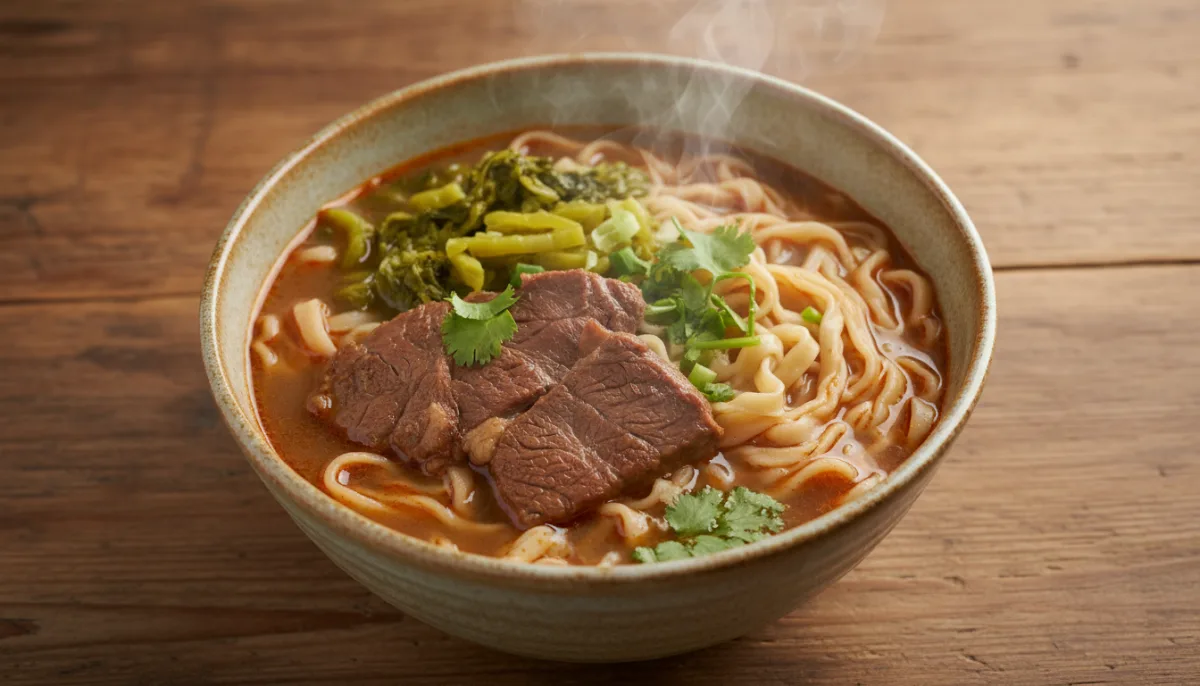
Savor a hearty bowl of Taiwanese Spicy Beef Noodle Soup, featuring tender beef, chewy noodles, and a rich, aromatic broth. The addition of tangy pickled mustard greens cuts through the richness, creating a perfectly balanced and deeply satisfying meal.

✎
HOW TO MAKE IT

Let's cook.

01

Blanch the beef shank cubes in a large pot of boiling water for 5 minutes, then drain and rinse thoroughly under cold water to remove impurities. Set aside.

02

Heat 2 tablespoons of cooking oil in a large Dutch oven or heavy-bottomed pot over medium-high heat. Add the minced garlic and sliced ginger, stir-frying for 1 minute until fragrant.

03

Add the doubanjiang to the pot and stir-fry for 2 minutes until the oil turns red. Add the blanched beef, soy sauce, rock sugar, and beef broth. Bring to a boil, then reduce heat to low, cover, and simmer for 2 hours, or until the beef is very tender.

04

While the beef simmers, prepare the pickled mustard greens. Rinse 1 cup of chopped pickled mustard greens thoroughly under cold water to remove excess salt, then squeeze out any liquid. Set aside.

05

Cook the fresh wide wheat noodles according to package instructions until al dente. Drain well and divide among four serving bowls.

06

Taste the beef broth and adjust seasoning if needed. Ladle the hot beef and broth over the noodles in each bowl.

07

Top each serving with a generous spoonful of the rinsed pickled mustard greens and a sprinkle of fresh chopped cilantro. Serve immediately.

About This Recipe

Savor a hearty bowl of Taiwanese Spicy Beef Noodle Soup, featuring tender beef, chewy noodles, and a rich, aromatic broth. The addition of tangy pickled mustard greens cuts through the richness, creating a perfectly balanced and deeply satisfying meal.
Taiwanese Spicy Beef Noodle Soup with Pickled Mustard Greens
Simple ingredients.
Big flavor.
✦
♨

Chef's Tips

For an extra layer of flavor, you can toast a few star anise, cinnamon sticks, and Sichuan peppercorns with the garlic and ginger in step 2. If you prefer a thicker broth, you can remove some beef and vegetables, blend a portion of the broth, and return it to the pot.
↔

Easy Substitutions

Beef short ribs can be used instead of beef shank for a richer flavor. For a vegetarian version, use firm tofu or mushrooms and vegetable broth, adjusting cooking times. Regular sugar can replace rock sugar, though rock sugar provides a subtle sweetness and shine. If fresh noodles are unavailable, dried wide wheat noodles or ramen noodles can be used.
▱

Storage & Reheating

Leftover beef noodle soup can be stored in an airtight container in the refrigerator for up to 3 days. Store noodles and broth separately if possible to prevent noodles from becoming soggy. Reheat gently on the stovetop or in the microwave.

Serving Suggestions

Serve with a side of blanched bok choy or other leafy greens. Offer extra chili oil or a dash of black vinegar for those who enjoy more heat or tang. A cold glass of Taiwanese bubble tea makes a refreshing accompaniment. You can also serve with a small dish of chopped fresh chilies for an extra kick.

Common Mistakes

Not blanching the beef properly can result in a cloudy broth with an off-flavor. Overcooking the noodles will make them mushy; cook them just until al dente. Not rinsing the pickled mustard greens can make the soup too salty. Rushing the simmering process will result in tough beef; allow ample time for the beef to become fork-tender. Forgetting to taste and adjust seasoning before serving can lead to an unbalanced flavor profile.

Frequently Asked Questions

Can I make this soup less spicy?

Yes, you can reduce the amount of doubanjiang or omit it entirely if you prefer a milder flavor. You can also use a non-spicy broad bean paste.


What kind of noodles are best for this recipe?

Fresh wide wheat noodles are traditional and highly recommended for their chewy texture. However, dried wide wheat noodles, ramen noodles, or even udon noodles can be used as alternatives.

Can I freeze this soup?

The broth and cooked beef can be frozen separately for up to 3 months. Thaw overnight in the refrigerator and reheat. It's best to cook fresh noodles when ready to serve, as frozen and reheated noodles can become mushy.

Where can I find doubanjiang and pickled mustard greens?

Both ingredients are commonly found in Asian grocery stores. Doubanjiang is usually in the condiment aisle, and pickled mustard greens can be found in jars or vacuum-sealed packages.
MORE TO KNOW
The key to a truly authentic Taiwanese Spicy Beef Noodle Soup lies in the slow simmering of the beef shank, which breaks down the tough connective tissues into gelatin, enriching the broth with a silky texture and deep umami. Blanching the beef beforehand is crucial for a clear, clean broth. The doubanjiang (spicy broad bean paste) provides the signature spicy and savory base, while rock sugar balances the flavors and adds a slight sheen to the broth. Don't skip the pickled mustard greens; their bright, tangy crunch is essential for cutting through the richness of the soup and adding a refreshing contrast.
WHAT PEOPLE THINK

Reviews

☆

No reviews yet

Be the first person to review this recipe.

SHARE YOUR THOUGHTS

Made this recipe?

Tell us how it turned out.

Your review will be checked before appearing publicly.