Home › Recipes › Dinner ›Taiwanese ›Taiwanese Braised Pork Ribs with Daikon (Lu Pai Gu)
DINNER

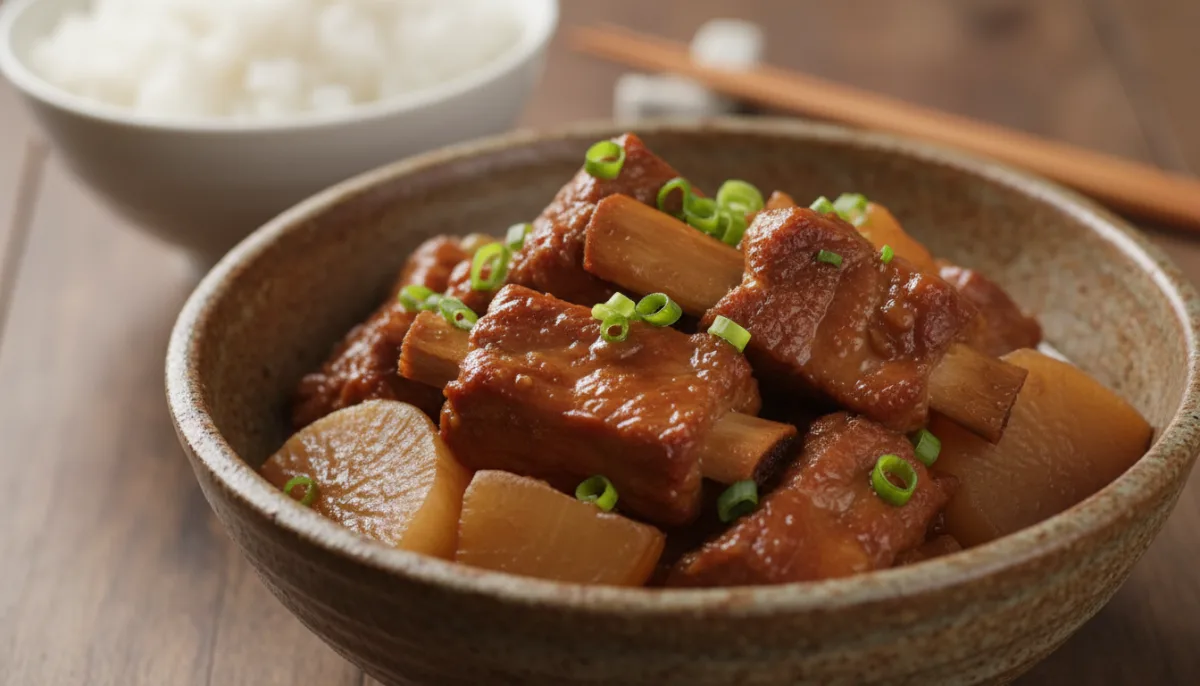
Taiwanese Braised Pork Ribs with Daikon (Lu Pai Gu)

This comforting Taiwanese dish features tender pork ribs and sweet daikon radish, slow-braised in a savory, aromatic sauce. It's a beloved home-style meal, perfect for a hearty dinner.

✎
HOW TO MAKE IT

Let's cook.

01

Blanch the pork ribs: Bring a large pot of water to a rolling boil. Add the pork ribs and boil for 5 minutes to remove impurities. Drain the ribs and rinse them thoroughly under cold water.

02

Sauté aromatics: In a large pot or Dutch oven, heat 1 tablespoon of cooking oil over medium heat. Add the smashed garlic cloves and ginger slices, sautéing for 1 minute until fragrant.

03

Brown the ribs: Add the blanched pork ribs to the pot and brown them lightly on all sides for about 5-7 minutes.

04

Add braising liquids and seasonings: Pour in the soy sauce, dark soy sauce, and water. Add the rock sugar and five-spice powder. Bring the mixture to a boil, then reduce the heat to low, cover, and simmer for 60 minutes.

05

Add daikon: After 60 minutes, add the daikon radish rounds to the pot. Continue to simmer, covered, for another 30 minutes, or until the pork ribs are very tender and the daikon is translucent.

06

Adjust seasoning and serve: Taste the sauce and adjust with more soy sauce or sugar if needed. Serve hot with steamed rice.

About This Recipe

This comforting Taiwanese dish features tender pork ribs and sweet daikon radish, slow-braised in a savory, aromatic sauce. It's a beloved home-style meal, perfect for a hearty dinner.
Taiwanese Braised Pork Ribs with Daikon (Lu Pai Gu)
Simple ingredients.
Big flavor.
✦
♨

Chef's Tips

For extra depth of flavor, you can add 1 star anise and a small piece of cinnamon stick to the braising liquid. If you prefer a thicker sauce, remove the ribs and daikon, then reduce the sauce over medium-high heat for 5-10 minutes until it reaches your desired consistency.
↔

Easy Substitutions

If rock sugar is unavailable, use 1 tablespoon of granulated sugar. Boneless pork shoulder can be used instead of ribs, but adjust cooking time as needed until fork-tender. Carrots can be added alongside the daikon for additional sweetness and color.
▱

Storage & Reheating

Store leftover Taiwanese Braised Pork Ribs with Daikon in an airtight container in the refrigerator for up to 3 days. Reheat gently on the stovetop over medium-low heat or in the microwave until warmed through.

Serving Suggestions

Serve these tender braised pork ribs over a bed of fluffy steamed white rice to soak up all the delicious sauce. A side of blanched green vegetables, such as bok choy or gai lan, would complement the richness of the dish. For a complete meal, consider adding a simple clear soup or a light cucumber salad.

Common Mistakes

Not blanching the ribs: This can lead to a cloudy sauce with an off-flavor. Always blanch and rinse the ribs thoroughly. Overcooking the daikon: While you want the daikon tender, overcooking can make it mushy. Add it in the last 30 minutes of braising. Not adjusting seasoning: Taste the sauce before serving and adjust to your preference; braising liquids can concentrate. Using too high heat: Braising requires a low, gentle simmer for tender results, not a rolling boil.

Frequently Asked Questions

Can I make this dish in a slow cooker?

Yes, after browning the ribs and aromatics, transfer everything to a slow cooker and cook on low for 6-8 hours or on high for 3-4 hours, adding the daikon for the last hour.


What is rock sugar?

Rock sugar is a less sweet, crystallized form of sugar often used in Asian cooking. It dissolves slowly, contributing a subtle sweetness and a beautiful sheen to braised dishes.

Can I freeze leftovers?

Yes, this dish freezes well. Store in an airtight, freezer-safe container for up to 2-3 months. Thaw overnight in the refrigerator and reheat as directed.
MORE TO KNOW
The blanching step for the pork ribs is crucial for achieving a clean, clear braising liquid and a purer flavor. Don't skip it! The dark soy sauce is primarily for color, giving the dish its characteristic rich brown hue, while regular soy sauce provides the main savory seasoning. Rock sugar helps to create a glossy finish and a balanced sweet-savory profile.
WHAT PEOPLE THINK

Reviews

☆

No reviews yet

Be the first person to review this recipe.

SHARE YOUR THOUGHTS

Made this recipe?

Tell us how it turned out.

Your review will be checked before appearing publicly.