Home › Recipes › Dinner ›Filipino ›Classic Pinakbet: Filipino Mixed Vegetables with Savory Shrimp Paste
DINNER

Classic Pinakbet: Filipino Mixed Vegetables with Savory Shrimp Paste

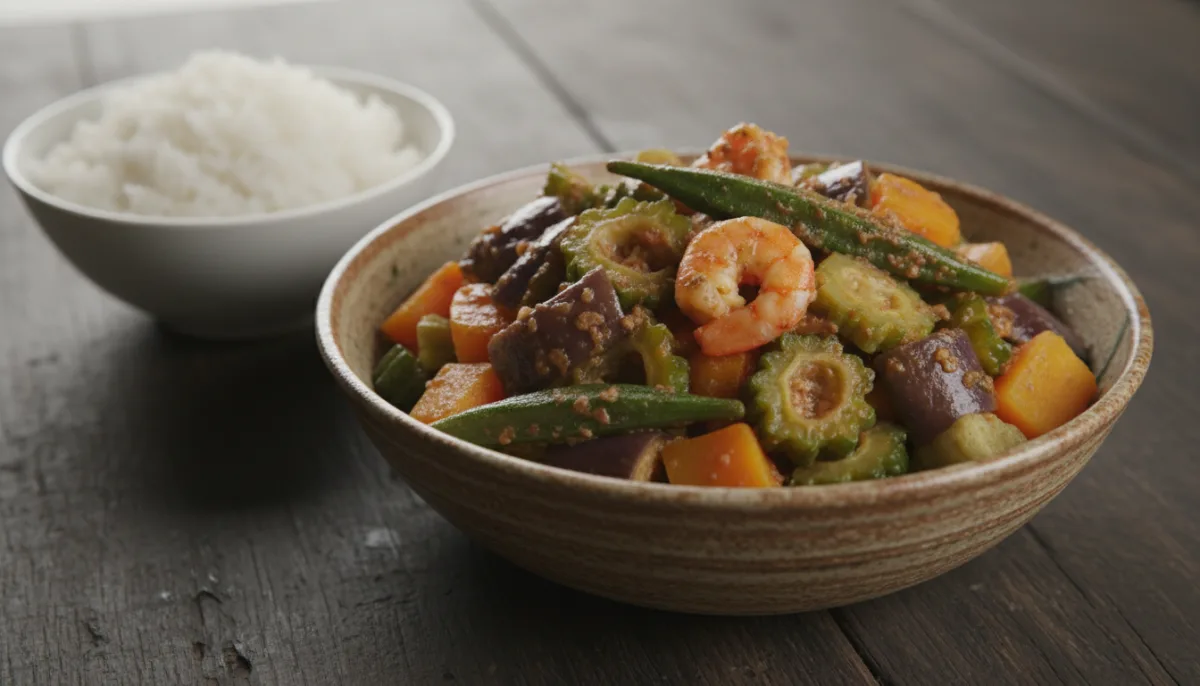
Discover the authentic flavors of the Philippines with this traditional Pinakbet recipe. A colorful assortment of local vegetables, including bitter melon, eggplant, and okra, are gently simmered in a rich, umami-packed shrimp paste sauce, creating a comforting and deeply satisfying dish.

✎
HOW TO MAKE IT

Let's cook.

01

Heat 2 tablespoons of cooking oil in a large pot or Dutch oven over medium heat. Sauté 1 chopped red onion until softened, about 3-4 minutes.

02

Add 3 minced garlic cloves and cook for another 1 minute until fragrant, being careful not to burn the garlic.

03

Stir in 2 tablespoons of bagoong alamang (shrimp paste) and cook for 2 minutes, stirring constantly, until its aroma intensifies.

04

Pour in 1 cup of water and bring the mixture to a simmer. Add 1 cup of cubed squash and cook for 5-7 minutes, or until slightly tender.

05

Add 1 sliced bitter melon, 1 eggplant cut into 1-inch pieces, and 1 cup of trimmed okra to the pot. Stir gently to combine all vegetables with the sauce.

06

Cover the pot and simmer for 10-12 minutes, or until all vegetables are tender-crisp. Stir occasionally to ensure even cooking.

07

Taste and adjust seasoning if necessary. Serve immediately with steamed white rice.

About This Recipe

Discover the authentic flavors of the Philippines with this traditional Pinakbet recipe. A colorful assortment of local vegetables, including bitter melon, eggplant, and okra, are gently simmered in a rich, umami-packed shrimp paste sauce, creating a comforting and deeply satisfying dish.
Classic Pinakbet: Filipino Mixed Vegetables with Savory Shrimp Paste
Simple ingredients.
Big flavor.
✦
♨

Chef's Tips

For a richer flavor, you can add a few pieces of pork belly or shrimp along with the vegetables. To reduce the bitterness of the bitter melon, soak it in salted water for 15 minutes before cooking, then rinse thoroughly.
↔

Easy Substitutions

If bitter melon is too strong, you can omit it or use green beans instead. Chayote can be used in place of squash for a different texture. For a vegetarian version, omit the shrimp paste and use a savory mushroom-based umami paste or a dash of soy sauce.
▱

Storage & Reheating

Leftover Pinakbet can be stored in an airtight container in the refrigerator for up to 3 days. Reheat gently on the stovetop over low heat, adding a splash of water if needed to prevent drying out.

Serving Suggestions

Serve Pinakbet hot with a generous portion of steamed white rice. It pairs wonderfully with grilled fish or fried pork belly (lechon kawali) on the side. A squeeze of calamansi or lime juice just before serving can brighten the flavors. It's also excellent as part of a larger Filipino meal spread.

Common Mistakes

1. Overcooking vegetables: This results in mushy Pinakbet. Add vegetables in stages based on their cooking time, aiming for tender-crisp. 2. Not sautéing shrimp paste enough: The bagoong needs to be cooked out properly to develop its full flavor and reduce its raw pungency. 3. Too much water: Pinakbet should have a thick, flavorful sauce, not be soupy. Add water sparingly. 4. Not tasting and adjusting: Shrimp paste varies in saltiness, so always taste before serving and adjust if needed.

Frequently Asked Questions

What is bagoong alamang?

Bagoong alamang is a Filipino condiment made from fermented small shrimp or krill, typically salty and pungent, providing a deep umami flavor to dishes.


Can I make Pinakbet less bitter?

Yes, you can soak sliced bitter melon in salted water for 15-30 minutes, then rinse thoroughly before cooking. You can also reduce the amount used or omit it entirely.

What kind of squash should I use?

Kabocha squash is traditional, but butternut squash or even pumpkin can be used as good alternatives.

Is Pinakbet spicy?

Traditionally, Pinakbet is not spicy, but you can add a siling labuyo (bird's eye chili) or a pinch of red pepper flakes if you prefer some heat.
MORE TO KNOW
Pinakbet is traditionally cooked in a palayok (clay pot), which imparts a unique earthy flavor and helps distribute heat evenly. While not essential, using one can elevate the dish. The key to a good Pinakbet is not overcooking the vegetables; they should retain some bite and their vibrant colors. The bagoong alamang is the soul of this dish, so choose a good quality brand for the best results. Some variations include adding ginger or chili for an extra kick.
WHAT PEOPLE THINK

Reviews

☆

No reviews yet

Be the first person to review this recipe.

SHARE YOUR THOUGHTS

Made this recipe?

Tell us how it turned out.

Your review will be checked before appearing publicly.