Home › Recipes › Dinner ›Filipino ›Filipino Laing with Dried Taro Leaves and Coconut Cream
DINNER

Filipino Laing with Dried Taro Leaves and Coconut Cream

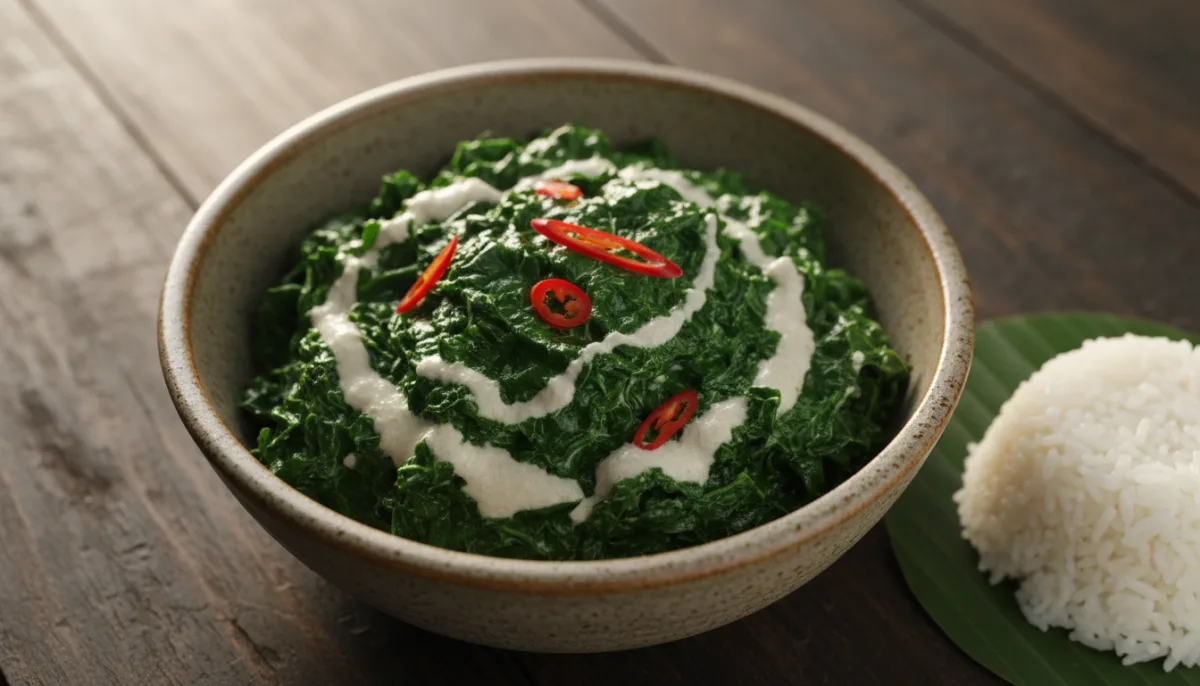
Experience the rich and creamy flavors of this traditional Filipino Laing, featuring dried taro leaves simmered in a spicy coconut cream sauce. This comforting dish is a staple in Bicolano cuisine, known for its vibrant taste and aromatic spices.

✎
HOW TO MAKE IT

Let's cook.

01

Rinse the dried taro leaves thoroughly under cold running water. Gently squeeze out excess water and set aside. Do not shred if using whole leaves.

02

In a large pot or deep pan, combine 1 can of coconut milk, sliced ginger, minced garlic, chopped red onion, and minced siling labuyo. Bring the mixture to a gentle simmer over medium heat, stirring occasionally for 5 minutes.

03

Carefully add the rinsed dried taro leaves to the simmering coconut milk mixture. Do not stir the leaves immediately; allow them to soften and cook in the coconut milk for 15 minutes over low heat. This prevents the leaves from becoming itchy.

04

After 15 minutes, gently stir the taro leaves. Add the second can of coconut milk and the bagoong alamang (if using). Continue to simmer over low heat for another 20 minutes, stirring occasionally, until the leaves are very tender and the sauce has thickened to a creamy consistency.

05

Season with 1/2 teaspoon salt, or to taste. Cook for an additional 5 minutes, ensuring the flavors are well combined and the sauce is rich and creamy. Serve hot.

About This Recipe

Experience the rich and creamy flavors of this traditional Filipino Laing, featuring dried taro leaves simmered in a spicy coconut cream sauce. This comforting dish is a staple in Bicolano cuisine, known for its vibrant taste and aromatic spices.
Filipino Laing with Dried Taro Leaves and Coconut Cream
Simple ingredients.
Big flavor.
✦
♨

Chef's Tips

For a richer flavor, you can add a few pieces of pork belly or shrimp to the laing during the simmering process. If you prefer a milder spice level, reduce the amount of siling labuyo or remove the seeds. Ensure the taro leaves are fully cooked to avoid any itchiness in the mouth.
↔

Easy Substitutions

If dried taro leaves are unavailable, fresh taro leaves can be used, but they must be cooked longer to remove any itchiness. You can substitute siling labuyo with serrano peppers or a pinch of cayenne pepper for heat. Fish sauce can be used in place of bagoong alamang for a different savory depth.
▱

Storage & Reheating

Store leftover Laing in an airtight container in the refrigerator for up to 3 days. Reheat gently on the stovetop over low heat, adding a splash of coconut milk or water if the sauce has thickened too much.

Serving Suggestions

Serve Filipino Laing hot with steamed white rice to soak up all the delicious coconut cream sauce. It pairs wonderfully with grilled fish or fried chicken. For a complete Filipino meal, serve it alongside a simple vegetable side dish or a fresh tomato and onion salad.

Common Mistakes

1. Not rinsing dried taro leaves properly: This can leave behind dirt or impurities. Always rinse thoroughly. 2. Stirring the taro leaves too early: This can release compounds that cause an itchy sensation in the mouth. Allow them to cook undisturbed for the initial phase. 3. Not cooking long enough: Undercooked taro leaves can be fibrous and itchy. Ensure they are very tender before serving. 4. Using low-fat coconut milk: This will result in a less creamy and flavorful dish. Full-fat coconut milk is essential for authentic Laing.

Frequently Asked Questions

Can I use fresh taro leaves instead of dried?

Yes, you can, but fresh taro leaves require longer cooking times to ensure they are tender and non-itchy. You may need to blanch them first.


What if my Laing turns out too spicy?

You can balance the heat by adding more coconut milk or a touch of sugar. Serving it with plain rice also helps to mellow the spice.

Why is my Laing itchy?

This usually happens if the taro leaves are not cooked long enough or if they were stirred too much in the early stages of cooking. Ensure the leaves are very tender before serving.
MORE TO KNOW
The key to a perfect Laing is patience and gentle cooking. The dried taro leaves need ample time to soften and absorb the rich coconut cream, which also helps to neutralize the calcium oxalate crystals that can cause an itchy sensation. Avoid stirring the leaves too much in the initial stages of cooking, as this can release these irritants. The bagoong alamang (fermented shrimp paste) is a traditional ingredient that adds a unique umami depth; if you're new to it, start with a small amount and adjust to your preference. The dish should be creamy, slightly spicy, and deeply savory, a true taste of Filipino comfort food.
WHAT PEOPLE THINK

Reviews

☆

No reviews yet

Be the first person to review this recipe.

SHARE YOUR THOUGHTS

Made this recipe?

Tell us how it turned out.

Your review will be checked before appearing publicly.