Home › Recipes › Dinner ›Filipino ›Creamy Coconut Vegetable Stew with Crispy Pork and Shrimp Paste
DINNER

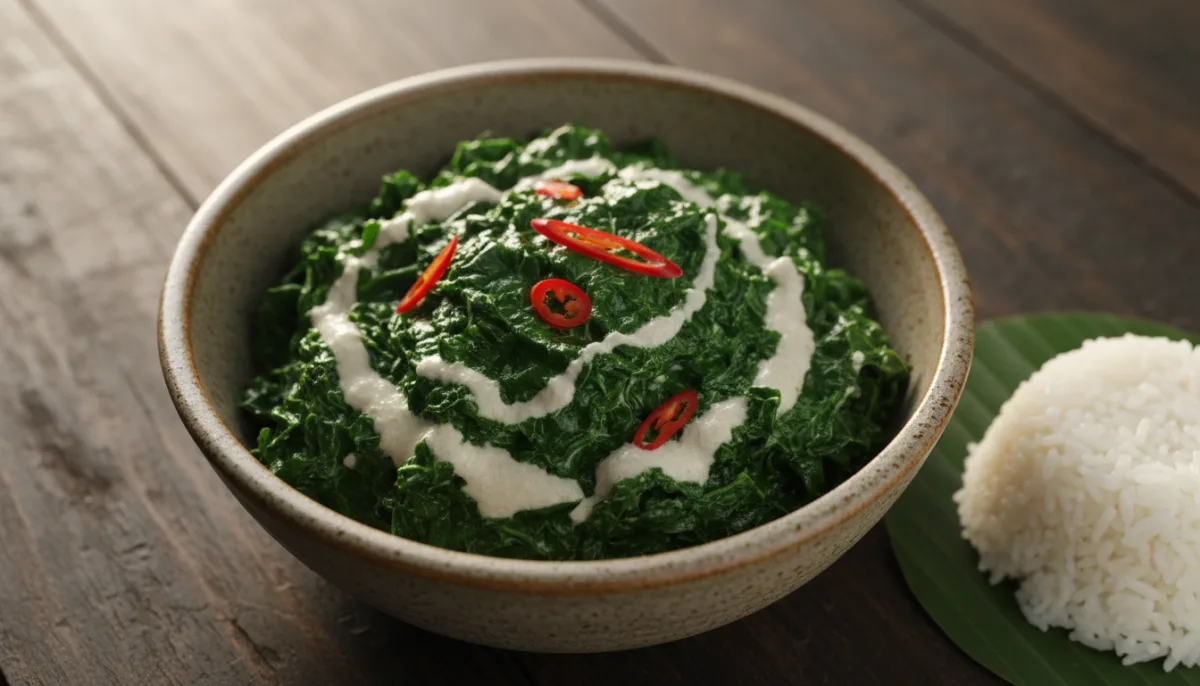
Creamy Coconut Vegetable Stew with Crispy Pork and Shrimp Paste

Experience the rich and comforting flavors of this Filipino-inspired vegetable stew. A medley of garden-fresh vegetables simmers gently in a luscious coconut milk broth, elevated by the savory depth of shrimp paste and crowned with irresistible, golden-crisp pork belly. This hearty and satisfying dish is a wonderful centerpiece for any family meal.

✎
HOW TO MAKE IT

Let's cook.

01

In a large pot, boil the pork belly cubes in water for 20 minutes until tender. Drain the pork, pat it dry, and then fry in 2 tablespoons of cooking oil over medium-high heat for 10-15 minutes until golden brown and crispy. Remove the crispy pork and set aside, reserving 1 tablespoon of the rendered fat in the pot.

02

In the same pot with the reserved fat, sauté the minced garlic, julienned ginger, and chopped onion over medium heat for 3-5 minutes until fragrant and softened.

03

Add the bagoong alamang to the pot and cook for 2 minutes, stirring constantly, until its aroma intensifies.

04

Pour in the coconut milk and water. Bring the mixture to a gentle simmer over medium heat, stirring occasionally to prevent the coconut milk from curdling.

05

Add the cubed calabaza (kabocha squash) to the simmering sauce. Cook for 8-10 minutes, or until the squash is fork-tender.

06

Stir in the sliced eggplant and snake beans. If using, add the siling haba. Continue to simmer for another 5-7 minutes, or until all vegetables are tender but not mushy.

07

Taste and adjust seasoning if needed, though the bagoong alamang usually provides enough saltiness. Ladle the ginataang gulay into serving bowls and top generously with the reserved crispy pork belly before serving.

About This Recipe

Experience the rich and comforting flavors of this Filipino-inspired vegetable stew. A medley of garden-fresh vegetables simmers gently in a luscious coconut milk broth, elevated by the savory depth of shrimp paste and crowned with irresistible, golden-crisp pork belly. This hearty and satisfying dish is a wonderful centerpiece for any family meal.
Creamy Coconut Vegetable Stew with Crispy Pork and Shrimp Paste
Simple ingredients.
Big flavor.
✦
♨

Chef's Tips

For extra richness, you can use a combination of thick and thin coconut milk. If you can't find snake beans, green beans are a good substitute. Adjust the amount of bagoong alamang to your preference; it's quite potent.
↔

Easy Substitutions

If pork belly is unavailable, you can use pork shoulder, though it won't be as crispy. For a vegetarian version, omit the pork and bagoong, and use a plant-based umami enhancer like mushroom powder. Other vegetables like okra or bitter melon can also be added.
▱

Storage & Reheating

Store leftover Ginataang Gulay in an airtight container in the refrigerator for up to 3 days. Reheat gently on the stovetop over low heat, adding a splash of water or coconut milk if it thickens too much. The crispy pork is best added fresh.

Serving Suggestions

Serve this Filipino Ginataang Gulay with plenty of steamed white rice to soak up the rich coconut sauce. A side of fresh sliced tomatoes and salted egg can provide a refreshing contrast. It also pairs well with grilled fish or chicken for a more elaborate meal. A squeeze of calamansi or lime juice just before serving can brighten the flavors.

Common Mistakes

1. Not drying the pork belly: This leads to less crispy pork and excessive oil splattering. Always pat it thoroughly dry after boiling. 2. Overcooking vegetables: Vegetables can become mushy if simmered for too long. Add them in stages based on their cooking times, starting with harder vegetables like squash. 3. High heat for coconut milk: Boiling coconut milk too vigorously can cause it to curdle. Maintain a gentle simmer. 4. Not cooking the bagoong alamang: Raw shrimp paste has a very strong, unpleasantly pungent flavor. Sautéing it properly mellows it and integrates it into the dish. 5. Over-salting: Bagoong alamang is very salty. Taste the dish before adding any additional salt.

Frequently Asked Questions

Can I make this dish spicier?

Yes, you can add more siling haba, or include a few bird's eye chilies (siling labuyo) for extra heat.


What if I can't find bagoong alamang?

While bagoong alamang is traditional, you can substitute with a good quality Thai shrimp paste (kapi) or even fish sauce, though the flavor profile will be slightly different.

Can I use frozen vegetables?

Yes, you can use frozen cubed squash or green beans, but adjust cooking times as they may cook faster.

How do I prevent the coconut milk from curdling?

Use full-fat coconut milk, keep the heat at a gentle simmer, and stir occasionally but not constantly.
MORE TO KNOW
Achieving truly crispy pork belly involves a two-step process: boiling to tenderize and then frying to crisp. Patting the pork very dry after boiling is crucial to prevent oil splattering and to ensure maximum crispiness. When simmering the coconut milk, keep the heat moderate and stir occasionally to prevent it from separating or curdling, which can affect the texture of the sauce. The bagoong alamang is a key flavor component, so ensure it's cooked out properly to mellow its strong taste and integrate it into the sauce.
WHAT PEOPLE THINK

Reviews

☆

No reviews yet

Be the first person to review this recipe.

SHARE YOUR THOUGHTS

Made this recipe?

Tell us how it turned out.

Your review will be checked before appearing publicly.