Home › Recipes › Dinner ›Filipino ›Filipino Adobong Pusit (Squid Adobo)
DINNER

Filipino Adobong Pusit (Squid Adobo)

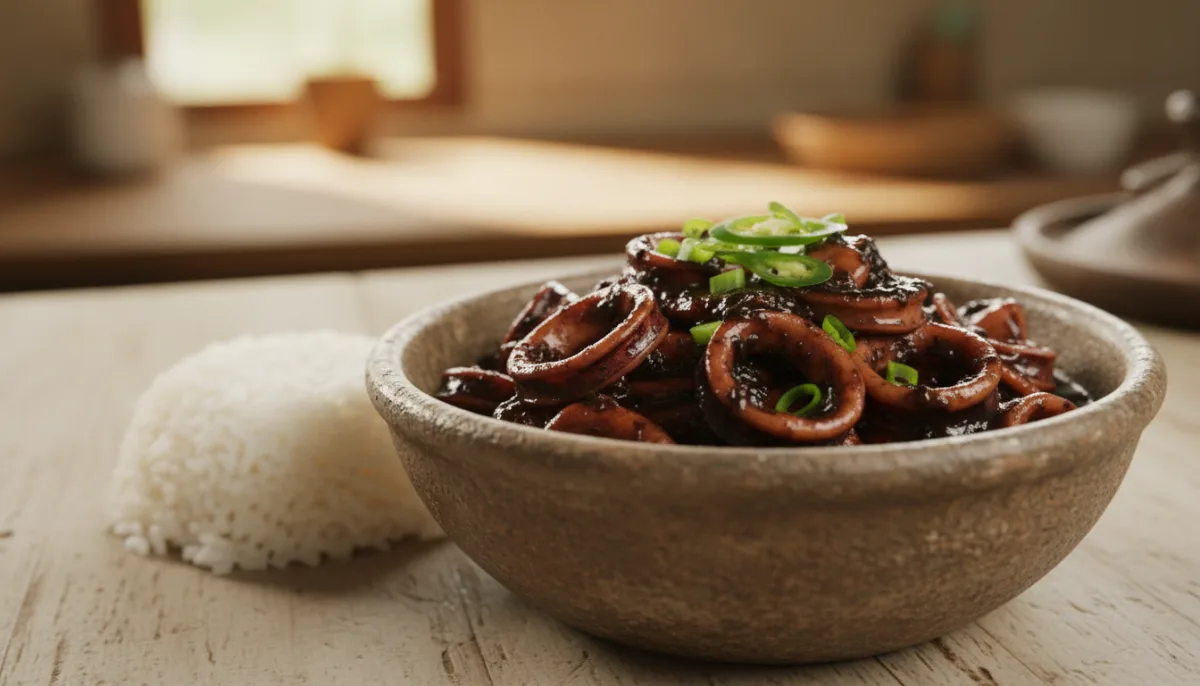
This classic Filipino Adobong Pusit recipe features tender squid simmered in a savory, tangy, and slightly spicy sauce made with soy sauce, vinegar, garlic, and its own ink. It's a flavorful and unique dish that's perfect for dinner.

✎
HOW TO MAKE IT

Let's cook.

01

Clean the squid thoroughly, separating the heads from the bodies. Remove the clear quill from the body and the eyes and beak from the head. Reserve the ink sacs carefully.

02

Cut the squid bodies into 1/2-inch rings and the heads into bite-sized pieces. Pat dry with paper towels.

03

In a medium bowl, combine the reserved squid ink with the vinegar and soy sauce. Mix well until the ink is fully dissolved.

04

Heat the cooking oil in a large pan or pot over medium heat. Sauté the minced garlic and sliced red onion for 2-3 minutes until fragrant.

05

Add the cleaned squid to the pan and cook for 1-2 minutes, stirring constantly, until the squid just starts to curl. Do not overcook at this stage.

06

Pour the squid ink mixture into the pan. Add the crushed black peppercorns and green chili (if using). Bring to a simmer over medium heat.

07

Reduce the heat to low, cover the pan, and simmer for 10-15 minutes, or until the squid is tender. Stir occasionally to prevent sticking.

08

Taste and adjust seasoning if necessary. Serve immediately with steamed white rice.

About This Recipe

This classic Filipino Adobong Pusit recipe features tender squid simmered in a savory, tangy, and slightly spicy sauce made with soy sauce, vinegar, garlic, and its own ink. It's a flavorful and unique dish that's perfect for dinner.
Filipino Adobong Pusit (Squid Adobo)
Simple ingredients.
Big flavor.
✦
♨

Chef's Tips

For a richer flavor, you can add a bay leaf or two during the simmering process. If you prefer a thicker sauce, you can simmer uncovered for an additional 2-3 minutes at the end.
↔

Easy Substitutions

If fresh squid with ink is unavailable, you can use store-bought squid ink (about 1-2 teaspoons) mixed with the vinegar and soy sauce. For less heat, omit the green chili. You can also use apple cider vinegar instead of white vinegar for a slightly different tang.
▱

Storage & Reheating

Store leftover Adobong Pusit in an airtight container in the refrigerator for up to 2-3 days. Reheat gently on the stovetop over low heat or in the microwave.

Serving Suggestions

Serve Adobong Pusit hot with plenty of steamed white rice to soak up the delicious sauce. A side of fresh sliced tomatoes and salted eggs (itlog na maalat) provides a refreshing contrast. It also pairs well with a simple green salad.

Common Mistakes

1. Overcooking the squid: This is the most common mistake, leading to rubbery squid. Cook it quickly or simmer it for a longer duration to tenderize. 2. Not cleaning the squid properly: Ensure all internal organs, quill, eyes, and beak are removed. 3. Discarding the ink: The ink is essential for the authentic flavor and color of Adobong Pusit. 4. Too much salt: Soy sauce is already salty, so taste before adding more. 5. Not enough garlic: Garlic is a cornerstone of adobo flavor, so don't skimp!

Frequently Asked Questions

Can I use frozen squid for this recipe?

Yes, you can use frozen squid. Thaw it completely and clean it as you would fresh squid, ensuring the ink sacs are still intact if you want the authentic flavor.


What if I can't find squid with ink?

You can purchase squid ink separately from specialty stores or online. Use about 1-2 teaspoons mixed with the vinegar and soy sauce.

Is this dish very spicy?

The recipe includes an optional green chili. Without it, the dish is savory and tangy with a hint of pepper, not spicy. Add chili to your preference.

Why is my squid rubbery?

Squid becomes rubbery if cooked for a short period at high heat, or if cooked for too long at medium heat. It needs either a very quick cook (1-2 minutes) or a longer, slow simmer (30-45 minutes) to become tender.
MORE TO KNOW
The key to tender Adobong Pusit is not to overcook the squid. Squid becomes tough when cooked for too long at high heat. A quick sear followed by a short simmer is ideal. If you accidentally overcook it initially, continue simmering for a longer period (30-45 minutes) until it becomes tender again, though it may lose some of its texture. Cleaning squid can be messy but is crucial for this recipe. Wear gloves if you wish to avoid staining your hands with ink.
WHAT PEOPLE THINK

Reviews

☆

No reviews yet

Be the first person to review this recipe.

SHARE YOUR THOUGHTS

Made this recipe?

Tell us how it turned out.

Your review will be checked before appearing publicly.