Home › Recipes › Dinner ›Filipino ›Creamy Filipino Laing with Pork Belly
DINNER

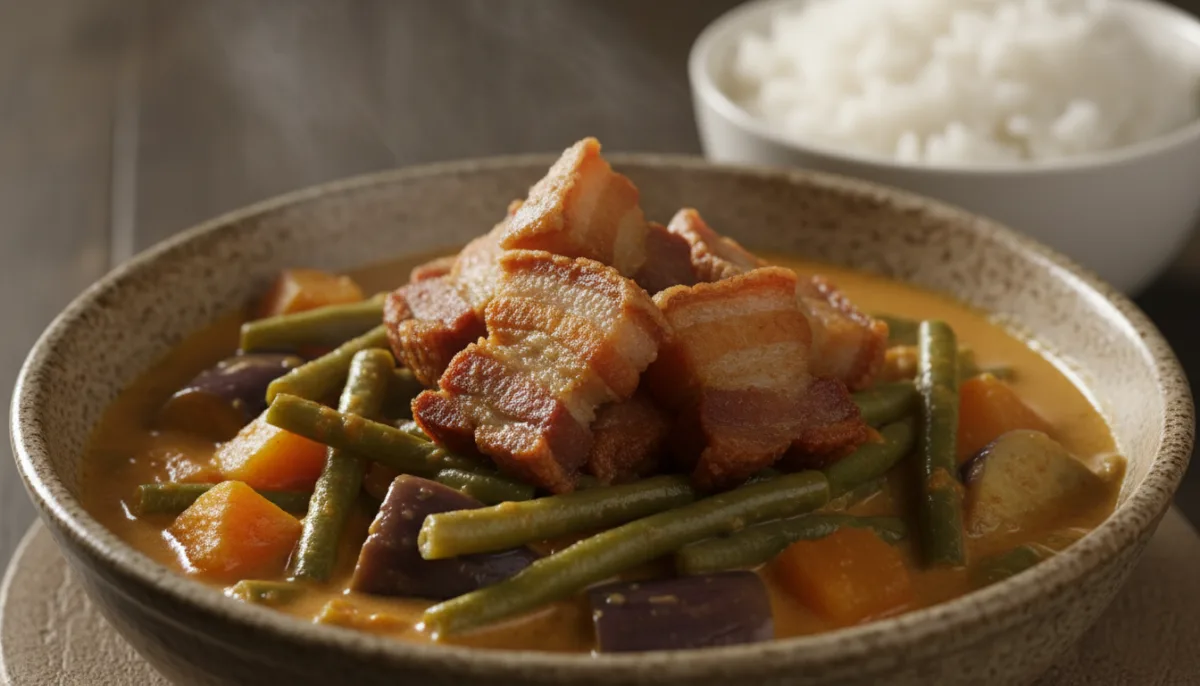
Creamy Filipino Laing with Pork Belly

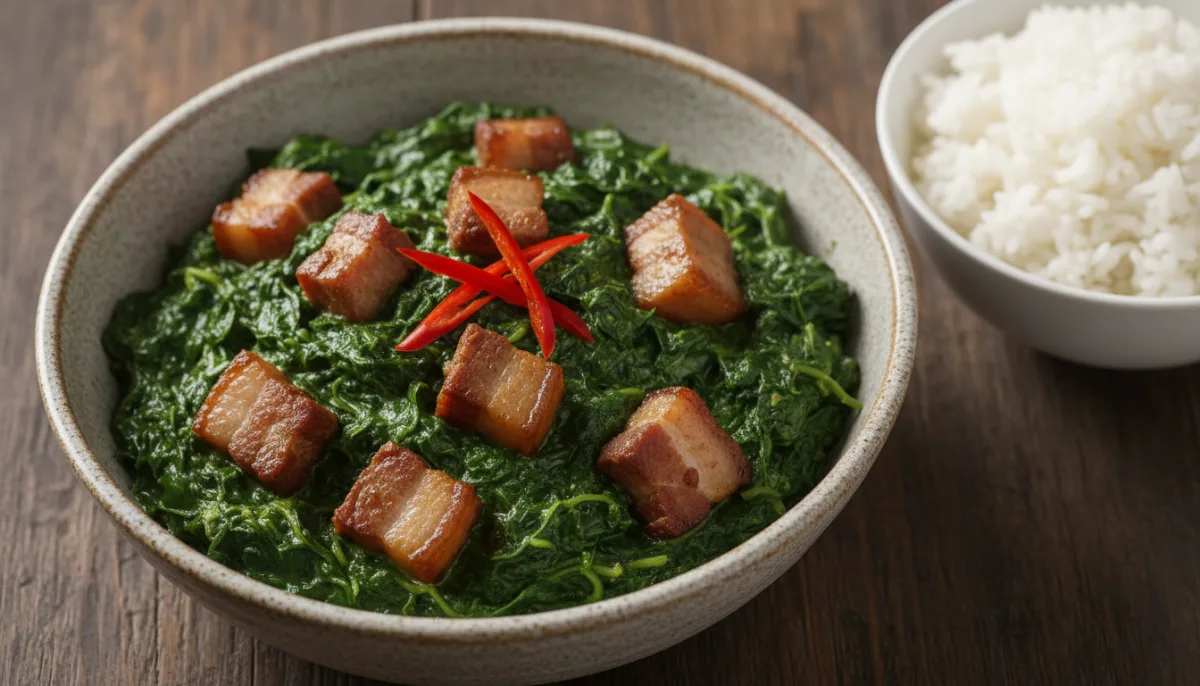
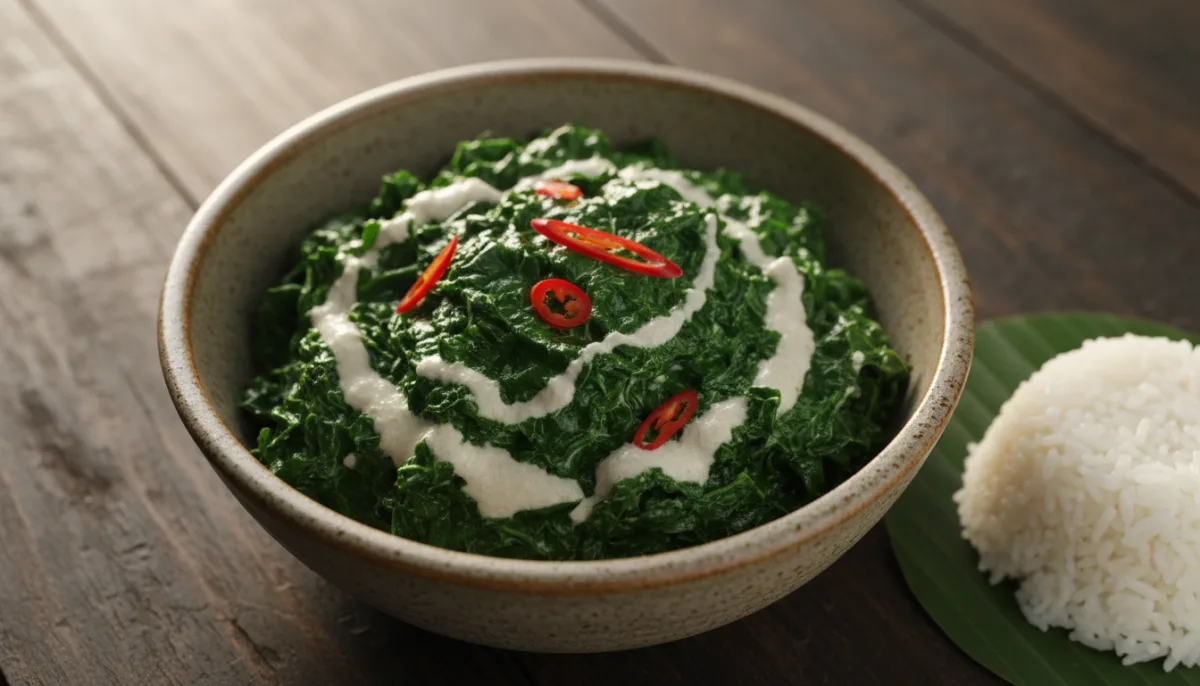
Experience the rich and comforting flavors of Filipino Laing, a classic dish featuring taro leaves simmered in spicy coconut milk with tender pork belly. This recipe delivers a creamy, savory, and slightly spicy stew perfect for a hearty meal.

✎
HOW TO MAKE IT

Let's cook.

01

If using dried taro leaves, soak them in warm water for 30 minutes, then drain thoroughly and gently squeeze out excess water. If using fresh, simply chop them.

02

In a large pot or Dutch oven, brown the pork belly over medium-high heat for 8-10 minutes until golden and some fat has rendered. Remove pork and set aside, leaving about 2 tablespoons of rendered fat in the pot.

03

Add minced garlic, sliced ginger, and minced red chilies to the pot. Sauté over medium heat for 2-3 minutes until fragrant.

04

Return the browned pork belly to the pot. Add the taro leaves, 1 can of coconut milk, and fish sauce. Bring to a gentle simmer, then reduce heat to low, cover, and cook for 30 minutes, stirring occasionally.

05

Pour in the second can of coconut milk and add salt. Continue to simmer uncovered for another 10-15 minutes, or until the taro leaves are very tender and the sauce has thickened to your desired consistency. Stir gently to prevent sticking.

06

Taste and adjust seasoning with more fish sauce or salt if needed. Serve hot.

About This Recipe

Experience the rich and comforting flavors of Filipino Laing, a classic dish featuring taro leaves simmered in spicy coconut milk with tender pork belly. This recipe delivers a creamy, savory, and slightly spicy stew perfect for a hearty meal.
Creamy Filipino Laing with Pork Belly
Simple ingredients.
Big flavor.
✦
♨

Chef's Tips

For a richer flavor, you can toast the dried taro leaves lightly in a dry pan before soaking. Be careful not to overcook the taro leaves initially, as they can become mushy. The second addition of coconut milk helps achieve a creamier texture.
↔

Easy Substitutions

Shrimp can be used instead of pork belly for a seafood version. For a vegetarian option, omit the pork and fish sauce, and use vegetable broth with a pinch of salt for umami. Spinach or collard greens can be used as a substitute for taro leaves, though the flavor will differ.
▱

Storage & Reheating

Store leftover Laing in an airtight container in the refrigerator for up to 3 days. Reheat gently on the stovetop over low heat, adding a splash of water or coconut milk if the sauce has thickened too much.

Serving Suggestions

Serve Creamy Filipino Laing with Pork Belly hot with steamed white rice. It also pairs wonderfully with grilled fish or chicken. For an extra kick, offer additional fresh chilies on the side. A squeeze of calamansi or lime juice just before serving can brighten the flavors.

Common Mistakes

1. Not soaking dried taro leaves properly: This can lead to a tough texture. Always soak and squeeze well. 2. Not cooking taro leaves long enough: Undercooked taro leaves can cause an itchy sensation in the mouth. Ensure they are very tender. 3. Over-stirring early in the cooking process: This can break down the leaves too much and make the dish mushy. Stir gently, especially after adding the leaves. 4. Using low-fat coconut milk: Full-fat coconut milk is essential for the rich, creamy texture and flavor of traditional Laing.

Frequently Asked Questions

Can I use fresh taro leaves instead of dried?

Yes, you can use 2 cups of fresh, chopped taro leaves. Ensure they are cooked thoroughly to remove any itchiness.


What if I can't find sili labuyo?

You can substitute with bird's eye chilies or any small, hot red chili. Adjust the quantity to your preferred spice level.

Can I make this dish spicier?

Absolutely! Increase the amount of red chilies or add a pinch of chili flakes during the simmering process.

Why is my Laing itchy?

This is usually due to undercooked taro leaves. Ensure they are simmered until very tender to neutralize the calcium oxalate.

Can I freeze Laing?

While possible, the texture of the coconut milk can sometimes change upon thawing. It's best consumed fresh or refrigerated.
MORE TO KNOW
The key to authentic Laing is using dried taro leaves, which impart a unique earthy flavor and texture. When handling taro leaves, especially fresh ones, ensure they are cooked thoroughly to neutralize calcium oxalate crystals, which can cause an itchy sensation. Soaking dried leaves helps with this, and simmering in coconut milk further breaks them down. Avoid stirring too vigorously in the initial stages of cooking to prevent the leaves from becoming too fibrous.
WHAT PEOPLE THINK

Reviews

☆

No reviews yet

Be the first person to review this recipe.

SHARE YOUR THOUGHTS

Made this recipe?

Tell us how it turned out.

Your review will be checked before appearing publicly.