Home › Recipes › Breakfast ›Scottish ›Traditional Scottish Oatcakes with Smoked Salmon & Cream Cheese
BREAKFAST

Traditional Scottish Oatcakes with Smoked Salmon & Cream Cheese

Savor a truly delightful Scottish-inspired breakfast or brunch with these homemade oatcakes, perfectly complemented by rich smoked salmon and creamy cheese. This recipe delivers a savory and satisfying start to your day, blending time-honored flavors with fresh, high-quality ingredients for a memorable meal.

✎
HOW TO MAKE IT

Let's cook.

01

In a medium bowl, combine the oat flour, rolled oats, baking soda, and salt. Mix well to ensure all dry ingredients are evenly distributed.

02

Pour the melted butter and hot water into the dry ingredients. Mix with a spoon until a shaggy dough forms. Knead lightly for 1-2 minutes until the dough comes together.

03

Lightly flour a clean surface with extra rolled oats. Roll out the dough to about 1/8-inch thickness. Use a 2-inch round cutter or the rim of a glass to cut out oatcakes.

04

Preheat oven to 375°F (190°C). Carefully transfer the oatcakes to a baking sheet. Bake for 12-15 minutes, until golden brown and crisp.

05

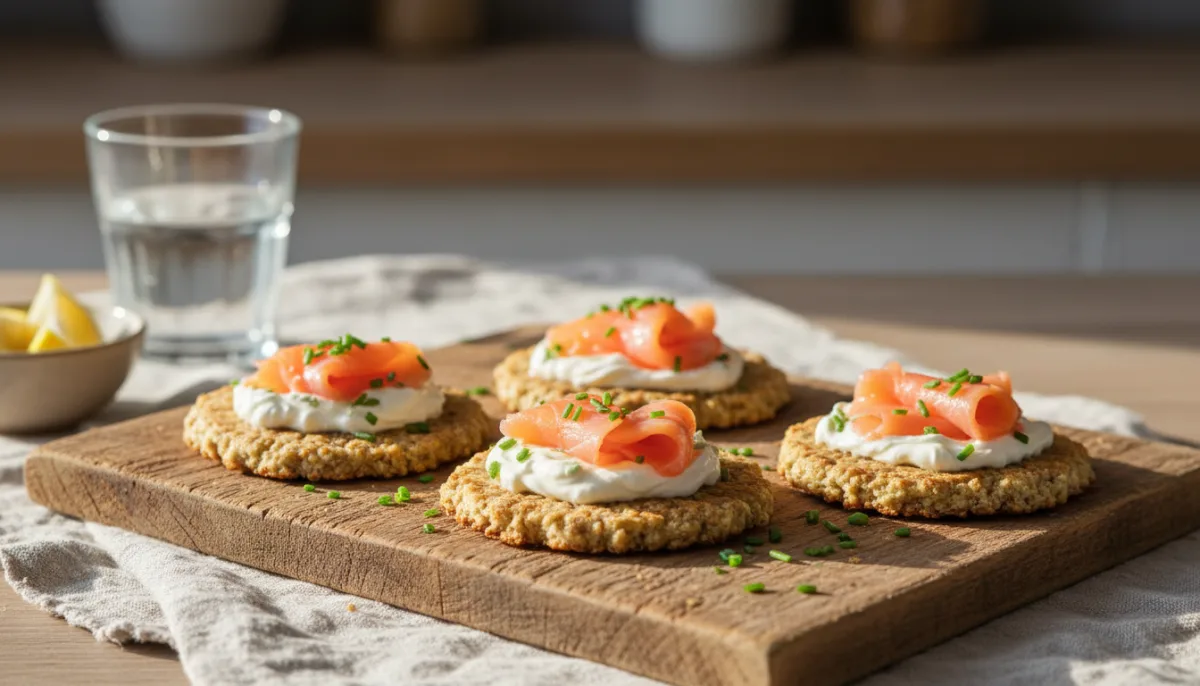
While the oatcakes cool slightly, spread cream cheese generously on each oatcake. Top with a slice of smoked salmon.

06

Garnish with fresh chopped chives and serve immediately.

About This Recipe

Savor a truly delightful Scottish-inspired breakfast or brunch with these homemade oatcakes, perfectly complemented by rich smoked salmon and creamy cheese. This recipe delivers a savory and satisfying start to your day, blending time-honored flavors with fresh, high-quality ingredients for a memorable meal.
Traditional Scottish Oatcakes with Smoked Salmon & Cream Cheese
Simple ingredients.
Big flavor.
✦
♨

Chef's Tips

For extra flavor, you can add a pinch of black pepper or a tiny amount of garlic powder to the oatcake dough. Ensure your skillet is not too hot to prevent the oatcakes from burning before they cook through.
↔

Easy Substitutions

If you don't have oat flour, you can make your own by blending rolled oats in a food processor until fine. For a dairy-free option, use plant-based butter and cream cheese. Dill or parsley can be used instead of chives.
▱

Storage & Reheating

Oatcakes are best enjoyed fresh. Leftover oatcakes can be stored in an airtight container at room temperature for up to 2 days. Store smoked salmon and cream cheese separately in the refrigerator. Reheat oatcakes in a dry skillet over medium-low heat until crisp.

Serving Suggestions

Serve these oatcakes as a sophisticated breakfast or brunch item. They also make an excellent appetizer for a gathering, perhaps alongside a small bowl of capers or a lemon wedge. Pair with a cup of strong Scottish breakfast tea or a mimosa for a special occasion.

Common Mistakes

Over-kneading the dough can make the oatcakes tough; knead just enough for the dough to come together. Rolling the oatcakes too thick will result in a softer, less crisp texture. Cooking on too high heat will burn the outside before the inside is cooked. Not using hot water can make the dough harder to work with and affect the final texture. Overcrowding the pan can lead to uneven cooking and steaming instead of crisping.

Frequently Asked Questions

Can I use quick oats instead of rolled oats?

While rolled oats are preferred for texture, quick oats can be used in a pinch. The oatcakes might be slightly less chewy.


Can I bake the oatcakes instead of pan-frying?

Yes, you can bake them at 375°F (190°C) for 15-20 minutes, flipping halfway, until golden and crisp. However, pan-frying often yields a superior crispness.

How can I make these gluten-free?

Ensure you use certified gluten-free oat flour and rolled oats, as oats can sometimes be cross-contaminated during processing.
MORE TO KNOW
The key to perfect Scottish oatcakes is achieving the right texture: crisp on the outside and slightly chewy within. Rolling them thinly and cooking them in a dry skillet helps achieve this. If your dough is too sticky, add a tiny bit more oat flour; if too dry, add a few drops of hot water. The hot water helps activate the oats and baking soda, contributing to the texture. Don't overcrowd the skillet; cook in batches if necessary to ensure even browning.
WHAT PEOPLE THINK

Reviews

☆

No reviews yet

Be the first person to review this recipe.

SHARE YOUR THOUGHTS

Made this recipe?

Tell us how it turned out.

Your review will be checked before appearing publicly.