Home › Recipes › Dessert ›Vietnamese ›Steamed Vietnamese Layer Cake with Coconut and Mung Bean (Bánh Da Lợn)
DESSERT

Steamed Vietnamese Layer Cake with Coconut and Mung Bean (Bánh Da Lợn)

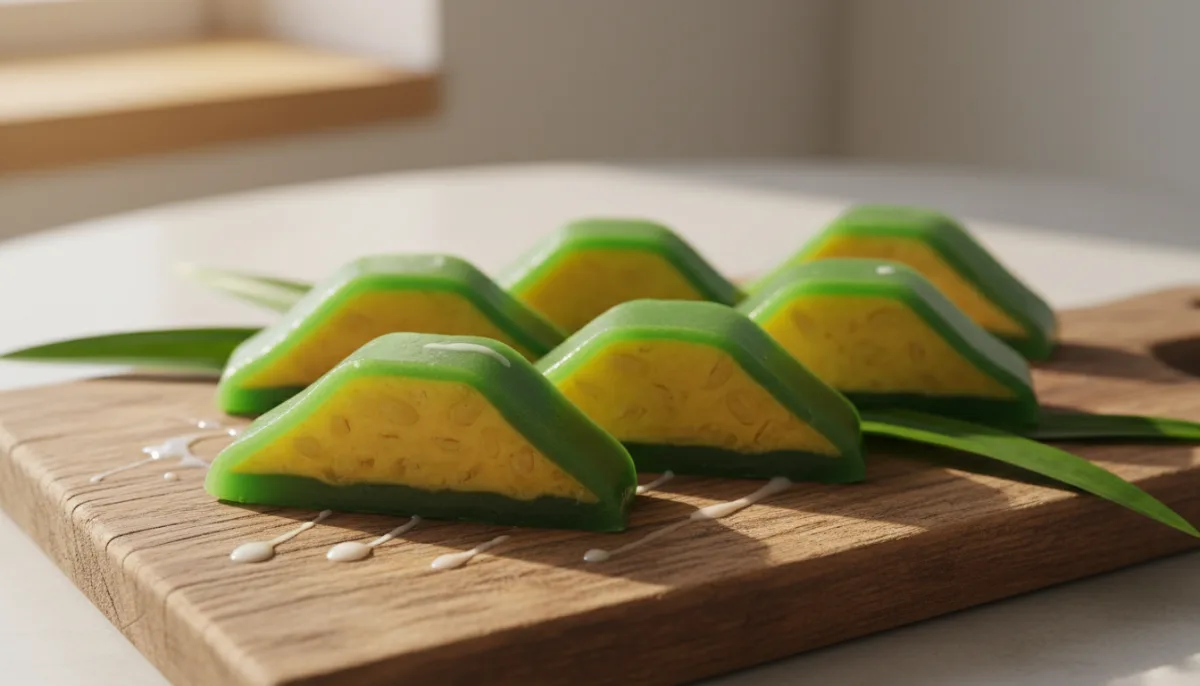
Bánh Da Lợn is a captivating Vietnamese dessert, known for its striking layered appearance and delightful chewiness. This steamed cake combines the fragrant sweetness of pandan and coconut with a rich, creamy mung bean filling, creating a truly unique and satisfying treat.

✎
HOW TO MAKE IT

Let's cook.

01

Rinse the dried split mung beans thoroughly and soak them in water for at least 2 hours, or preferably overnight. Drain the soaked beans and steam them over medium-high heat for 15-20 minutes until very tender. Mash the cooked mung beans until smooth, adding 1/4 cup of water if needed to achieve a paste-like consistency.

02

In a large bowl, combine the tapioca starch, rice flour, 1/2 cup of the granulated sugar, and 1/4 teaspoon of salt. Gradually whisk in 1 cup of coconut milk until a smooth batter forms. Divide this batter into two equal portions.

03

To one portion of the batter, add the mashed mung beans and mix well until fully incorporated. This is your mung bean layer batter.

04

To the second portion of the batter, add the pandan extract and mix until the color is uniform. This is your pandan-coconut layer batter.

05

Lightly grease an 8-inch round cake pan. Place the pan in a steamer basket over boiling water. Pour about 1/2 cup of the pandan-coconut batter into the hot pan, spread evenly, and steam for 5-7 minutes over medium-high heat until set and translucent.

06

Carefully pour about 1/2 cup of the mung bean batter over the pandan layer, spread evenly, and steam for another 5-7 minutes until set. Continue alternating layers, steaming each layer until set, ending with a pandan-coconut layer. For the final layer, steam for 10-15 minutes to ensure the entire cake is cooked through.

07

Remove the cake from the steamer and let it cool completely at room temperature for at least 2-3 hours before slicing. Cooling completely is crucial for the cake to firm up and achieve its characteristic chewy texture. Use a lightly oiled knife to cut into diamond or square shapes.

About This Recipe

Bánh Da Lợn is a captivating Vietnamese dessert, known for its striking layered appearance and delightful chewiness. This steamed cake combines the fragrant sweetness of pandan and coconut with a rich, creamy mung bean filling, creating a truly unique and satisfying treat.
Steamed Vietnamese Layer Cake with Coconut and Mung Bean (Bánh Da Lợn)
Simple ingredients.
Big flavor.
✦
♨

Chef's Tips

Ensure each layer is fully set before adding the next to prevent them from mixing. A clear steamer lid helps monitor doneness without releasing steam. For easier slicing, lightly oil your knife between cuts.
↔

Easy Substitutions

If pandan extract is unavailable, you can omit it for a plain coconut layer, or use a few drops of green food coloring and a touch of vanilla extract for a similar visual. For a slightly different flavor, a small amount of durian paste can be added to the mung bean layer.
▱

Storage & Reheating

Store Bánh Da Lợn in an airtight container at room temperature for up to 2 days, or in the refrigerator for up to 5 days. If refrigerated, allow it to come to room temperature for optimal texture before serving.

Serving Suggestions

Serve Bánh Da Lợn as a delightful dessert after a Vietnamese meal. It's also perfect as a sweet snack with a cup of Vietnamese iced coffee. Offer it on a platter for a vibrant addition to any potluck or gathering. Enjoy it chilled or at room temperature.

Common Mistakes

Not soaking mung beans long enough results in hard beans that won't mash smoothly. Adding the next layer before the previous one is set will cause the colors to bleed and layers to mix. Slicing the cake while it's still warm will make it sticky and difficult to cut cleanly. Over-steaming the cake can make it too tough or rubbery. Not greasing the pan properly can cause the cake to stick, making it hard to remove.

Frequently Asked Questions

Can I use fresh pandan leaves instead of extract?

Yes, you can blend fresh pandan leaves with a little water, strain the liquid, and use that for a more natural pandan flavor.


Why is my cake sticky?

It might be undercooked, or you might have sliced it before it cooled completely. Ensure each layer is steamed until translucent and allow the cake to cool fully.

Can I make this cake ahead of time?

Absolutely! Bánh Da Lợn tastes great the next day and can be stored in the refrigerator.

What if I don't have a steamer?

You can create a makeshift steamer by placing a heatproof rack or trivet in a large pot with a lid, ensuring the water level is below the rack.
MORE TO KNOW
Achieving the perfect texture for Bánh Da Lợn relies heavily on the correct ratio of tapioca starch to rice flour, which gives it its signature chewiness and slight elasticity. Over-steaming can make the cake too firm, while under-steaming will result in a sticky, unset texture. The key is to steam each layer just until it's set and translucent, allowing it to firm up further as it cools. Don't rush the cooling process; it's essential for the layers to fully meld and for the cake to become sliceable without sticking.
WHAT PEOPLE THINK

Reviews

☆

No reviews yet

Be the first person to review this recipe.

SHARE YOUR THOUGHTS

Made this recipe?

Tell us how it turned out.

Your review will be checked before appearing publicly.