Home › Recipes › Lunch ›Uruguayan ›Uruguayan Fainá (Chickpea Flour Flatbread) with Rosemary and Sea Salt
LUNCH

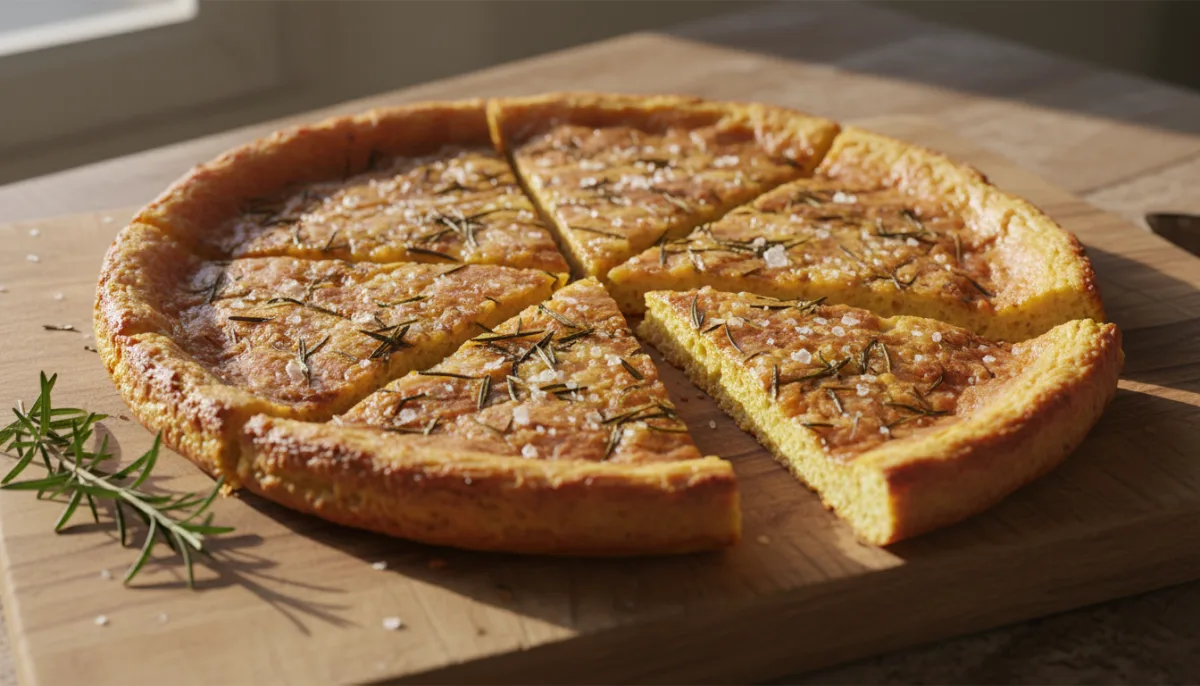
Uruguayan Fainá (Chickpea Flour Flatbread) with Rosemary and Sea Salt

This traditional Uruguayan fainá is a savory chickpea flour flatbread, crispy on the outside and tender within. Infused with fresh rosemary and topped with flaky sea salt, it's a simple yet satisfying dish perfect for lunch or as an accompaniment.

✎
HOW TO MAKE IT

Let's cook.

01

In a large bowl, whisk together the chickpea flour, water, 1/4 cup olive oil, and 1/2 teaspoon salt until smooth and no lumps remain. Let the batter rest for 15 minutes at room temperature.

02

While the batter rests, preheat your oven to 450°F (230°C). Generously grease a 9-inch round cast iron skillet or a similar oven-safe pan with olive oil.

03

Place the greased skillet in the preheated oven for 5 minutes at 450°F (230°C) to get it very hot. This helps create a crispy crust.

04

Carefully remove the hot skillet from the oven. Pour the rested batter into the hot skillet. Sprinkle the chopped fresh rosemary evenly over the top.

05

Return the skillet to the oven and bake for 25-30 minutes at 450°F (230°C), or until the fainá is golden brown, firm to the touch, and crispy around the edges.

06

Once baked, remove the fainá from the oven. Immediately sprinkle with flaky sea salt. Let it cool in the pan for 5 minutes before slicing and serving.

About This Recipe

This traditional Uruguayan fainá is a savory chickpea flour flatbread, crispy on the outside and tender within. Infused with fresh rosemary and topped with flaky sea salt, it's a simple yet satisfying dish perfect for lunch or as an accompaniment.
Uruguayan Fainá (Chickpea Flour Flatbread) with Rosemary and Sea Salt
Simple ingredients.
Big flavor.
✦
♨

Chef's Tips

For an extra crispy fainá, ensure your skillet is very hot before adding the batter. A well-seasoned cast iron skillet works best for achieving the perfect texture.
↔

Easy Substitutions

You can substitute dried rosemary for fresh, using 1 teaspoon. Other herbs like thyme or oregano can also be used. For a different flavor, add a pinch of black pepper to the batter.
▱

Storage & Reheating

Store leftover fainá in an airtight container at room temperature for up to 2 days, or in the refrigerator for up to 4 days. Reheat in a warm oven (350°F/175°C) for 5-7 minutes to restore crispiness.

Serving Suggestions

Serve warm as an appetizer with a simple green salad, alongside a slice of pizza, or as a side with grilled meats. It's also delicious on its own as a savory snack.

Common Mistakes

1. Not letting the batter rest: This can lead to a gritty texture. Always allow at least 15 minutes for the flour to hydrate. 2. Not heating the pan sufficiently: A cold pan will result in a less crispy bottom crust. Ensure the pan is piping hot before adding the batter. 3. Over-mixing the batter: While you want it smooth, excessive whisking can introduce too much air, affecting the density. 4. Using too much liquid: This can make the fainá soggy. Stick to the specified water-to-flour ratio. 5. Not seasoning enough: The sea salt on top is essential for flavor; don't skip it.

Frequently Asked Questions

Can I make fainá ahead of time?

Yes, you can prepare the batter up to 24 hours in advance and store it in the refrigerator. Bring it to room temperature before baking.


What kind of pan should I use?

A cast iron skillet is ideal for its heat retention, but any heavy, oven-safe pan (like a baking dish) will work.

Is fainá gluten-free?

Yes, chickpea flour is naturally gluten-free, making fainá a great option for those with gluten sensitivities.

Can I add other toppings?

Absolutely! Sliced onions, olives, or a sprinkle of Parmesan cheese can be added before baking for extra flavor.

How do I know when it's done?

The fainá should be golden brown, especially around the edges, and feel firm when gently pressed in the center.
MORE TO KNOW
Fainá is a staple in Uruguay, often enjoyed alongside pizza or as a standalone snack. The key to its unique texture is the chickpea flour, which creates a dense yet tender interior and a wonderfully crisp exterior when baked at high heat. The resting period for the batter is crucial as it allows the chickpea flour to fully hydrate, preventing a gritty texture and ensuring a smoother, more cohesive flatbread.
WHAT PEOPLE THINK

Reviews

☆

No reviews yet

Be the first person to review this recipe.

SHARE YOUR THOUGHTS

Made this recipe?

Tell us how it turned out.

Your review will be checked before appearing publicly.