Home › Recipes › Dessert ›Ukrainian ›Classic Ukrainian Paska: Sweet Easter Bread with Lemon Glaze
DESSERT

Classic Ukrainian Paska: Sweet Easter Bread with Lemon Glaze

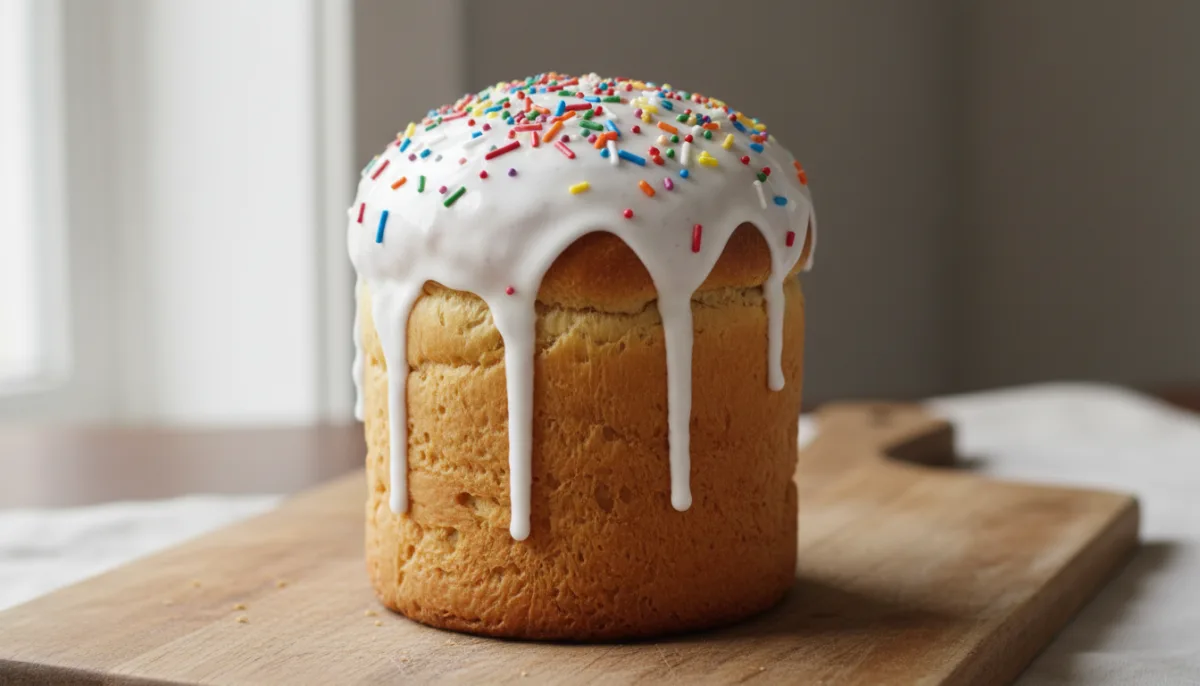
Elevate your Easter table with this cherished Ukrainian Paska recipe. This rich, subtly sweet bread, adorned with a bright lemon icing and festive sprinkles, is a true celebration of tradition and flavor.

✎
HOW TO MAKE IT

Let's cook.

01

In a large bowl, combine the warm milk, yeast, and 1 tablespoon of the granulated sugar. Let stand for 5-10 minutes until foamy.

02

Stir in the remaining granulated sugar, melted butter, eggs, and salt into the yeast mixture. Gradually add the flour, mixing until a soft dough forms. Turn the dough out onto a lightly floured surface and knead for 8-10 minutes until smooth and elastic.

03

Place the dough in a lightly oiled bowl, turning once to coat. Cover with plastic wrap and let rise in a warm place for 1.5-2 hours, or until doubled in size.

04

Punch down the dough and shape it into a round loaf. Place it into a greased 8-inch round baking pan or a paska mold. Cover and let rise again for 45-60 minutes, or until nearly doubled.

05

Bake the paska in a preheated oven at 350°F (175°C) for 40-45 minutes, or until golden brown and a wooden skewer inserted into the center comes out clean. If the top browns too quickly, loosely tent with foil. Let cool completely on a wire rack.

06

While the paska cools, prepare the icing: whisk together the powdered sugar and lemon juice until smooth. Once the paska is completely cool, drizzle the lemon icing over the top, allowing it to drip down the sides.

07

Immediately decorate with colorful sprinkles before the icing sets.

About This Recipe

Elevate your Easter table with this cherished Ukrainian Paska recipe. This rich, subtly sweet bread, adorned with a bright lemon icing and festive sprinkles, is a true celebration of tradition and flavor.
Classic Ukrainian Paska: Sweet Easter Bread with Lemon Glaze
Simple ingredients.
Big flavor.
✦
♨

Chef's Tips

Ensure your milk is not too hot, as it can kill the yeast. The dough should be soft and slightly sticky after kneading; resist adding too much extra flour. For a richer flavor, you can add 1/2 teaspoon of vanilla extract or a pinch of saffron to the dough.
↔

Easy Substitutions

You can substitute orange juice for lemon juice in the icing for a different citrus note. For a dairy-free version, use plant-based milk and vegan butter. If you don't have sprinkles, candied fruit or chopped nuts can be used for decoration.
▱

Storage & Reheating

Store Paska at room temperature in an airtight container for up to 3-4 days. For longer storage, wrap tightly in plastic wrap and then foil, and freeze for up to 2 months. Thaw at room temperature before serving.

Serving Suggestions

Serve slices of Paska with coffee or tea for breakfast or a festive snack. It's also delicious with a smear of butter or a dollop of fruit preserves. This bread is traditionally enjoyed during Easter, often as part of a larger celebratory meal.

Common Mistakes

1. Using milk that is too hot or too cold: This can kill the yeast or prevent it from activating. Ensure it's between 105-115°F (40-46°C). 2. Not kneading enough: Insufficient kneading results in a dense, heavy bread. Knead until the dough is smooth and elastic. 3. Over-flouring the dough: Adding too much flour makes the bread dry. The dough should be soft. 4. Rushing the rising times: Proper rising is crucial for a light texture. Allow the dough to double in size. 5. Icing a warm Paska: The icing will melt and run off if the bread isn't completely cool.

Frequently Asked Questions

Can I make this Paska ahead of time?

Yes, you can bake the Paska a day or two in advance. Store it properly, and ice it just before serving for the best presentation.


What if my dough isn't rising?

Check your yeast's expiration date and ensure your milk temperature was correct. A warm environment is also crucial for yeast activity.

Can I add dried fruit to the dough?

Absolutely! You can add 1/2 cup of raisins, dried cranberries, or candied citrus peel during the last few minutes of kneading for extra flavor and texture.
MORE TO KNOW
The key to a light and airy Paska is proper kneading and two distinct rises. The first rise allows the yeast to develop flavor and strength, while the second rise gives the bread its final structure. Don't rush these steps. If your kitchen is cool, you can create a warm environment for rising by placing the covered dough in a slightly warmed (but turned off) oven with the door ajar, or near a sunny window.
WHAT PEOPLE THINK

Reviews

☆

No reviews yet

Be the first person to review this recipe.

SHARE YOUR THOUGHTS

Made this recipe?

Tell us how it turned out.

Your review will be checked before appearing publicly.