Home › Recipes › Dessert ›Taiwanese ›Traditional Taiwanese Peanut Candy (Gong Tang)
DESSERT

Traditional Taiwanese Peanut Candy (Gong Tang)

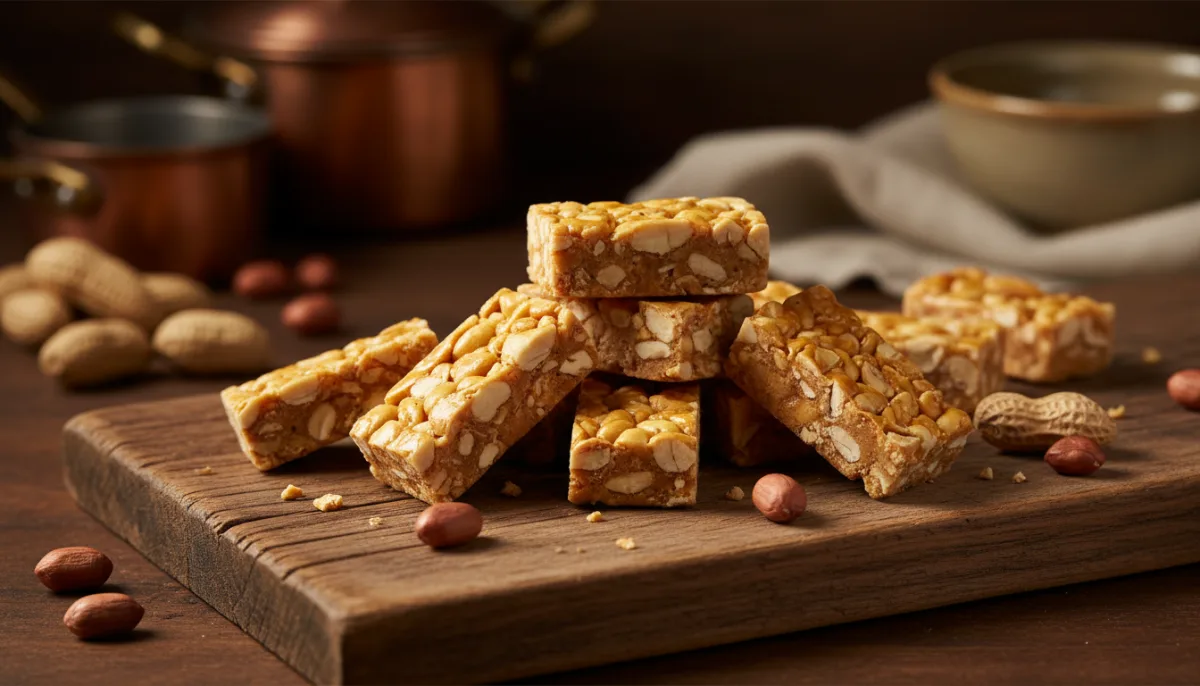
This classic Taiwanese peanut candy, known as Gong Tang, offers a delightful crunch and rich nutty flavor. It's a simple yet satisfying treat, perfect for sharing or enjoying as a sweet snack.

✎
HOW TO MAKE IT

Let's cook.

01

Spread the raw peanuts in a single layer on a baking sheet. Roast them in an oven at 350°F/175°C for 10-12 minutes, or until lightly golden and fragrant. Remove from the oven, let cool slightly, then rub them between your hands or in a clean towel to remove most of the skins. Roughly chop the peanuts and set aside.

02

In a heavy-bottomed saucepan, combine the granulated sugar, maltose syrup, water, and salt. Cook over medium heat, stirring occasionally, until the sugar dissolves and the mixture comes to a boil. Continue to cook without stirring until the syrup reaches 280°F/138°C (soft crack stage) on a candy thermometer.

03

Reduce the heat to low. Stir in the chopped roasted peanuts and optional sesame seeds until they are evenly coated with the syrup. Work quickly as the mixture will start to stiffen.

04

Pour the peanut mixture onto a silicone baking mat or a lightly oiled piece of parchment paper. Place another piece of parchment paper on top and, using a rolling pin, quickly roll the candy to an even thickness of about 1/4 inch.

05

While the candy is still warm and pliable, use a sharp, oiled knife to cut it into desired shapes, such as 1x2-inch rectangles. If the candy cools too much and becomes brittle, it will be difficult to cut cleanly.

06

Allow the cut pieces to cool completely at room temperature for at least 30 minutes until firm and crisp. Once fully cooled, separate the pieces.

About This Recipe

This classic Taiwanese peanut candy, known as Gong Tang, offers a delightful crunch and rich nutty flavor. It's a simple yet satisfying treat, perfect for sharing or enjoying as a sweet snack.
Traditional Taiwanese Peanut Candy (Gong Tang)
Simple ingredients.
Big flavor.
✦
♨

Chef's Tips

Using a candy thermometer is crucial for achieving the correct texture. If you don't have one, test by dropping a small amount of syrup into cold water; it should form brittle threads. Work quickly when rolling and cutting the candy, as it hardens fast.
↔

Easy Substitutions

For a different flavor, you can add a pinch of five-spice powder to the syrup. If maltose syrup is unavailable, light corn syrup can be used as a substitute, though the texture might be slightly different.
▱

Storage & Reheating

Store the Taiwanese peanut candy in an airtight container at room temperature for up to 2 weeks. Humidity can make the candy sticky, so ensure it's well-sealed.

Serving Suggestions

Serve these traditional Taiwanese peanut candies as a delightful after-dinner treat with tea. They are also excellent as a snack during festive occasions or packed in small bags as homemade gifts. Enjoy them alongside a cup of oolong tea for a classic pairing.

Common Mistakes

1. Not reaching the correct syrup temperature: This results in candy that is too soft or too hard. Always use a candy thermometer. 2. Not working quickly enough: The candy hardens rapidly. Have your peanuts ready, your surface prepared, and your knife oiled before you start mixing. 3. Over-roasting or under-roasting peanuts: This impacts the final flavor. Roast until fragrant and lightly golden. 4. Cutting the candy when it's too cold: This will cause it to shatter. Cut while it's still warm and pliable but firm enough to hold its shape. 5. Storing improperly: Exposure to air and humidity will make the candy sticky. Use an airtight container.

Frequently Asked Questions

Can I use pre-roasted peanuts?

Yes, but ensure they are unsalted. You might still want to warm them slightly in the oven to enhance their flavor before adding to the syrup.


What is maltose syrup?

Maltose syrup is a less sweet, thick syrup made from malted grains, commonly used in Asian confectionery for its unique texture and sheen.

My candy turned out too sticky, what happened?

This usually means the syrup didn't reach a high enough temperature (soft crack stage). Humidity can also contribute to stickiness.

Can I make this without a candy thermometer?

While possible with the cold water test, a candy thermometer provides the most accurate results for candy making.

How can I prevent the candy from sticking to my knife when cutting?

Lightly oil your knife with a neutral oil before cutting. Re-oil as needed.
MORE TO KNOW
Achieving the perfect texture for Gong Tang relies heavily on the syrup's temperature. The 'soft crack' stage (280°F/138°C) ensures the candy is firm and brittle but not overly hard or chewy. If the syrup doesn't reach this temperature, your candy might be too soft. Conversely, if it goes much higher, it could become too hard or even burn. Roasting the peanuts properly is also key; under-roasted peanuts lack flavor, while over-roasted ones can taste bitter. A gentle, even roast brings out their natural sweetness and aroma.
WHAT PEOPLE THINK

Reviews

☆

No reviews yet

Be the first person to review this recipe.

SHARE YOUR THOUGHTS

Made this recipe?

Tell us how it turned out.

Your review will be checked before appearing publicly.