Home › Recipes › Lunch ›Taiwanese ›Taiwanese Oyster Omelet with Sweet Chili Sauce
LUNCH

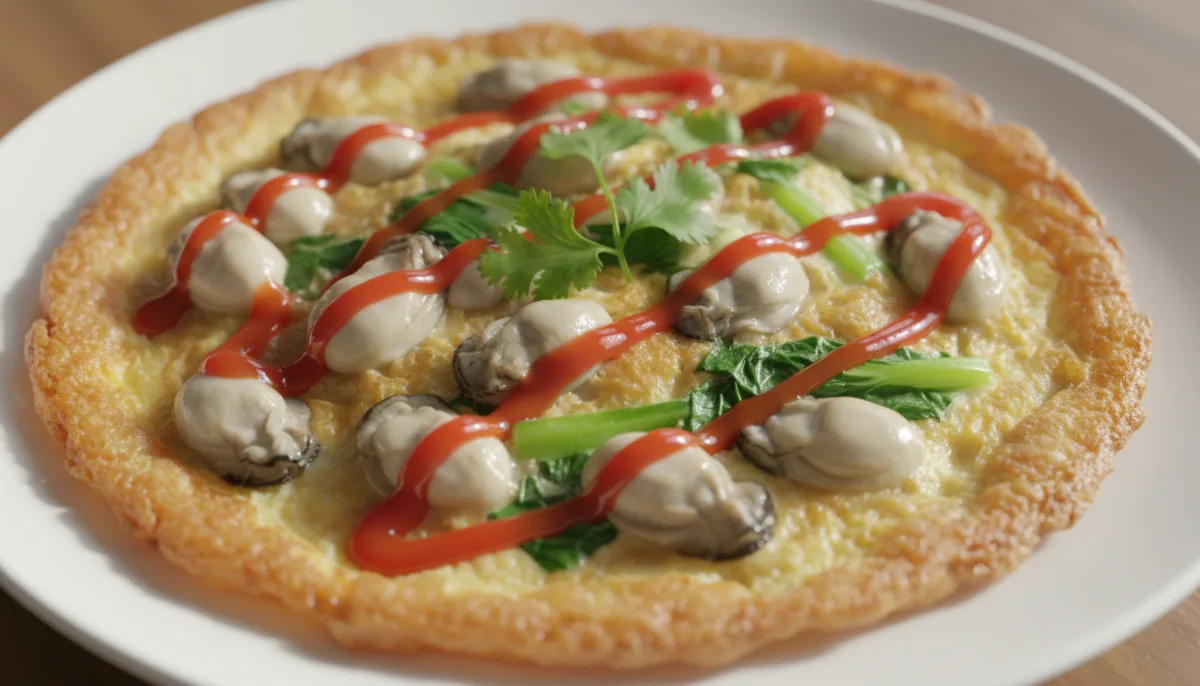
Taiwanese Oyster Omelet with Sweet Chili Sauce

This classic Taiwanese Oyster Omelet, known as "Orh Ah Jian," features plump oysters cooked in a savory egg and starch batter, served with a vibrant sweet chili sauce. It's a beloved street food that's surprisingly easy to recreate at home for a satisfying lunch.

✎
HOW TO MAKE IT

Let's cook.

01

In a small bowl, whisk together the tapioca starch and water until smooth. This is your starch slurry.

02

In a separate bowl, beat the eggs with soy sauce and white pepper. Set aside.

03

Heat 1 tablespoon of cooking oil in a large non-stick skillet over medium-high heat. Add the drained oysters and cook for 1-2 minutes until slightly plumped.

04

Pour half of the starch slurry over the oysters, spreading it evenly. Immediately pour half of the beaten egg mixture over the starch layer.

05

Add half of the chopped baby bok choy to the skillet. Cook for 2-3 minutes until the edges are crispy and the omelet is set. Carefully flip the omelet and cook for another 1-2 minutes until golden brown.

06

Slide the omelet onto a serving plate. Repeat steps 3-5 for the second omelet.

07

Serve immediately with sweet chili sauce and a sprinkle of fresh cilantro.

About This Recipe

This classic Taiwanese Oyster Omelet, known as "Orh Ah Jian," features plump oysters cooked in a savory egg and starch batter, served with a vibrant sweet chili sauce. It's a beloved street food that's surprisingly easy to recreate at home for a satisfying lunch.
Taiwanese Oyster Omelet with Sweet Chili Sauce
Simple ingredients.
Big flavor.
✦
♨

Chef's Tips

Ensure your skillet is hot before adding the oysters to get a nice sear. Don't overcrowd the pan; cook the omelets one at a time for best results. For extra crispiness, use a slightly higher heat and cook a bit longer on each side.
↔

Easy Substitutions

If fresh oysters are unavailable, you can use small shrimp or even thinly sliced mushrooms for a vegetarian version. Baby spinach or watercress can be used instead of bok choy. For a spicier kick, add a dash of sriracha to the sweet chili sauce.
▱

Storage & Reheating

Leftover omelet can be stored in an airtight container in the refrigerator for up to 1 day. Reheat gently in a non-stick skillet over medium heat until warmed through, or in a microwave for 30-60 seconds.

Serving Suggestions

Serve this omelet as a standalone lunch, or pair it with a simple side of steamed white rice. It also makes a fantastic appetizer for a larger meal. A cold glass of Taiwanese bubble tea would complement it perfectly. For a more complete meal, consider a light cucumber salad on the side.

Common Mistakes

Overcooking the oysters can make them tough and rubbery; cook them just until plump. Not draining the oysters properly can lead to a watery omelet. Using too little oil can cause the omelet to stick to the pan. Not having the skillet hot enough will prevent the omelet from getting crispy edges. Overcrowding the pan will steam the omelet instead of frying it, resulting in a less desirable texture.

Frequently Asked Questions

Can I use frozen oysters?

Yes, but ensure they are fully thawed and thoroughly drained before cooking to prevent excess moisture.


What kind of sweet chili sauce should I use?

Any good quality bottled Thai or Asian sweet chili sauce will work well.

Can I prepare the batter ahead of time?

You can mix the starch slurry and egg mixture separately, but combine them just before cooking for the best texture.

Is this dish spicy?

The omelet itself is not spicy, but the sweet chili sauce adds a mild, pleasant heat. You can adjust the spice level by choosing a milder or hotter sauce.

What is tapioca starch?

Tapioca starch is a gluten-free flour derived from cassava root, known for its thickening properties and ability to create a chewy texture.
MORE TO KNOW
The key to a great Taiwanese Oyster Omelet is the tapioca starch slurry, which gives the omelet its characteristic chewy and slightly gelatinous texture. This texture contrasts beautifully with the crispy edges and tender oysters. Mastering the flip is also crucial; a wide, thin spatula can be very helpful. If you're nervous about flipping, you can gently slide the omelet onto a plate and then invert it back into the pan to cook the other side.
WHAT PEOPLE THINK

Reviews

☆

No reviews yet

Be the first person to review this recipe.

SHARE YOUR THOUGHTS

Made this recipe?

Tell us how it turned out.

Your review will be checked before appearing publicly.