Home › Recipes › Breakfast ›Taiwanese ›Taiwanese Congee with Pork Floss and Preserved Duck Egg
BREAKFAST

Taiwanese Congee with Pork Floss and Preserved Duck Egg

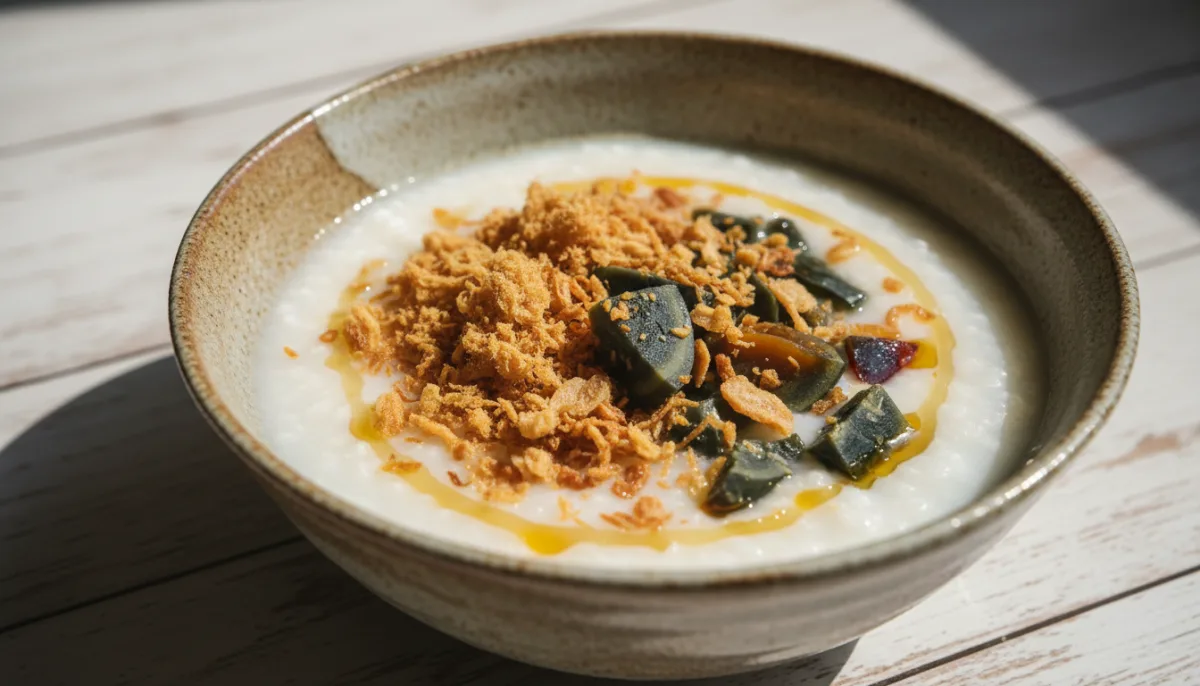
Experience the heartwarming comfort of this traditional Taiwanese congee, a beloved breakfast dish. This recipe guides you through creating a perfectly silky rice porridge, generously adorned with savory pork floss and the distinctive, creamy richness of preserved duck egg. It's a truly satisfying and flavorful way to begin your day.

✎
HOW TO MAKE IT

Let's cook.

01

Combine the rinsed short-grain white rice and 8 cups of water in a large pot. Bring the mixture to a boil over high heat.

02

Once boiling, reduce the heat to low, cover the pot, and simmer for 40 minutes, stirring occasionally to prevent sticking. The rice should break down into a thick, creamy porridge.

03

Stir in the 1/2 teaspoon of salt. If the congee is too thick, add a little more hot water until it reaches your desired consistency.

04

Divide the hot congee among four serving bowls.

05

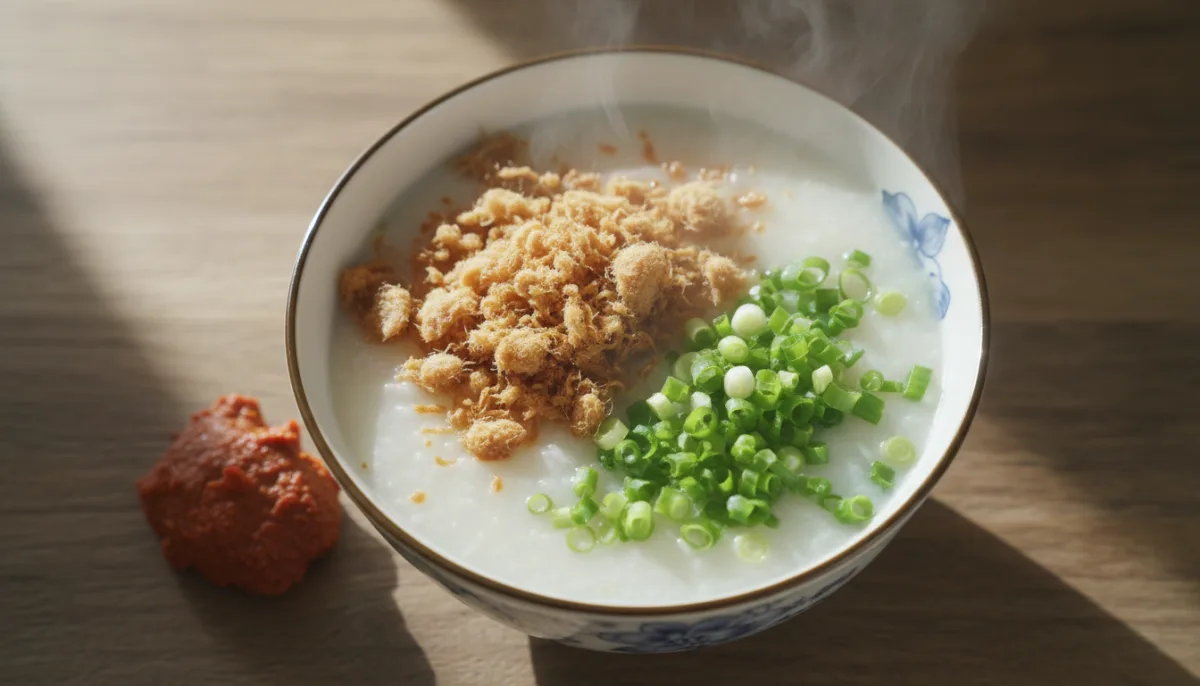
Top each bowl generously with diced preserved duck eggs and pork floss.

06

Garnish with fried shallots and a drizzle of sesame oil before serving immediately.

About This Recipe

Experience the heartwarming comfort of this traditional Taiwanese congee, a beloved breakfast dish. This recipe guides you through creating a perfectly silky rice porridge, generously adorned with savory pork floss and the distinctive, creamy richness of preserved duck egg. It's a truly satisfying and flavorful way to begin your day.
Taiwanese Congee with Pork Floss and Preserved Duck Egg
Simple ingredients.
Big flavor.
✦
♨

Chef's Tips

For an even creamier congee, soak the rice in water for 30 minutes before cooking. This helps the grains break down more easily. Adjust the amount of water during cooking to achieve your preferred thickness.
↔

Easy Substitutions

If pork floss is unavailable, shredded cooked chicken or dried shredded scallops can be used for a similar savory texture. For a vegetarian option, omit the pork floss and add sautéed mushrooms or crumbled firm tofu.
▱

Storage & Reheating

Leftover congee can be stored in an airtight container in the refrigerator for up to 3 days. It will thicken considerably upon cooling. Reheat gently on the stovetop with a splash of water or broth to restore its creamy consistency.

Serving Suggestions

Serve this Taiwanese congee with a side of pickled daikon radish for a refreshing contrast, a dash of white pepper for a subtle kick, or a few drops of soy sauce for extra savoriness. A small plate of stir-fried greens also pairs well.

Common Mistakes

1. Not rinsing the rice: This can lead to a gummy congee. Always rinse rice until the water runs clear. 2. Not stirring enough: The rice can stick and burn at the bottom of the pot, creating an unpleasant taste. Stir every 10-15 minutes. 3. Over-salting: Pork floss and preserved eggs are already salty. Add salt gradually and taste before adding more. 4. Cooking at too high a heat: This can cause the congee to boil over or cook unevenly. Maintain a low simmer. 5. Not adjusting consistency: Congee thickens as it cools. Always adjust with hot water when reheating or if it becomes too thick during cooking.

Frequently Asked Questions

Can I use brown rice for congee?

While you can, brown rice will take significantly longer to cook and achieve the desired creamy texture. Short-grain white rice is traditional for its ability to break down easily.


What is pork floss?

Pork floss (rousong) is a dried, fluffy, savory pork product with a cotton-like texture, commonly used as a topping in Asian cuisine.

How do I peel a preserved duck egg easily?

Gently tap the entire surface of the egg to crack the shell, then peel under running water. The membrane can sometimes stick, so patience helps.

Can I make this congee in a slow cooker?

Yes, combine rice and water in a slow cooker and cook on low for 4-6 hours, or until creamy. Stir occasionally.

Is congee only for breakfast?

While popular for breakfast, congee is a versatile dish enjoyed at any time of day, especially when feeling unwell or for a light meal.
MORE TO KNOW
Achieving the perfect congee consistency is key. The goal is a smooth, almost velvety porridge where the rice grains have mostly disintegrated. Stirring occasionally during the simmering process is crucial to prevent the rice from sticking to the bottom of the pot and burning. If you find your congee is too thin, simply simmer it uncovered for a few more minutes until it thickens. If it's too thick, gradually stir in hot water or chicken broth until it reaches your desired texture. The preserved duck egg, also known as century egg, adds a unique umami depth and creamy texture that is characteristic of this dish. Don't be intimidated by its appearance; it's a delightful component.
WHAT PEOPLE THINK

Reviews

☆

No reviews yet

Be the first person to review this recipe.

SHARE YOUR THOUGHTS

Made this recipe?

Tell us how it turned out.

Your review will be checked before appearing publicly.