Home › Recipes › Dinner ›Sichuan ›Sichuan Twice-Cooked Pork (Hui Guo Rou) with Leeks and Broad Bean Paste
DINNER

Sichuan Twice-Cooked Pork (Hui Guo Rou) with Leeks and Broad Bean Paste

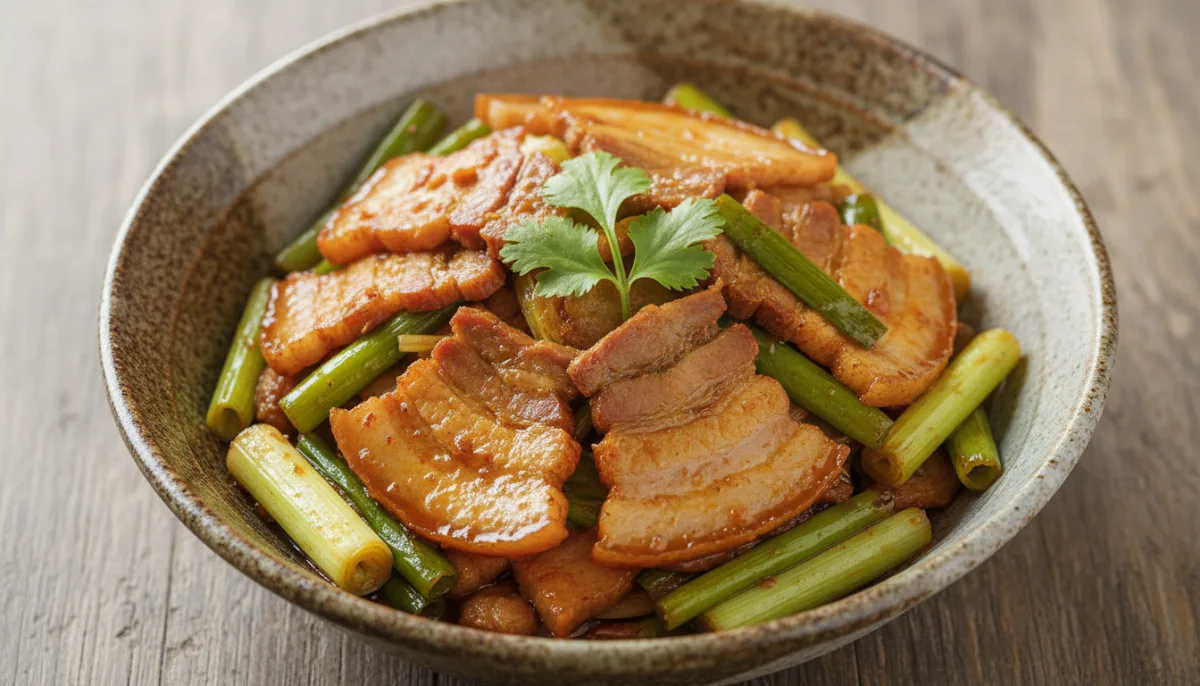
Experience the authentic flavors of Sichuan with this classic twice-cooked pork dish. Tender pork belly is simmered, sliced, then stir-fried with leeks and a savory, spicy broad bean paste for a truly satisfying meal.

✎
HOW TO MAKE IT

Let's cook.

01

Place the pork belly in a pot with enough cold water to cover it. Add the sliced ginger. Bring to a boil over high heat, then reduce heat to medium-low and simmer for 20 minutes, or until the pork is just cooked through and tender.

02

Remove the pork belly from the pot, reserving the cooking liquid. Let the pork cool completely, then slice it into thin, 1/8-inch thick pieces.

03

Heat 2 tablespoons of vegetable oil in a wok or large skillet over medium-high heat. Add the sliced pork belly and stir-fry for 3-5 minutes, or until the edges start to curl and turn golden brown, rendering some of the fat.

04

Push the pork to one side of the wok. Add the minced garlic and Sichuan broad bean paste to the empty side of the wok. Stir-fry for 1 minute until fragrant and the oil turns red.

05

If using, add the sweet bean paste and sugar, stirring to combine with the broad bean paste and garlic. Then, mix everything together with the pork.

06

Add the sliced leeks and Shaoxing wine to the wok. Stir-fry for 2-3 minutes over medium-high heat, or until the leeks are slightly softened but still retain some crispness.

07

Serve immediately with steamed white rice.

About This Recipe

Experience the authentic flavors of Sichuan with this classic twice-cooked pork dish. Tender pork belly is simmered, sliced, then stir-fried with leeks and a savory, spicy broad bean paste for a truly satisfying meal.
Sichuan Twice-Cooked Pork (Hui Guo Rou) with Leeks and Broad Bean Paste
Simple ingredients.
Big flavor.
✦
♨

Chef's Tips

For extra flavor, you can add a few dried chilies or a pinch of Sichuan peppercorns along with the broad bean paste. Ensure the pork belly is very cold before slicing; this makes it easier to get thin, even pieces.
↔

Easy Substitutions

If pork belly is unavailable, a leaner cut like pork shoulder can be used, though it won't render as much fat. Napa cabbage or bell peppers can be used instead of leeks for a different vegetable texture. Shaoxing wine can be substituted with dry sherry or chicken broth.
▱

Storage & Reheating

Store leftover Twice-Cooked Pork in an airtight container in the refrigerator for up to 3 days. Reheat gently in a wok or microwave until warmed through.

Serving Suggestions

Serve this Sichuan Twice-Cooked Pork with a side of plain steamed white rice to soak up the delicious sauce. A simple cucumber salad or a light clear soup would complement the richness of the dish. You can also wrap it in lettuce leaves for a fresh, crunchy bite.

Common Mistakes

Overcooking the pork belly during the initial simmer can make it tough; aim for just tender. Not rendering enough fat from the pork belly in the stir-fry can result in a greasy dish. Overcooking the leeks will make them mushy; they should remain slightly crisp. Using too much broad bean paste can make the dish overly salty; taste and adjust.

Frequently Asked Questions

What is Sichuan broad bean paste?

Sichuan broad bean paste (doubanjiang) is a fermented paste made from broad beans, chili peppers, and other spices. It's a key ingredient in Sichuan cuisine, providing a savory, spicy, and umami flavor.


Can I make this dish less spicy?

Yes, you can reduce the amount of Sichuan broad bean paste or choose a milder brand. You can also omit any additional dried chilies or Sichuan peppercorns.

Why is it called 'twice-cooked'?

The pork is first simmered in water, then sliced and stir-fried a second time with other ingredients. This two-step cooking process gives the dish its name and unique texture.
MORE TO KNOW
Hui Guo Rou, meaning 'twice-cooked meat,' is a cornerstone of Sichuan cuisine, celebrated for its complex flavors and textures. The 'twice-cooked' method is crucial: first, the pork is simmered to tenderize it and infuse it with initial flavor, then it's sliced and stir-fried to crisp the edges and render fat, creating a rich base for the aromatic broad bean paste. This technique ensures both tenderness and a satisfying chew, making it a beloved dish for its depth of flavor and textural contrast.
WHAT PEOPLE THINK

Reviews

☆

No reviews yet

Be the first person to review this recipe.

SHARE YOUR THOUGHTS

Made this recipe?

Tell us how it turned out.

Your review will be checked before appearing publicly.