Home › Recipes › Dinner ›Sichuan ›Spicy Sichuan Kung Pao Shrimp with Peanuts
DINNER

Spicy Sichuan Kung Pao Shrimp with Peanuts

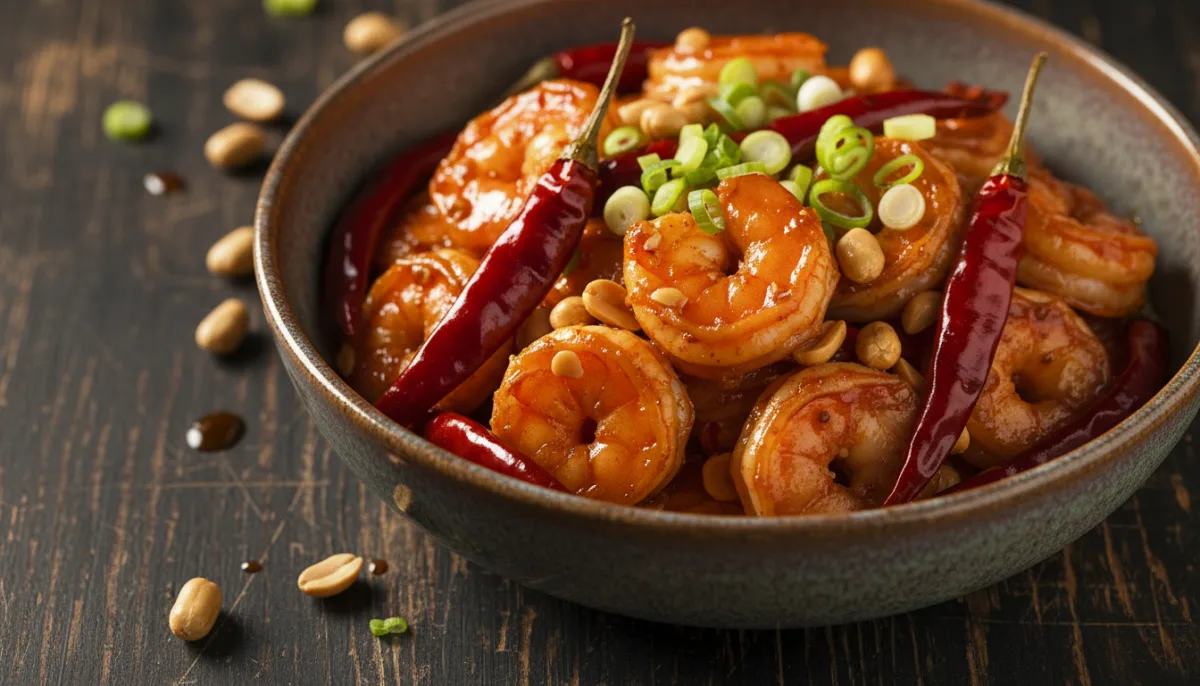
Experience the bold and exciting flavors of Sichuan cuisine with this Kung Pao Shrimp recipe. Plump, juicy shrimp are quickly stir-fried with a tantalizing blend of sweet, savory, and spicy sauces, then tossed with crunchy peanuts and aromatic dried chilies for a truly unforgettable meal.

✎
HOW TO MAKE IT

Let's cook.

01

In a medium bowl, combine the shrimp with 1 tablespoon of soy sauce, Shaoxing wine, and cornstarch. Toss to coat and set aside to marinate for 10 minutes.

02

Prepare the sauce by whisking together the remaining 1 tablespoon of soy sauce, black vinegar, and sugar in a small bowl. Set aside.

03

Heat 1 tablespoon of vegetable oil in a large wok or skillet over medium-high heat. Add the peanuts and dried red chilies. Stir-fry for 1-2 minutes until the chilies are fragrant and the peanuts are lightly toasted. Remove from the wok and set aside.

04

Add the remaining 1 tablespoon of vegetable oil to the wok. Add the marinated shrimp and stir-fry for 2-3 minutes until they turn pink and opaque. Remove the shrimp from the wok and set aside.

05

Add the minced garlic, minced ginger, and Sichuan peppercorns (if using) to the wok. Stir-fry for 30 seconds until fragrant.

06

Pour the prepared sauce into the wok and bring to a simmer, stirring constantly until it thickens slightly, about 1 minute.

07

Return the cooked shrimp, toasted peanuts, and dried chilies to the wok. Toss everything together quickly to coat with the sauce, about 1 minute.

08

Serve immediately over steamed rice.

About This Recipe

Experience the bold and exciting flavors of Sichuan cuisine with this Kung Pao Shrimp recipe. Plump, juicy shrimp are quickly stir-fried with a tantalizing blend of sweet, savory, and spicy sauces, then tossed with crunchy peanuts and aromatic dried chilies for a truly unforgettable meal.
Spicy Sichuan Kung Pao Shrimp with Peanuts
Simple ingredients.
Big flavor.
✦
♨

Chef's Tips

For extra heat, you can add a pinch of red pepper flakes along with the dried chilies. Adjust the amount of dried chilies to your preferred spice level. Using fresh, good quality shrimp makes a big difference in this dish.
↔

Easy Substitutions

Chicken or firm tofu can be used instead of shrimp. If you don't have Shaoxing wine, dry sherry or even chicken broth can be substituted. Rice vinegar can replace black vinegar in a pinch, though the flavor will be slightly different.
▱

Storage & Reheating

Store any leftover Kung Pao Shrimp in an airtight container in the refrigerator for up to 2 days. Reheat gently in a skillet over medium heat or in the microwave until warmed through.

Serving Suggestions

Serve this Sichuan Kung Pao Shrimp with fluffy steamed jasmine rice, a side of stir-fried bok choy, or a light cucumber salad to balance the richness and spice.

Common Mistakes

Overcooking the shrimp will make them rubbery; cook just until pink and opaque. Not toasting the peanuts and chilies enough can result in a less flavorful dish. Overcrowding the wok can lead to steamed, rather than stir-fried, ingredients. Forgetting to prepare the sauce ahead of time can make the cooking process rushed and less efficient. Using too much cornstarch can make the sauce overly thick and gloopy.

Frequently Asked Questions

Can I make this dish less spicy?

Yes, simply reduce the number of dried red chilies and omit the Sichuan peppercorns if you prefer a milder flavor.


What is Shaoxing wine?

Shaoxing wine is a traditional Chinese rice wine used in cooking. It adds a distinct savory depth to dishes. Dry sherry is a common substitute.

Can I use raw peanuts?

If using raw peanuts, you'll need to toast them in a dry pan over medium heat for 5-7 minutes, stirring frequently, until golden brown before adding them to the recipe.
MORE TO KNOW
The key to a great Kung Pao dish is the 'mala' flavor profile, which combines the numbing sensation from Sichuan peppercorns with the heat of dried chilies. Toasting the peanuts and chilies separately before adding them back at the end helps maintain their texture and maximizes their flavor. Don't overcrowd your wok when cooking the shrimp; cook in batches if necessary to ensure they sear properly and don't steam.
WHAT PEOPLE THINK

Reviews

☆

No reviews yet

Be the first person to review this recipe.

SHARE YOUR THOUGHTS

Made this recipe?

Tell us how it turned out.

Your review will be checked before appearing publicly.