Home › Recipes › Dinner ›Malaysian ›Steamed Fish with Ginger and Fermented Bean Paste (Malaysian Style)
DINNER

Steamed Fish with Ginger and Fermented Bean Paste (Malaysian Style)

Experience the vibrant flavors of Malaysia with this exquisite steamed fish recipe. Delicate white fish is gently steamed to perfection, then adorned with fragrant ginger and a savory fermented bean paste, creating a light yet deeply satisfying meal that's both healthy and bursting with authentic taste.

✎
HOW TO MAKE IT

Let's cook.

01

Rinse the fish fillet and pat it dry with paper towels. Place the fish on a heatproof plate that fits inside your steamer.

02

In a small bowl, combine the fermented bean paste, light soy sauce, sesame oil, and water. Mix well to form a sauce.

03

Spread half of the julienned ginger over the fish. Pour the prepared sauce evenly over the fish.

04

Bring water to a boil in a steamer. Carefully place the plate with the fish into the steamer. Cover and steam for 10-15 minutes, or until the fish is opaque and flakes easily with a fork.

05

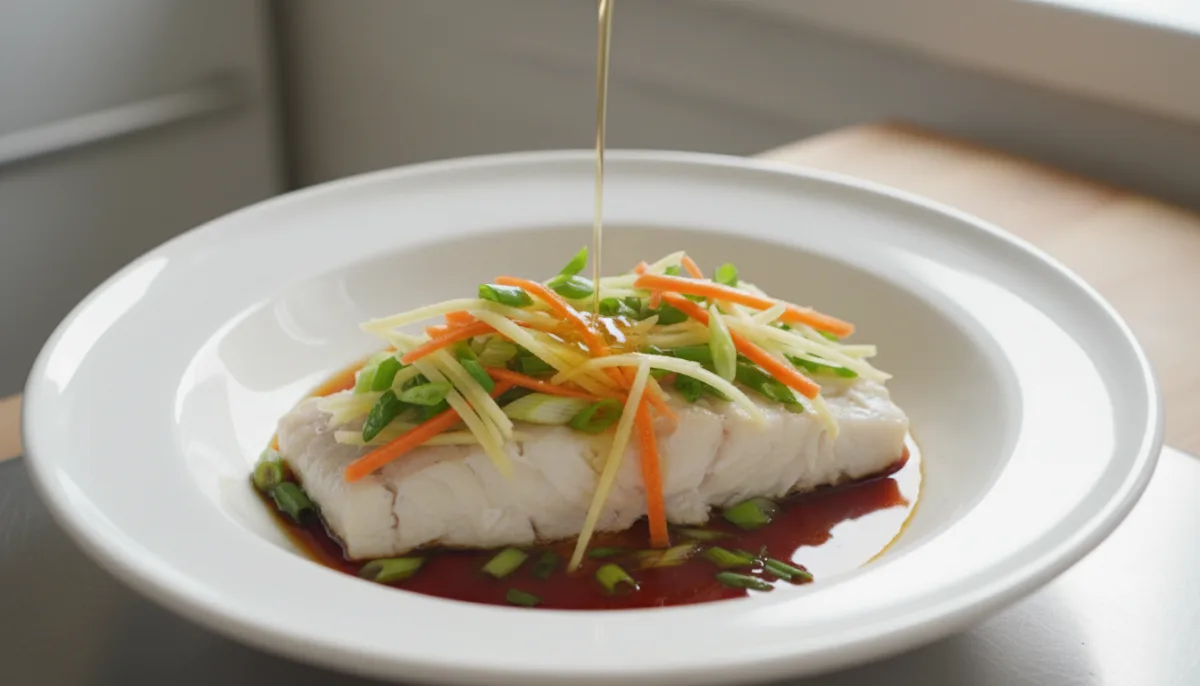
Once cooked, carefully remove the plate from the steamer. Garnish the steamed fish with the remaining julienned ginger and sliced scallions.

06

Heat 1 tablespoon of cooking oil in a small pan over medium-high heat until shimmering. Carefully pour the hot oil over the scallions and ginger on the fish. Serve immediately.

About This Recipe

Experience the vibrant flavors of Malaysia with this exquisite steamed fish recipe. Delicate white fish is gently steamed to perfection, then adorned with fragrant ginger and a savory fermented bean paste, creating a light yet deeply satisfying meal that's both healthy and bursting with authentic taste.
Steamed Fish with Ginger and Fermented Bean Paste (Malaysian Style)
Simple ingredients.
Big flavor.
✦
♨

Chef's Tips

For best results, use a fresh, firm white fish. The hot oil drizzle at the end is crucial for releasing the aromatics and adding a final layer of flavor and sizzle.
↔

Easy Substitutions

You can substitute the white fish with other firm white fish like halibut or barramundi. If you don't have fermented bean paste, you can use a mixture of miso paste and a pinch of salt, though the flavor profile will be slightly different.
▱

Storage & Reheating

Leftover steamed fish can be stored in an airtight container in the refrigerator for up to 1 day. Reheat gently in a steamer or microwave, but note that the texture may change slightly.

Serving Suggestions

Serve this Malaysian Steamed Fish with Ginger and Fermented Bean Paste with a side of steamed white rice to soak up the delicious sauce. A simple stir-fried green vegetable like bok choy or gai lan would complement the meal perfectly. You could also offer a small bowl of chili padi (bird's eye chilies) in soy sauce for those who prefer extra heat.

Common Mistakes

Overcooking the fish is the most common mistake; it leads to dry, tough fish. Ensure your steamer water is boiling before adding the fish. Using too much fermented bean paste can make the dish overly salty, so measure carefully. Not patting the fish dry can result in a watery sauce. Forgetting the hot oil drizzle will miss out on a key aromatic and textural element.

Frequently Asked Questions

Can I use frozen fish for this recipe?

Yes, you can use frozen fish, but make sure to thaw it completely and pat it very dry before steaming to prevent excess water.


What is fermented bean paste?

Fermented bean paste, or taucheo, is a savory condiment made from fermented soybeans. It has a distinct umami flavor and is a staple in many Southeast Asian cuisines.

How do I know when the fish is cooked?

The fish is cooked when it turns opaque throughout and flakes easily with a fork. The cooking time will vary slightly depending on the thickness of your fillet.

Can I prepare the sauce ahead of time?

Yes, you can mix the sauce ingredients ahead of time and store it in the refrigerator. Add it to the fish just before steaming.
MORE TO KNOW
Steaming is a fantastic cooking method for fish as it keeps the fish moist and tender. The key to perfectly steamed fish is not to overcook it. Start checking for doneness at the 10-minute mark. The fish should be opaque throughout and flake easily. Overcooked fish will be dry and rubbery. The hot oil drizzle at the end is a classic technique in Asian steamed fish dishes, designed to 'bloom' the fresh aromatics like ginger and scallions, releasing their full fragrance and adding a delightful sizzle and sheen to the dish.
WHAT PEOPLE THINK

Reviews

☆

No reviews yet

Be the first person to review this recipe.

SHARE YOUR THOUGHTS

Made this recipe?

Tell us how it turned out.

Your review will be checked before appearing publicly.