Home › Recipes › Dessert ›Filipino ›Filipino Sapin-Sapin (Layered Sticky Rice Cake)
DESSERT

Filipino Sapin-Sapin (Layered Sticky Rice Cake)

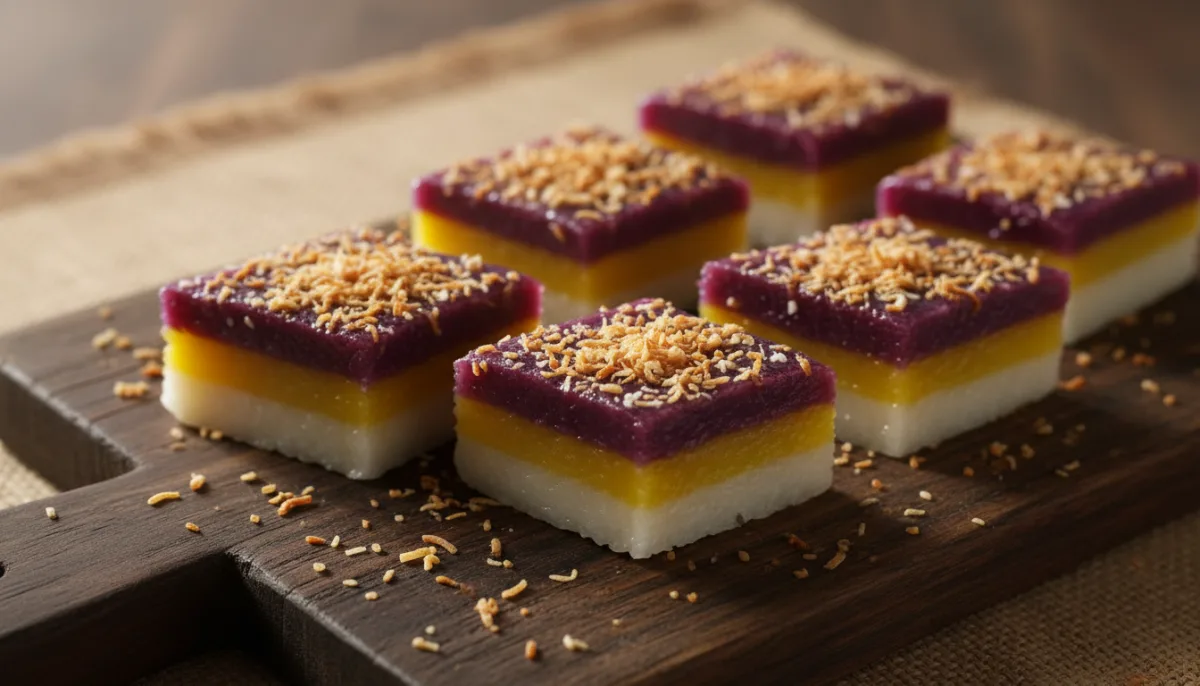
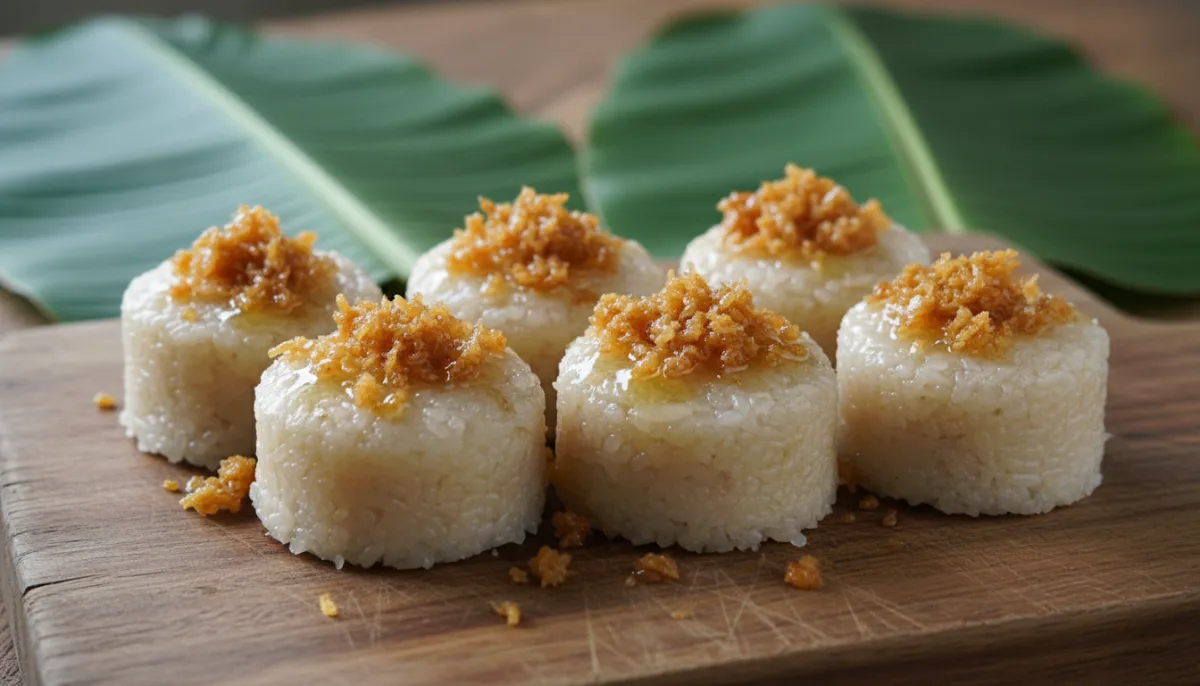
Sapin-Sapin is a vibrant and delicious Filipino layered sticky rice cake, known for its distinct colors and flavors. This recipe guides you through creating the classic purple yam, jackfruit, and plain coconut layers, topped with toasted coconut flakes.

✎
HOW TO MAKE IT

Let's cook.

01

Lightly grease an 8-inch round or square steaming pan. Prepare a steamer by filling it with water and bringing it to a boil over high heat.

02

In a large bowl, combine the glutinous rice flour, rice flour, coconut milk, granulated sugar, and salt. Whisk until smooth and no lumps remain. Divide the batter evenly into three separate bowls.

03

To the first bowl, add the ube halaya and mix well until the batter is uniformly purple. To the second bowl, add the finely diced or pureed sweetened jackfruit and mix well. Leave the third bowl plain.

04

Pour the ube (purple yam) batter into the prepared steaming pan. Place the pan in the hot steamer, cover, and steam for 15 minutes over medium-high heat, until the layer is set.

05

Carefully pour the jackfruit batter over the ube layer. Cover and steam for another 15 minutes, until this layer is also set.

06

Finally, pour the plain batter over the jackfruit layer. Cover and steam for a final 20 minutes, or until a toothpick inserted into the center comes out clean.

07

Remove the pan from the steamer and let the Sapin-Sapin cool completely at room temperature for at least 1 hour before slicing. This is crucial for clean cuts and proper texture.

08

Once cooled, carefully unmold the Sapin-Sapin onto a serving plate. Slice into desired shapes, such as squares or diamonds, and sprinkle generously with toasted coconut flakes before serving.

About This Recipe

Sapin-Sapin is a vibrant and delicious Filipino layered sticky rice cake, known for its distinct colors and flavors. This recipe guides you through creating the classic purple yam, jackfruit, and plain coconut layers, topped with toasted coconut flakes.
Filipino Sapin-Sapin (Layered Sticky Rice Cake)
Simple ingredients.
Big flavor.
✦
♨

Chef's Tips

Ensure each layer is fully set before adding the next to prevent colors from bleeding. Cooling completely is essential for a firm, sliceable texture. For extra flavor, you can add a few drops of ube extract to the purple layer and a tiny bit of yellow food coloring to the jackfruit layer for more vibrant colors.
↔

Easy Substitutions

If ube halaya is unavailable, you can use purple food coloring and a touch of vanilla extract for the purple layer, though the flavor will differ. For the jackfruit layer, mango puree can be used as an alternative. Toasted desiccated coconut can be used if flakes are not available.
▱

Storage & Reheating

Store leftover Sapin-Sapin in an airtight container at room temperature for up to 2 days, or in the refrigerator for up to 5 days. Reheat gently in a steamer for a few minutes to restore its soft texture.

Serving Suggestions

Serve Filipino Sapin-Sapin as a delightful dessert after a meal, as a sweet snack with coffee or tea, or as part of a festive spread for special occasions. It's also wonderful packed in individual portions for lunchboxes.

Common Mistakes

Not cooling the Sapin-Sapin completely before slicing, which results in a sticky, messy cake. Overcooking the layers, leading to a rubbery texture. Not mixing the batter thoroughly, causing lumps. Adding too much liquid, making the cake too soft. Not greasing the pan properly, making it difficult to unmold.

Frequently Asked Questions

Can I make Sapin-Sapin ahead of time?

Yes, you can make it a day in advance and store it as directed.

What if I don't have a steamer?

You can create a makeshift steamer by placing a heat-proof rack or trivet in a large pot with a lid, ensuring the water level is below the rack.

Can I use fresh ube?

Yes, you can boil and mash fresh ube, then sweeten it to make your own halaya for a more authentic flavor.

Why is my Sapin-Sapin too soft?

This could be due to too much liquid in the batter or not enough steaming time for each layer to set properly.

Can I freeze Sapin-Sapin?

While possible, freezing can alter the texture, making it less chewy upon thawing. It's best consumed fresh or refrigerated.
MORE TO KNOW
The key to a beautiful Sapin-Sapin lies in the patience between layers. Each layer needs to be firm enough to support the next without mixing, but not overcooked to become tough. The steaming process ensures a moist and chewy texture. Using good quality glutinous rice flour and full-fat coconut milk will yield the best results. The traditional method often involves banana leaves to line the pan, which imparts a subtle aroma; if you have access to them, feel free to use them instead of greasing the pan directly.
WHAT PEOPLE THINK

Reviews

☆

No reviews yet

Be the first person to review this recipe.

SHARE YOUR THOUGHTS

Made this recipe?

Tell us how it turned out.

Your review will be checked before appearing publicly.