Home › Recipes › Dessert ›Filipino ›Classic Filipino Bibingka with Salted Egg and Cheese
DESSERT

Classic Filipino Bibingka with Salted Egg and Cheese

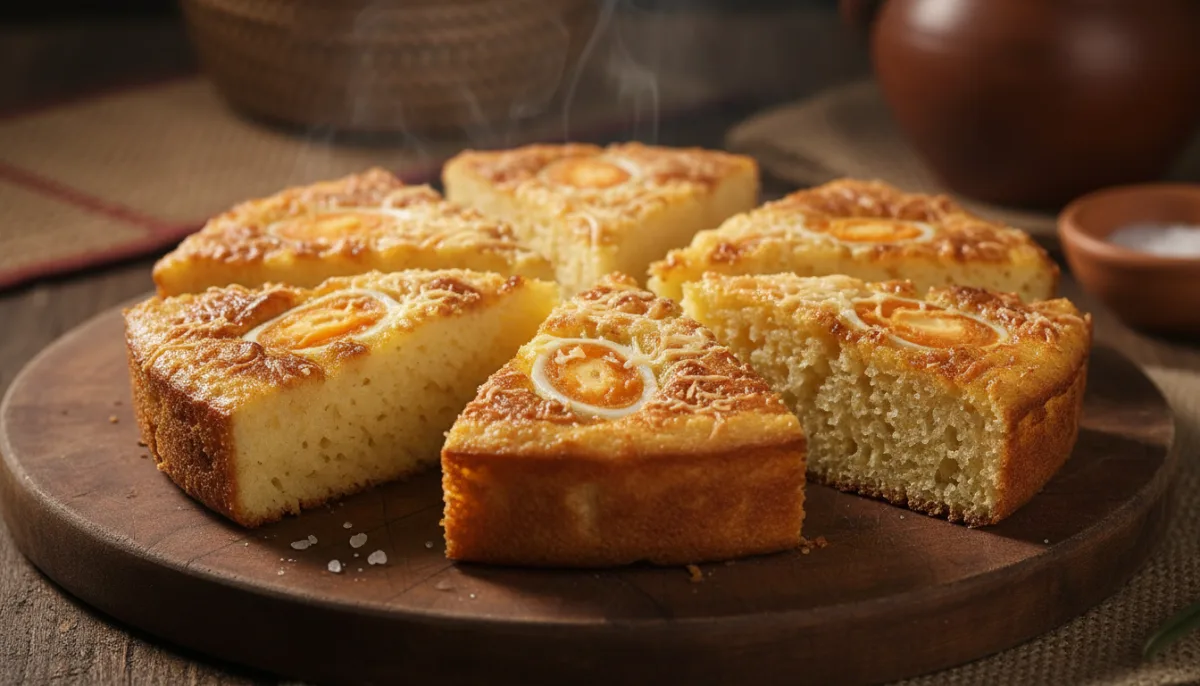
Experience the heartwarming tradition of Filipino bibingka with this authentic recipe. This beloved rice cake offers a delightful interplay of sweet and savory notes, featuring a tender, subtly chewy base crowned with slices of salted duck egg and a generous sprinkle of grated cheese. It's a cherished treat, especially during festive seasons, ideal for sharing and creating lasting memories.

✎
HOW TO MAKE IT

Let's cook.

01

In a large bowl, combine the rice flour, sugar, baking powder, and salt. Whisk well to ensure all dry ingredients are evenly distributed.

02

Gradually add the coconut milk and evaporated milk to the dry ingredients, mixing until a smooth batter forms. Ensure there are no lumps.

03

Lightly grease a bibingka pan or a 9-inch round baking pan with butter and line with banana leaves, if available, for authentic flavor. Pour the batter into the prepared pan.

04

Arrange the sliced salted eggs on top of the batter. Bake in a preheated oven at 375°F/190°C for 20 minutes, or until the edges begin to set.

05

Remove the bibingka from the oven and sprinkle the grated cheese evenly over the top. Return to the oven and bake for another 10 minutes, or until the cheese is melted and lightly golden, and a toothpick inserted into the center comes out clean.

06

Once baked, remove from the oven and brush the top generously with melted butter.

07

Let the bibingka cool slightly in the pan before slicing and serving warm.

About This Recipe

Experience the heartwarming tradition of Filipino bibingka with this authentic recipe. This beloved rice cake offers a delightful interplay of sweet and savory notes, featuring a tender, subtly chewy base crowned with slices of salted duck egg and a generous sprinkle of grated cheese. It's a cherished treat, especially during festive seasons, ideal for sharing and creating lasting memories.
Classic Filipino Bibingka with Salted Egg and Cheese
Simple ingredients.
Big flavor.
✦
♨

Chef's Tips

For an extra smoky flavor, you can cook bibingka over charcoal in a traditional clay oven. If using banana leaves, briefly pass them over an open flame to soften them and prevent tearing.
↔

Easy Substitutions

If salted eggs are unavailable, you can use hard-boiled eggs for a milder flavor. For a dairy-free version, use a plant-based milk alternative and omit the cheese, or use a dairy-free cheese substitute.
▱

Storage & Reheating

Store leftover bibingka in an airtight container at room temperature for up to 2 days, or refrigerate for up to 4 days. Reheat gently in a microwave or oven until warm.

Serving Suggestions

Serve warm with a cup of hot coffee or tsokolate (Filipino hot chocolate). Enjoy it as a festive breakfast or a delightful afternoon snack. You can also offer additional grated cheese or a sprinkle of desiccated coconut on the side for those who prefer extra toppings.

Common Mistakes

Overmixing the batter can lead to a tough bibingka; mix just until combined. Not greasing the pan properly can cause sticking, especially with banana leaves. Overbaking will result in a dry bibingka, so watch for the golden-brown top and clean toothpick test. Forgetting to brush with butter at the end will miss out on the glossy finish and added richness.

Frequently Asked Questions

Can I make bibingka ahead of time?

Yes, you can prepare the batter a day in advance and store it in the refrigerator. Just give it a good stir before baking.


What kind of rice flour should I use?

Use glutinous rice flour (also known as sweet rice flour) for the best chewy texture.

Can I add other toppings?

Absolutely! Some variations include shredded coconut, muscovado sugar, or even a drizzle of condensed milk.
MORE TO KNOW
Bibingka is traditionally cooked in clay pots lined with banana leaves, with heat applied from both the top and bottom. This unique cooking method gives it a distinct smoky aroma and a slightly charred bottom. While a conventional oven can replicate the texture, using banana leaves is key to achieving that authentic flavor. The combination of sweet rice flour, rich coconut milk, and the savory toppings creates a balanced and comforting dessert.
WHAT PEOPLE THINK

Reviews

☆

No reviews yet

Be the first person to review this recipe.

SHARE YOUR THOUGHTS

Made this recipe?

Tell us how it turned out.

Your review will be checked before appearing publicly.