Home › Recipes › Lunch ›Taiwanese ›Classic Taiwanese Beef Noodle Soup (Niu Rou Mian)
LUNCH

Classic Taiwanese Beef Noodle Soup (Niu Rou Mian)

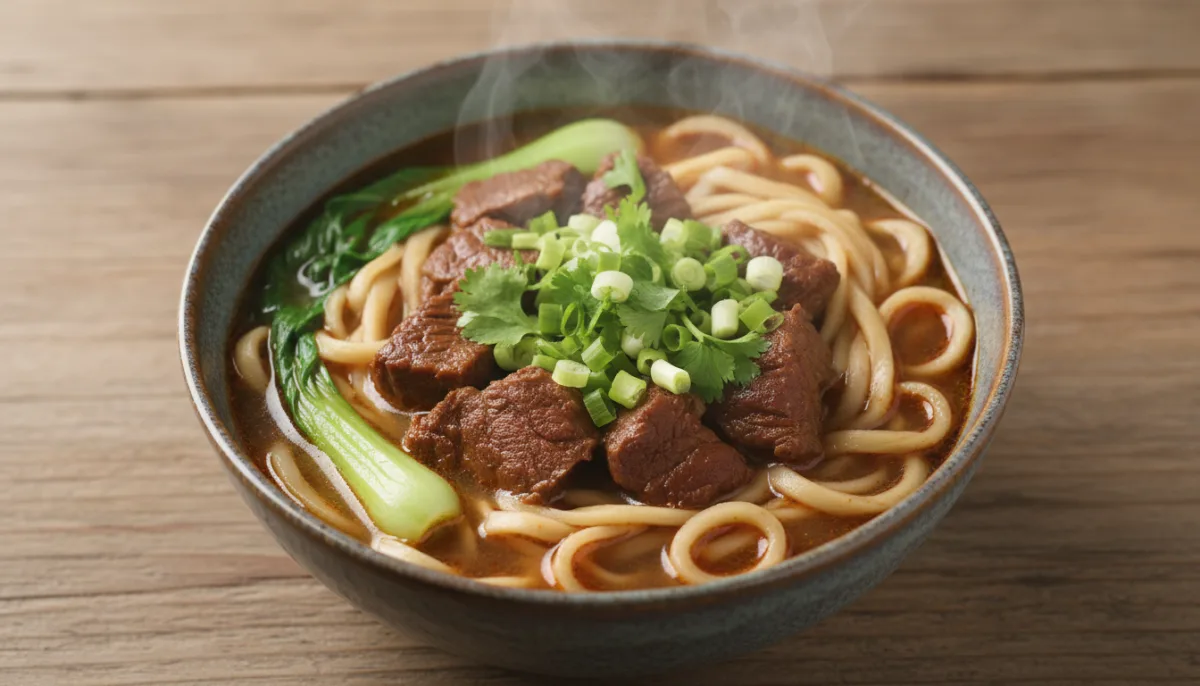
Savor the rich, aromatic broth and tender beef of this classic Taiwanese Beef Noodle Soup. This comforting dish features slow-cooked beef, chewy noodles, and a deeply flavorful broth, perfect for a satisfying lunch.

✎
HOW TO MAKE IT

Let's cook.

01

Blanch the beef shank cubes by placing them in a pot of cold water, bringing it to a boil over high heat, and simmering for 5 minutes. Drain and rinse the beef thoroughly under cold water to remove any impurities.

02

Heat 2 tablespoons of cooking oil in a large pot or Dutch oven over medium-high heat. Add the blanched beef shank and sear until browned on all sides, about 5-7 minutes. Remove the beef and set aside.

03

In the same pot, add the smashed garlic cloves and sliced ginger. Sauté for 1 minute until fragrant. Return the seared beef to the pot.

04

Pour in the soy sauce, add the rock sugar, and then add 6 cups of beef broth. Bring the mixture to a boil, then reduce the heat to low, cover, and simmer for 2 hours, or until the beef is very tender.

05

While the beef simmers, cook the fresh wheat noodles according to package directions. In the last 2 minutes of noodle cooking, add the quartered bok choy to the boiling water to blanch until tender-crisp. Drain both the noodles and bok choy.

06

To serve, divide the cooked noodles and bok choy among four bowls. Ladle the tender beef and rich broth over the noodles and vegetables. Serve hot.

About This Recipe

Savor the rich, aromatic broth and tender beef of this classic Taiwanese Beef Noodle Soup. This comforting dish features slow-cooked beef, chewy noodles, and a deeply flavorful broth, perfect for a satisfying lunch.
Classic Taiwanese Beef Noodle Soup (Niu Rou Mian)
Simple ingredients.
Big flavor.
✦
♨

Chef's Tips

For an extra layer of flavor, you can add 1 star anise and a small piece of cinnamon stick to the broth during simmering. Adjust the sweetness and saltiness of the broth to your preference by adding more rock sugar or soy sauce.
↔

Easy Substitutions

Beef short ribs can be used instead of beef shank for a richer flavor. For a vegetarian version, use firm tofu and vegetable broth, adjusting cooking times. Fresh ramen noodles or udon noodles can replace wheat noodles.
▱

Storage & Reheating

Leftover beef noodle soup can be stored in an airtight container in the refrigerator for up to 3 days. Store noodles and broth separately if possible to prevent noodles from becoming soggy. Reheat gently on the stovetop or in the microwave.

Serving Suggestions

Serve with a side of pickled mustard greens for a tangy contrast. A drizzle of chili oil can add a spicy kick. Garnish with chopped fresh cilantro or scallions for added freshness and color. Enjoy with a hard-boiled egg for extra protein.

Common Mistakes

1. Not blanching the beef: This leads to a cloudy broth with impurities. Always blanch and rinse the beef thoroughly. 2. Not simmering long enough: The beef needs ample time to become fork-tender. Don't cut the simmering time short. 3. Overcooking noodles: Noodles can become mushy if cooked too long. Cook them just until al dente. 4. Not seasoning the broth properly: Taste and adjust the soy sauce and rock sugar before serving.

Frequently Asked Questions

Can I make this soup in a slow cooker?

Yes, after searing the beef and sautéing aromatics, transfer everything to a slow cooker and cook on low for 6-8 hours or on high for 3-4 hours until beef is tender.


What kind of noodles are best?

Fresh, thick wheat noodles are traditional, but fresh ramen or udon noodles work well too.

Can I freeze the soup?

The broth and beef can be frozen separately for up to 3 months. Thaw overnight in the refrigerator and reheat. Cook fresh noodles when ready to serve.

What is rock sugar?

Rock sugar is a less sweet, crystallized form of sugar often used in Asian cooking to add a subtle sweetness and glossy finish to dishes.
MORE TO KNOW
The key to authentic Taiwanese Beef Noodle Soup lies in the slow simmering process, which allows the beef to become incredibly tender and the broth to develop its deep, complex flavors. Blanching the beef before searing is crucial for a clear, clean broth. Don't rush this step, as it significantly impacts the final taste and appearance of your soup. The rock sugar helps to balance the savory notes of the soy sauce and adds a subtle sweetness that is characteristic of this dish.
WHAT PEOPLE THINK

Reviews

☆

No reviews yet

Be the first person to review this recipe.

SHARE YOUR THOUGHTS

Made this recipe?

Tell us how it turned out.

Your review will be checked before appearing publicly.