Home › Recipes › Breakfast ›Chinese ›Silky Pork and Century Egg Congee (Pidang Shou Rou Zhou)
BREAKFAST

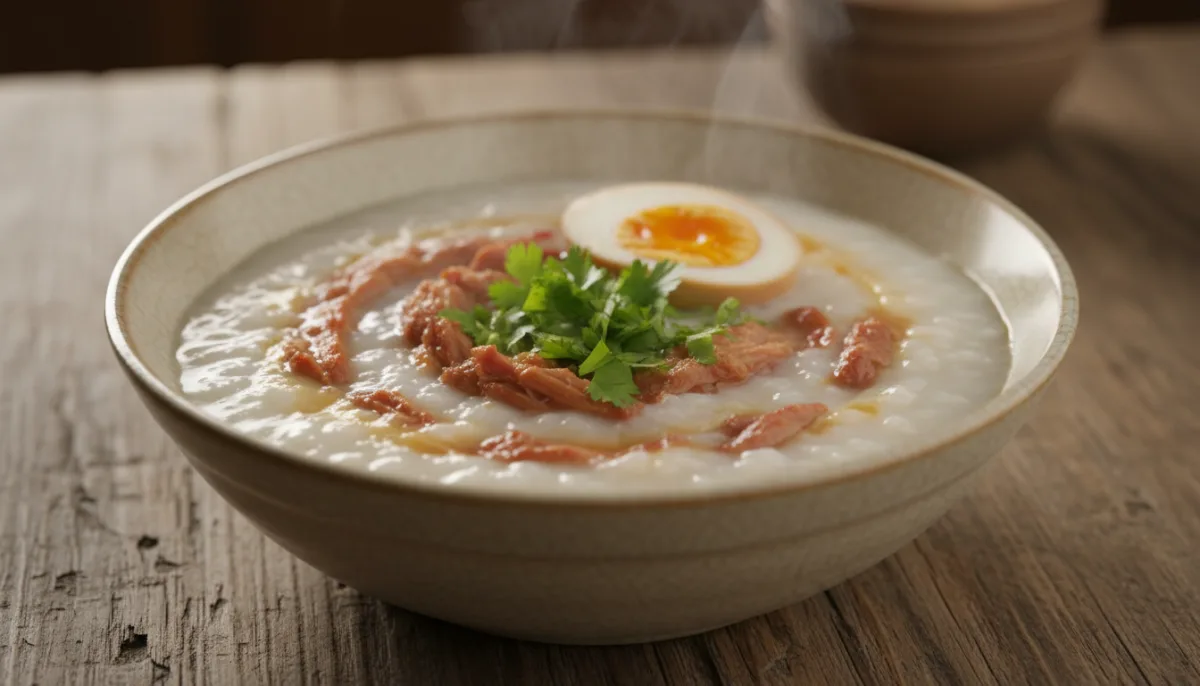
Silky Pork and Century Egg Congee (Pidang Shou Rou Zhou)

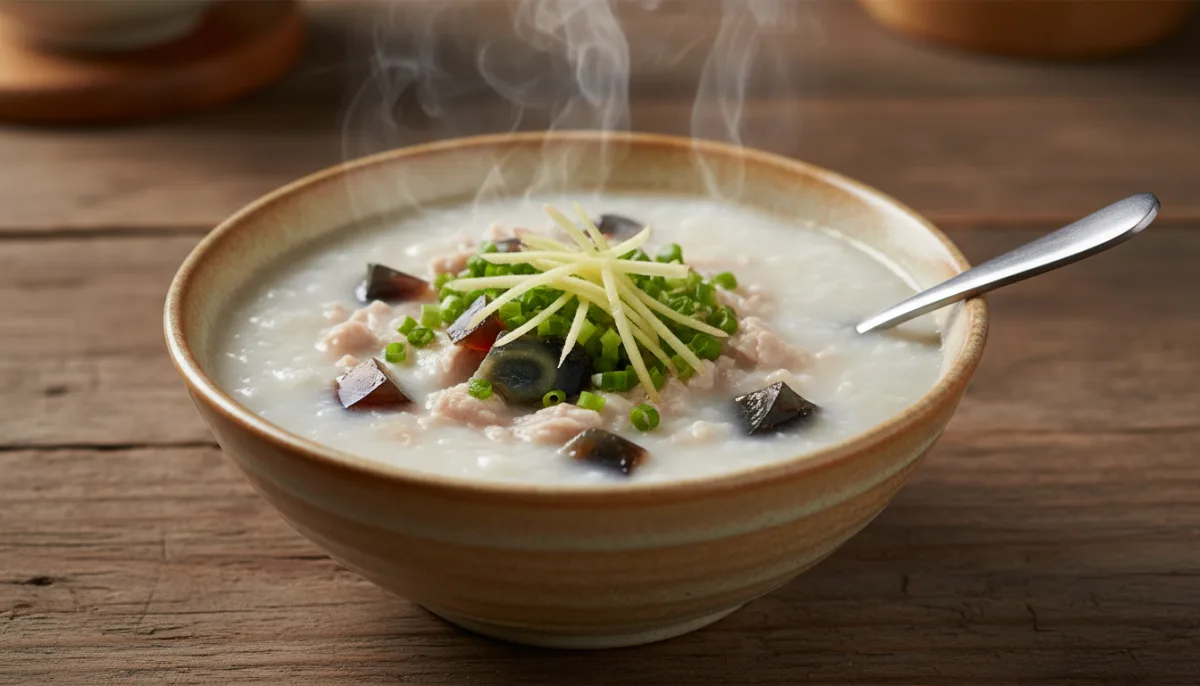
Experience the ultimate comfort in a bowl with this classic Chinese congee. Fragrant ginger, tender shredded pork, and savory century egg are simmered together until the rice grains break down into a wonderfully smooth, creamy porridge. It's a deeply satisfying dish, ideal for a nourishing breakfast, a light lunch, or whenever you crave something truly soothing.

✎
HOW TO MAKE IT

Let's cook.

01

Rinse the rice thoroughly under cold water until the water runs clear. Drain well.

02

In a large pot, combine the rinsed rice and 8 cups of water. Bring to a boil over high heat, then reduce heat to low, cover, and simmer for 45 minutes, stirring occasionally to prevent sticking.

03

While the congee simmers, marinate the sliced pork with 1 tablespoon of soy sauce and 1/4 teaspoon of white pepper. Set aside.

04

After 45 minutes, the rice should have broken down into a thick porridge. Add the marinated pork, diced century eggs, and julienned ginger to the pot. Stir well.

05

Continue to simmer for another 15 minutes, or until the pork is cooked through and tender. Stir occasionally.

06

Season the congee with 1 teaspoon of salt, or to taste. Adjust seasoning as needed.

07

Ladle the hot congee into individual bowls. Garnish generously with chopped scallions before serving.

About This Recipe

Experience the ultimate comfort in a bowl with this classic Chinese congee. Fragrant ginger, tender shredded pork, and savory century egg are simmered together until the rice grains break down into a wonderfully smooth, creamy porridge. It's a deeply satisfying dish, ideal for a nourishing breakfast, a light lunch, or whenever you crave something truly soothing.
Silky Pork and Century Egg Congee (Pidang Shou Rou Zhou)
Simple ingredients.
Big flavor.
✦
♨

Chef's Tips

For an even creamier congee, soak the rice in water for 30 minutes before cooking. You can also add a few drops of sesame oil just before serving for extra aroma.
↔

Easy Substitutions

Chicken breast or thigh can be used instead of pork. Preserved salted duck egg can be added alongside or in place of century egg for a different flavor profile. For a vegetarian version, omit the pork and add mushrooms or rehydrated dried shiitake mushrooms.
▱

Storage & Reheating

Store leftover congee in an airtight container in the refrigerator for up to 2 days. Reheat gently on the stovetop, adding a little water or broth if it's too thick.

Serving Suggestions

Serve hot with a side of crispy fried dough sticks (youtiao), a dash of white pepper, or a drizzle of chili oil for those who enjoy a little spice. A small plate of pickled vegetables also pairs wonderfully.

Common Mistakes

1. Not rinsing the rice: This can lead to a starchy, gummy congee. Always rinse until the water is clear. 2. Not stirring enough: The rice can stick and burn at the bottom of the pot, so stir occasionally, especially during the first 30 minutes. 3. Overcooking the pork: Add the pork only after the rice has mostly broken down to ensure it remains tender. 4. Not seasoning properly: Taste and adjust salt and pepper at the end, as the flavors develop during simmering. 5. Using too little water: Congee needs a lot of liquid to achieve its creamy texture; don't be afraid to add more if it gets too thick.

Frequently Asked Questions

What is a century egg?

A century egg, also known as pidan, is a Chinese preserved duck, chicken, or quail egg. It has a dark, gelatinous albumen and a creamy, dark green yolk with a distinct savory flavor.


Can I make this congee in a slow cooker?

Yes, you can combine the rinsed rice and water in a slow cooker and cook on low for 6-8 hours or on high for 3-4 hours. Add the pork, century eggs, and ginger during the last hour of cooking.

Is congee healthy?

Congee is generally considered a light and easily digestible dish, often consumed for breakfast or when feeling unwell. It's hydrating and can be a good source of carbohydrates.
MORE TO KNOW
The key to a good congee is patience and consistent stirring, especially in the initial stages, to prevent the rice from sticking to the bottom of the pot. The long simmering time allows the rice grains to fully break down, creating that characteristic silky texture. Don't be afraid to adjust the water content to your preferred consistency; some prefer a thicker congee, while others like it thinner. The century egg adds a unique umami depth and creamy texture that is central to this dish, so don't skip it if you want an authentic flavor.
WHAT PEOPLE THINK

Reviews

☆

No reviews yet

Be the first person to review this recipe.

SHARE YOUR THOUGHTS

Made this recipe?

Tell us how it turned out.

Your review will be checked before appearing publicly.