Home › Recipes › Dessert ›Burmese ›Burmese Sago and Coconut Milk Pudding with Jaggery
DESSERT

Burmese Sago and Coconut Milk Pudding with Jaggery

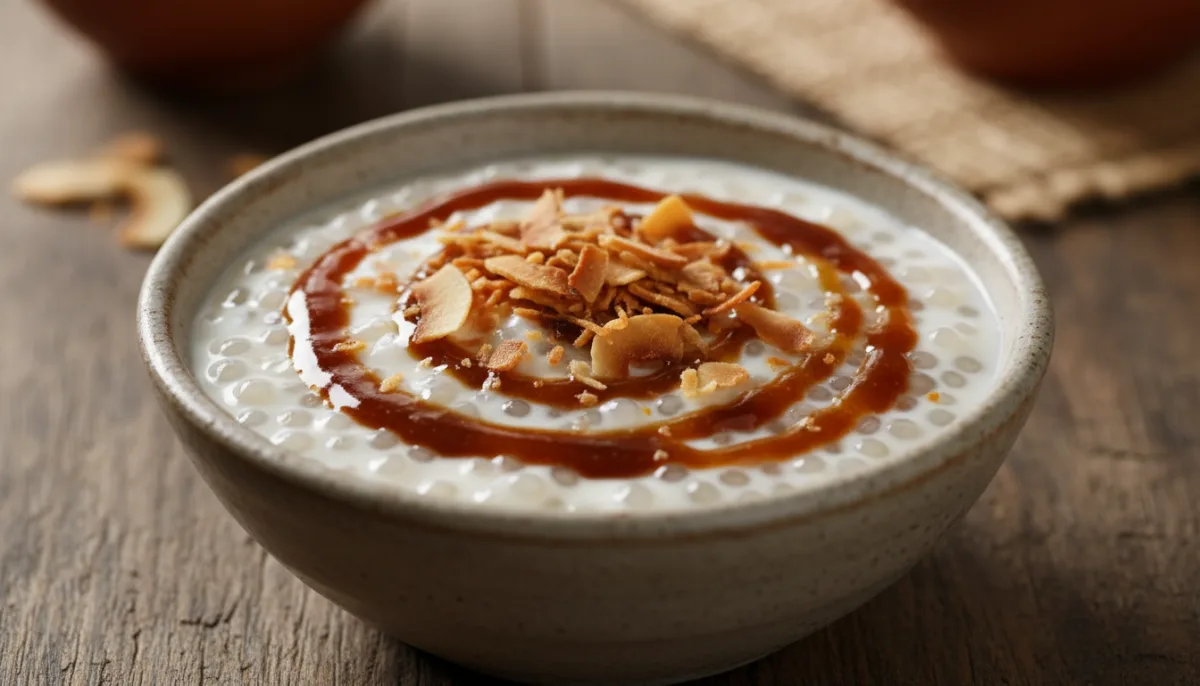
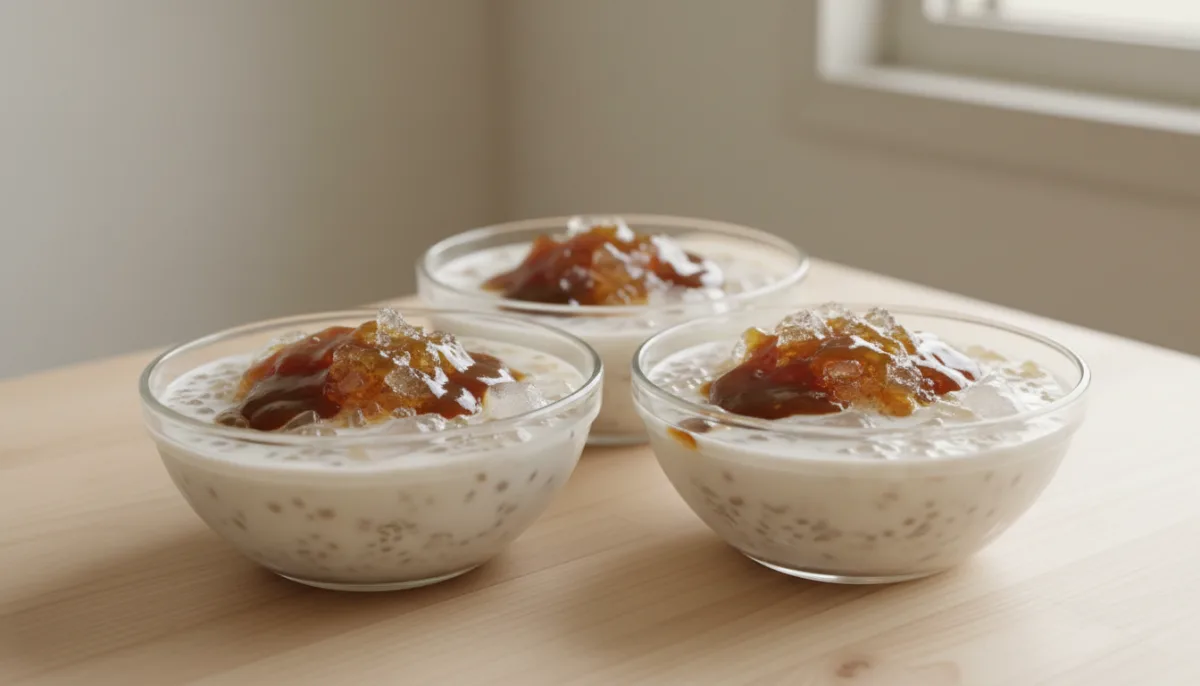
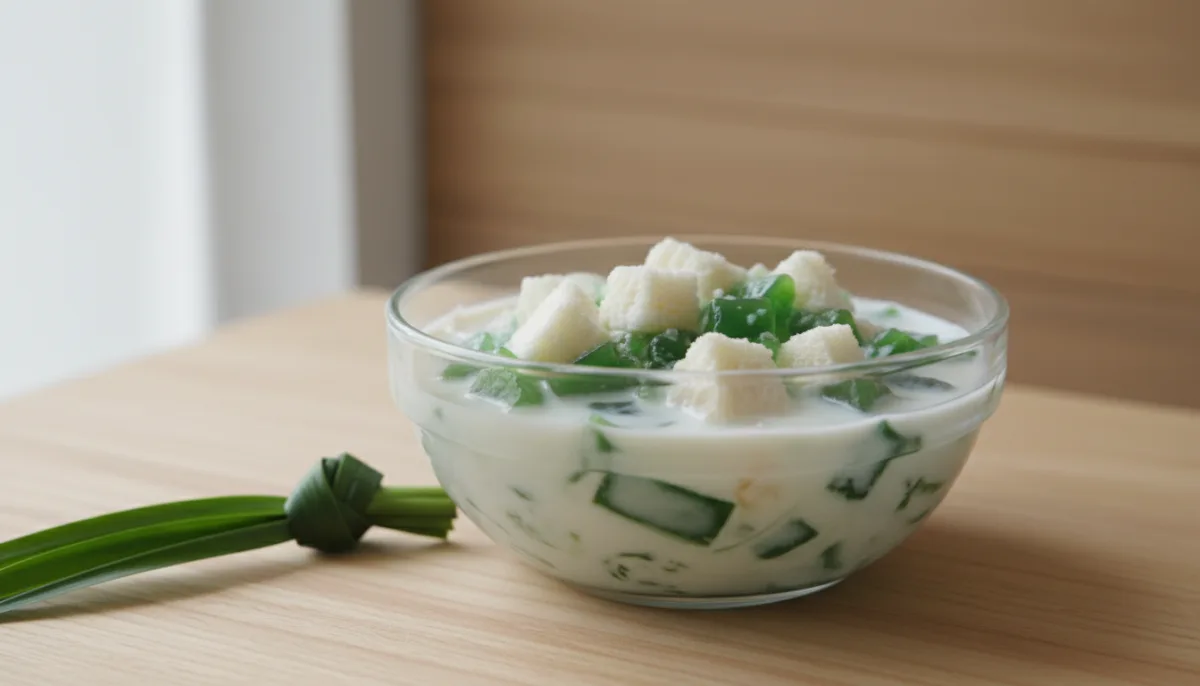
This traditional Burmese dessert features tender sago pearls simmered in rich coconut milk, sweetened with aromatic jaggery, and finished with a touch of salt. It's a comforting and naturally gluten-free treat, perfect for a light dessert or snack.

✎
HOW TO MAKE IT

Let's cook.

01

Rinse the sago pearls under cold water in a fine-mesh sieve until the water runs clear. This removes excess starch and prevents stickiness.

02

In a medium saucepan, combine the rinsed sago pearls, 1 cup of coconut milk, and 1/2 cup of water. Bring the mixture to a gentle simmer over medium heat, stirring constantly to prevent sticking.

03

Continue to simmer for 15-20 minutes, stirring frequently, until the sago pearls become translucent with only a tiny white dot remaining in the center. If the mixture becomes too thick, add a splash more water.

04

Add the remaining 1 cup of coconut milk, grated jaggery, and salt to the saucepan. Stir well until the jaggery is completely dissolved and the pudding is heated through, about 3-5 minutes over medium-low heat.

05

Remove the pudding from the heat and let it rest for 5 minutes to allow it to thicken slightly. Serve warm or chilled, garnished with toasted coconut flakes.

About This Recipe

This traditional Burmese dessert features tender sago pearls simmered in rich coconut milk, sweetened with aromatic jaggery, and finished with a touch of salt. It's a comforting and naturally gluten-free treat, perfect for a light dessert or snack.
Burmese Sago and Coconut Milk Pudding with Jaggery
Simple ingredients.
Big flavor.
✦
♨

Chef's Tips

For a richer flavor, use fresh coconut milk if available. Adjust the amount of jaggery to your preferred sweetness. The pudding will thicken considerably as it cools, so don't overcook it.
↔

Easy Substitutions

If jaggery is unavailable, you can use palm sugar or brown sugar, though the flavor profile will be slightly different. For a vegan option, ensure your coconut milk is dairy-free. You can substitute sago pearls with small tapioca pearls.
▱

Storage & Reheating

Store leftover pudding in an airtight container in the refrigerator for up to 3 days. It may thicken further when chilled; you can loosen it with a splash of coconut milk or water when reheating.

Serving Suggestions

Serve this pudding in small bowls as a light dessert after a meal. It can also be enjoyed as a sweet breakfast or a refreshing snack on a warm day. A sprinkle of chopped nuts like cashews or peanuts can add an extra layer of texture and flavor.

Common Mistakes

1. Not rinsing sago pearls: This leads to a sticky, gummy pudding. Always rinse thoroughly. 2. Not stirring constantly: Sago pearls can easily stick to the bottom of the pan and burn. Stirring prevents this. 3. Overcooking sago: This can result in mushy pearls. Cook until mostly translucent with a small white dot. 4. Adding jaggery too early: Adding sugar too early can prevent sago from cooking properly. Add it after the pearls are mostly cooked. 5. Not balancing sweetness with salt: A pinch of salt enhances the sweetness and richness of the coconut milk and jaggery.

Frequently Asked Questions

Can I use large sago pearls?

Yes, but large sago pearls will require a longer cooking time and more liquid. Adjust accordingly.


Is this pudding gluten-free?

Yes, sago pearls are naturally gluten-free, making this a suitable dessert for those with gluten sensitivities.

Can I make this ahead of time?

Absolutely! This pudding can be made a day in advance and stored in the refrigerator. It's delicious served chilled.
MORE TO KNOW
Sago pearls are derived from the pith of the sago palm and are a staple in many Southeast Asian desserts. Their neutral flavor and chewy texture make them an excellent base for absorbing the rich flavors of coconut milk and jaggery. The key to perfectly cooked sago is constant stirring to prevent clumping and ensuring they become mostly translucent, indicating they are cooked through. The small white dot in the center is normal and will disappear as the pudding cools and sets.
WHAT PEOPLE THINK

Reviews

☆

No reviews yet

Be the first person to review this recipe.

SHARE YOUR THOUGHTS

Made this recipe?

Tell us how it turned out.

Your review will be checked before appearing publicly.