Home › Recipes › Dinner ›Burmese ›Burmese Mohinga (Fish Noodle Soup)
DINNER

Burmese Mohinga (Fish Noodle Soup)

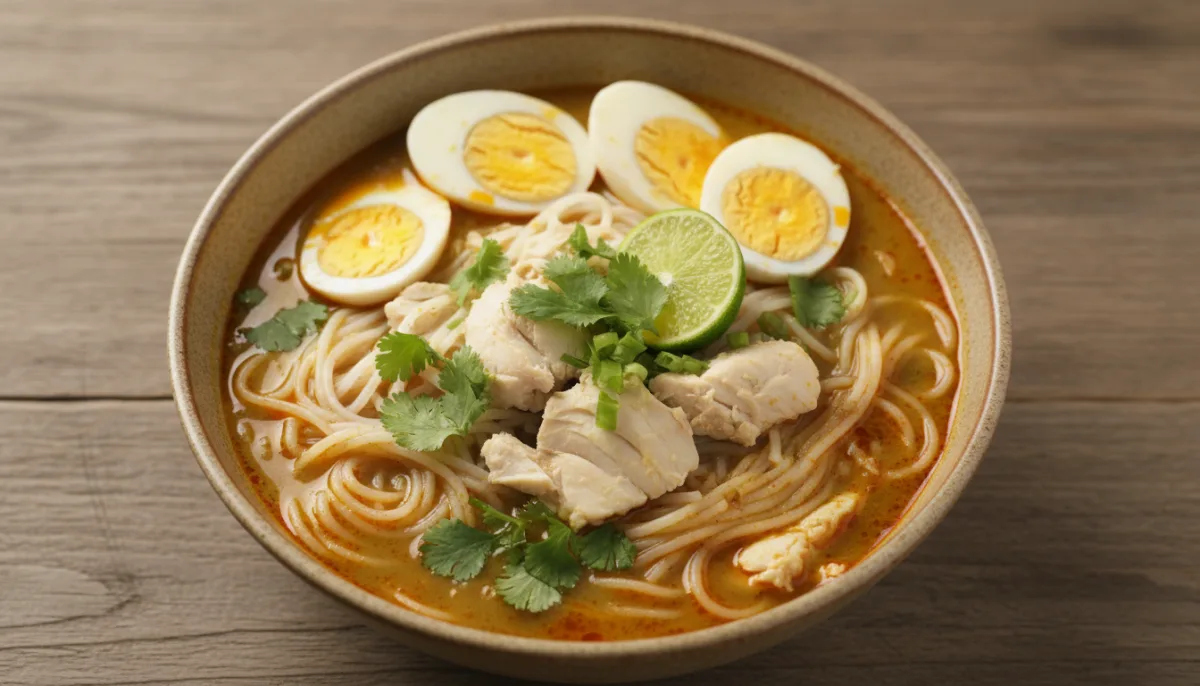
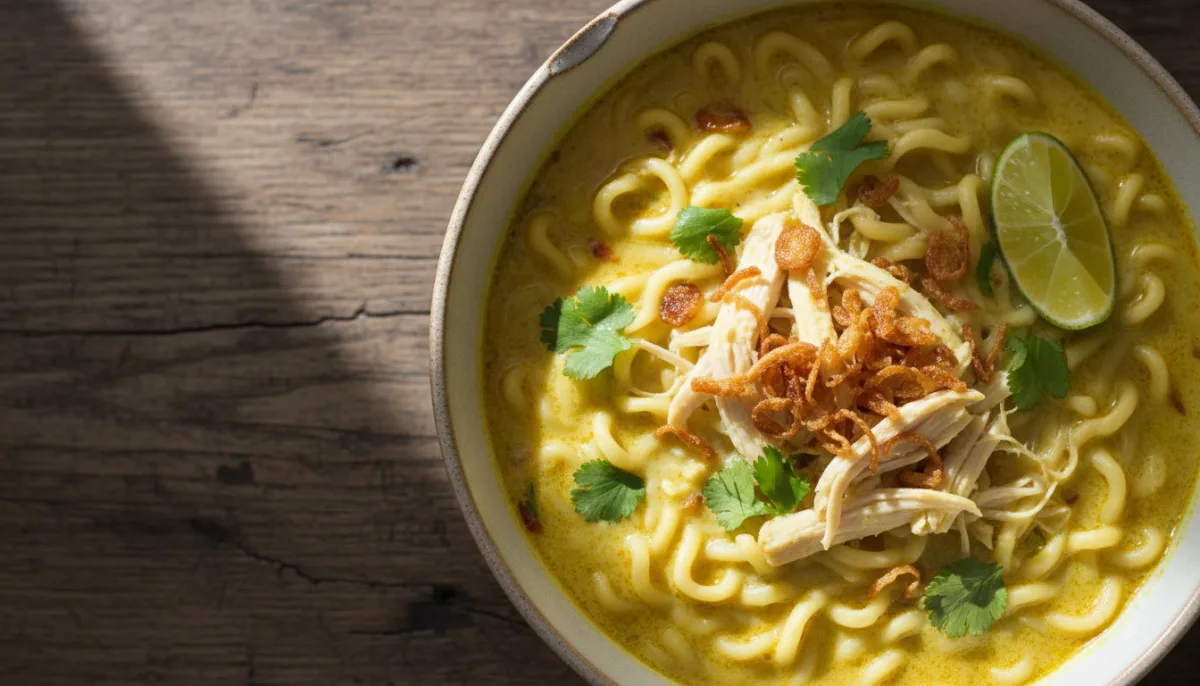
Mohinga is a beloved Burmese fish noodle soup, often considered the national dish. This recipe captures its authentic flavors with a rich, aromatic broth and tender fish, served over rice vermicelli.

✎
HOW TO MAKE IT

Let's cook.

01

Poach the fish fillets in 2 cups of the broth over medium heat for 8-10 minutes, or until cooked through and flaky. Remove the fish, reserving the poaching liquid. Once cooled, flake the fish into small pieces.

02

In a large pot, heat the vegetable oil over medium heat. Add the grated ginger and minced garlic, cooking for 2 minutes until fragrant. Stir in the turmeric powder and paprika, cooking for 1 minute more.

03

Gradually whisk in the chickpea flour into the pot, cooking for 2-3 minutes until a thick paste forms. Slowly pour in the remaining 4 cups of broth and the reserved poaching liquid, whisking constantly to prevent lumps.

04

Bring the mixture to a simmer, then add the flaked fish, fish sauce, salt, and black pepper. Reduce the heat to low and let it simmer for 20 minutes, allowing the flavors to meld and the broth to thicken slightly.

05

While the soup simmers, prepare the rice vermicelli noodles according to package instructions. Typically, this involves soaking them in hot water for 5-7 minutes until tender, then draining.

06

To serve, place a portion of cooked rice vermicelli noodles in each bowl. Ladle the hot Mohinga broth and fish over the noodles. Garnish with desired toppings.

About This Recipe

Mohinga is a beloved Burmese fish noodle soup, often considered the national dish. This recipe captures its authentic flavors with a rich, aromatic broth and tender fish, served over rice vermicelli.
Burmese Mohinga (Fish Noodle Soup)
Simple ingredients.
Big flavor.
✦
♨

Chef's Tips

For an extra layer of flavor, you can add a stalk of lemongrass (bruised) and a few slices of banana blossom to the broth while it simmers, removing them before serving. Adjust the fish sauce and salt to your taste.
↔

Easy Substitutions

If white fish fillets are unavailable, canned tuna (drained) can be used, added in step 4. For a vegetarian version, omit the fish and fish sauce, using vegetable broth and adding sliced mushrooms or tofu. Use gluten-free chickpea flour for a gluten-free option.
▱

Storage & Reheating

Store leftover Mohinga broth and noodles separately in airtight containers in the refrigerator for up to 3 days. Reheat the broth gently on the stovetop and add freshly prepared noodles.

Serving Suggestions

Serve Mohinga with a variety of traditional toppings such as crispy fried split peas, sliced hard-boiled eggs, chopped fresh cilantro, lime wedges, and a sprinkle of chili flakes. A side of fried gourd fritters (akyaw) also makes a wonderful accompaniment.

Common Mistakes

One common mistake is not whisking the chickpea flour thoroughly, leading to a lumpy broth. Ensure continuous whisking when adding liquids. Another error is overcooking the fish, which can make it tough; poach it just until it flakes easily. Lastly, not allowing the soup to simmer long enough can result in a less flavorful broth; give it the full 20 minutes for optimal taste.

Frequently Asked Questions

Can I make Mohinga ahead of time?

Yes, the broth can be made a day in advance and stored in the refrigerator. Reheat gently and cook fresh noodles just before serving.


What kind of fish is best for Mohinga?

Mild white fish like cod, tilapia, or catfish are commonly used.

Is Mohinga spicy?

Traditionally, Mohinga is not overly spicy, but chili flakes are often added as a garnish for those who prefer more heat.

Can I freeze Mohinga?

The broth can be frozen for up to 2 months. Thaw overnight in the refrigerator and reheat. Noodles should be cooked fresh.
MORE TO KNOW
Mohinga's unique depth of flavor comes from the combination of aromatic spices, the richness of the fish, and the thickening power of chickpea flour. The key to a smooth broth is to whisk the chickpea flour gradually into the liquid, ensuring no lumps form. The simmering time allows the flavors to fully develop, creating a truly comforting and satisfying meal. Don't be afraid to adjust the seasonings to your preference, as Mohinga often varies slightly from region to region in Myanmar.
WHAT PEOPLE THINK

Reviews

☆

No reviews yet

Be the first person to review this recipe.

SHARE YOUR THOUGHTS

Made this recipe?

Tell us how it turned out.

Your review will be checked before appearing publicly.