Home › Recipes › Dinner ›Uzbek ›Uzbek Lagman (Hand-Pulled Noodle Soup) with Beef and Vegetables
DINNER

Uzbek Lagman (Hand-Pulled Noodle Soup) with Beef and Vegetables

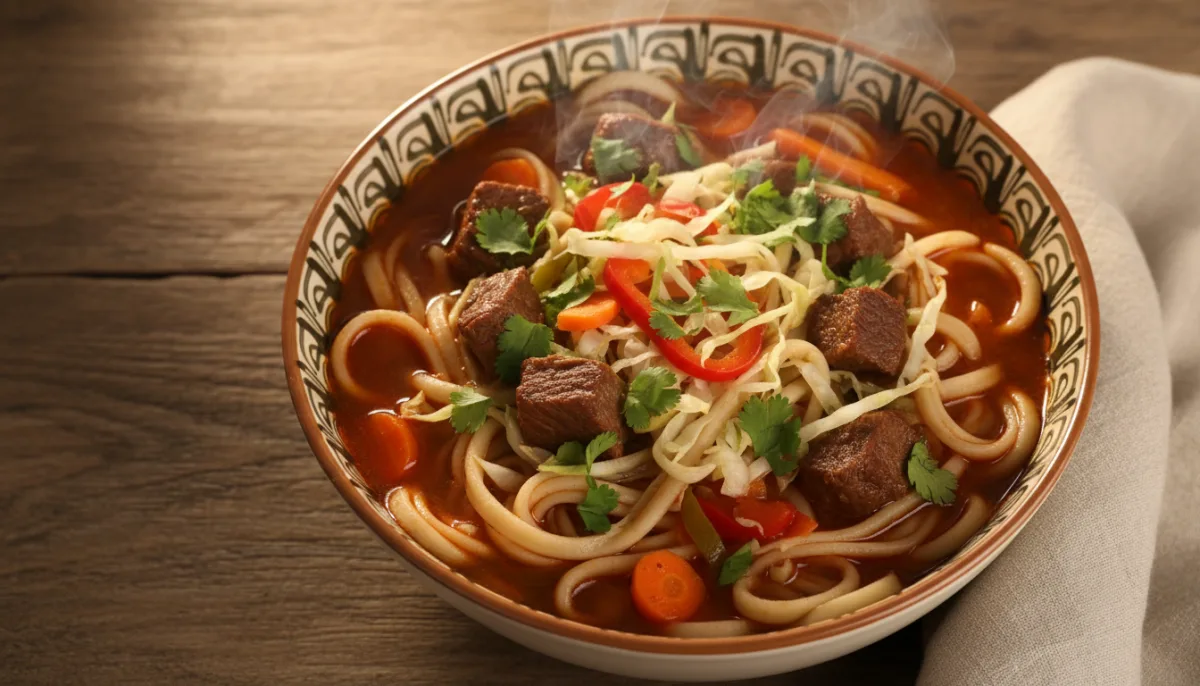
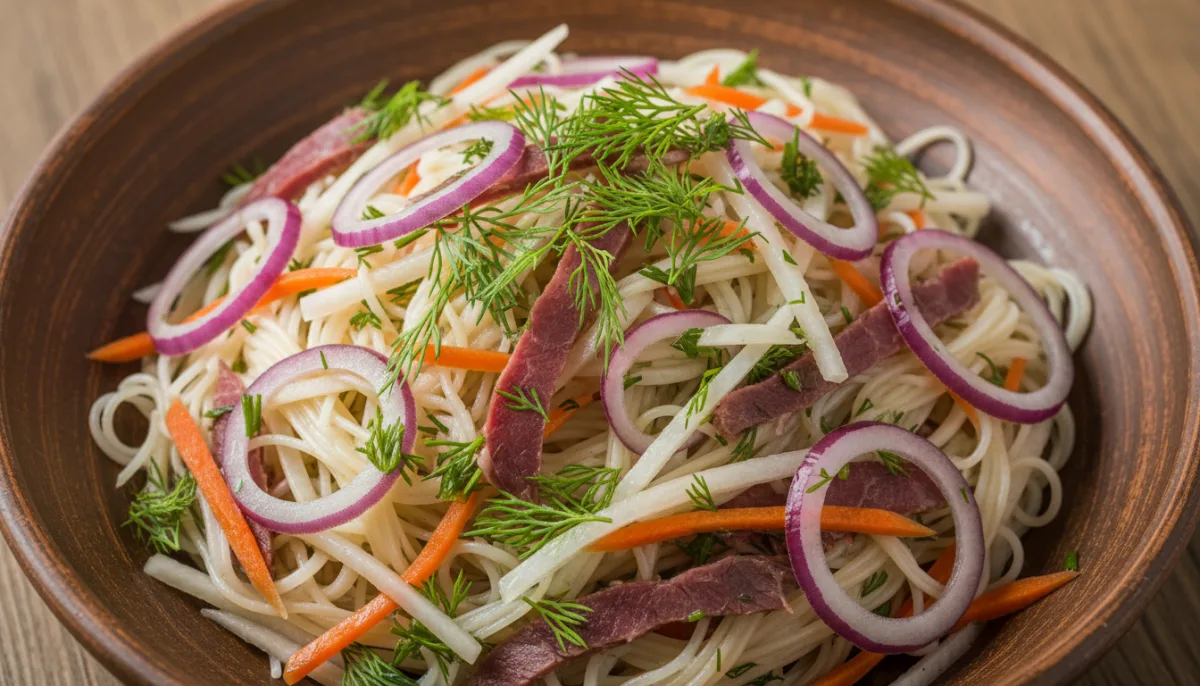
This hearty Uzbek Lagman features tender hand-pulled noodles, succulent beef, and a vibrant medley of vegetables in a rich, flavorful broth. It's a comforting and satisfying meal perfect for a chilly evening.

✎
HOW TO MAKE IT

Let's cook.

01

Heat 2 tablespoons of vegetable oil in a large pot or Dutch oven over medium-high heat. Add the beef cubes and sear them on all sides until browned, about 5-7 minutes. Remove the beef and set aside.

02

Add the chopped onion to the pot and cook until softened and translucent, about 5 minutes. Stir in the minced garlic and cook for 1 minute more until fragrant.

03

Return the seared beef to the pot. Add the diced carrots, bell pepper, and shredded cabbage. Cook for 8-10 minutes, stirring occasionally, until the vegetables begin to soften.

04

Stir in the diced tomatoes, beef broth, ground cumin, paprika, black pepper, and salt. Bring the mixture to a boil, then reduce the heat to low, cover, and simmer for 45 minutes, or until the beef is very tender.

05

While the soup simmers, cook the lagman noodles according to package directions until al dente. If using fresh hand-pulled noodles, boil them in a separate pot of salted water until cooked through, typically 3-5 minutes. Drain the noodles.

06

Divide the cooked noodles among four serving bowls. Ladle the hot beef and vegetable soup over the noodles. Garnish each serving with fresh chopped cilantro before serving immediately.

About This Recipe

This hearty Uzbek Lagman features tender hand-pulled noodles, succulent beef, and a vibrant medley of vegetables in a rich, flavorful broth. It's a comforting and satisfying meal perfect for a chilly evening.
Uzbek Lagman (Hand-Pulled Noodle Soup) with Beef and Vegetables
Simple ingredients.
Big flavor.
✦
♨

Chef's Tips

For an authentic touch, try making your own hand-pulled lagman noodles. If using store-bought, fresh udon or thick spaghetti works well. Adjust spice levels by adding a pinch of red pepper flakes to the broth.
↔

Easy Substitutions

Lamb can be used instead of beef. Other vegetables like potatoes, green beans, or celery can be added or substituted. If fresh cilantro is unavailable, fresh dill or parsley can be used as a garnish.
▱

Storage & Reheating

Store leftover Lagman soup and noodles separately in airtight containers in the refrigerator for up to 3 days. Reheat the soup gently on the stovetop and add freshly cooked or reheated noodles just before serving to prevent them from becoming mushy.

Serving Suggestions

Serve this Uzbek Lagman with a side of fresh, crusty bread for dipping into the flavorful broth. A dollop of sour cream or plain yogurt can be added to each bowl for extra creaminess. A simple side salad with a light vinaigrette would also complement the rich soup.

Common Mistakes

Overcooking the noodles: Noodles can become mushy if added too early or overcooked in the soup. Cook them separately and add just before serving. Not simmering the beef long enough: Tough beef will ruin the dish; ensure it's fork-tender. Skimping on vegetables: A variety of vegetables adds flavor and texture; don't be afraid to add more. Not seasoning adequately: Taste and adjust salt and spices throughout the cooking process.

Frequently Asked Questions

Can I make this recipe vegetarian?

Yes, you can omit the beef and use vegetable broth. Add chickpeas or lentils for protein, and mushrooms for a meaty texture.


What kind of noodles are best for Lagman?

Traditionally, hand-pulled lagman noodles are used. If unavailable, fresh udon noodles or thick spaghetti are good substitutes due to their similar texture and ability to hold up in soup.

Can I freeze Lagman?

It's best to freeze the broth and beef mixture separately from the noodles. Thaw, reheat the broth, and cook fresh noodles when ready to serve for the best texture.
MORE TO KNOW
The key to a great Lagman is the depth of flavor in the broth and the texture of the noodles. Simmering the beef and vegetables for an adequate time allows the flavors to meld beautifully. If you're feeling adventurous, hand-pulling noodles is a rewarding process that adds an incredible chewiness to the dish. The dough for hand-pulled noodles is typically made with flour, water, and a touch of salt, then repeatedly stretched and folded.
WHAT PEOPLE THINK

Reviews

☆

No reviews yet

Be the first person to review this recipe.

SHARE YOUR THOUGHTS

Made this recipe?

Tell us how it turned out.

Your review will be checked before appearing publicly.