Home › Recipes › Lunch ›Trinidadian ›Trinidadian Stewed Fish with Provisions
LUNCH

Trinidadian Stewed Fish with Provisions

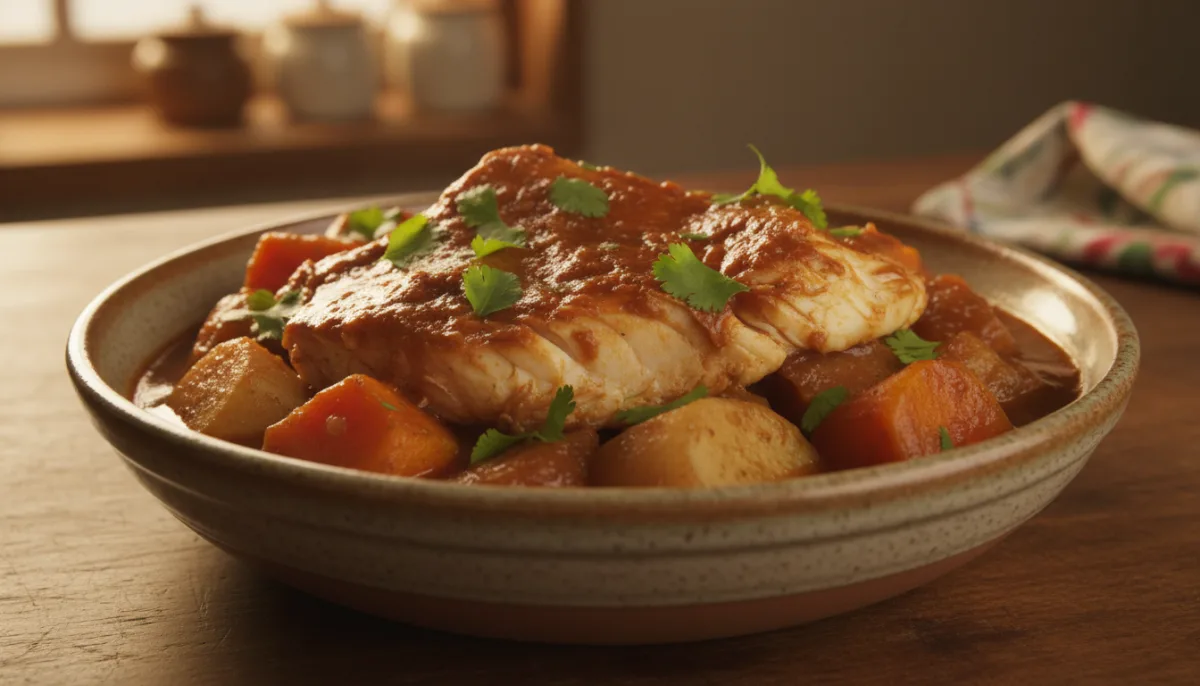
Savor the authentic taste of the Caribbean with this Trinidadian Stewed Fish, featuring flaky fish gently simmered in a deeply flavorful, rich brown sauce alongside traditional root vegetables. This comforting one-pot meal is a true taste of Trinidad, perfect for a satisfying lunch or dinner.

✎
HOW TO MAKE IT

Let's cook.

01

Pat fish fillets dry with paper towels and season lightly with 1/4 teaspoon salt and 1/8 teaspoon black pepper.

02

In a large pot or Dutch oven, heat 1 tablespoon of brown sugar over medium heat until it melts and turns a dark amber color, being careful not to burn it. This is the 'browning' step.

03

Add 2 tablespoons of vegetable oil to the pot, then carefully place the seasoned fish fillets in the pot. Sear the fish for 2 minutes per side until lightly browned.

04

Remove the fish from the pot and set aside. Add the chopped onion and minced garlic to the pot, cooking over medium heat for 3-4 minutes until softened and fragrant.

05

Return the fish to the pot. Add 1 cup of water, the remaining 1/4 teaspoon salt, and 1/8 teaspoon black pepper. Bring to a gentle simmer.

06

Add the sweet potato and dasheen chunks to the pot. Cover and simmer for 20-25 minutes over medium-low heat, or until the fish is cooked through and the provision is tender.

07

Gently stir to ensure all ingredients are coated in the rich stewing liquid. Serve hot.

About This Recipe

Savor the authentic taste of the Caribbean with this Trinidadian Stewed Fish, featuring flaky fish gently simmered in a deeply flavorful, rich brown sauce alongside traditional root vegetables. This comforting one-pot meal is a true taste of Trinidad, perfect for a satisfying lunch or dinner.
Trinidadian Stewed Fish with Provisions
Simple ingredients.
Big flavor.
✦
♨

Chef's Tips

For extra flavor, marinate the fish in a little lime juice and green seasoning (a blend of herbs like thyme, parsley, and chives) for 30 minutes before cooking. Adjust the amount of brown sugar for browning based on your desired depth of color and sweetness.
↔

Easy Substitutions

If Kingfish or Red Snapper are unavailable, cod or mahi-mahi can be used. Yams or regular potatoes can substitute for dasheen or sweet potato. For a spicier kick, add a whole Scotch bonnet pepper to the stew (do not break it open).
▱

Storage & Reheating

Store leftover stewed fish and provision in an airtight container in the refrigerator for up to 2 days. Reheat gently on the stovetop over low heat, adding a splash of water if needed to maintain moisture.

Serving Suggestions

Serve this Trinidadian Stewed Fish with Provision alongside a simple side of steamed white rice, a fresh green salad with a light vinaigrette, or a side of fried plantains for added sweetness.

Common Mistakes

Overcooking the fish can make it dry and flaky; cook just until it flakes easily with a fork. Burning the brown sugar during the browning step will result in a bitter taste; remove from heat immediately if it starts to smoke excessively. Not cutting the provision uniformly can lead to uneven cooking; ensure chunks are roughly the same size.

Frequently Asked Questions

What is 'provision' in Trinidadian cooking?

'Provision' refers to a variety of ground provisions or root vegetables commonly eaten in the Caribbean, such as dasheen (taro), sweet potato, yam, cassava, and eddoes.


Can I use frozen fish fillets?

Yes, you can use frozen fish fillets. Ensure they are fully thawed and patted very dry before seasoning and searing to prevent excess water from diluting the stew.

Is this dish spicy?

This recipe is not inherently spicy, but you can add a whole Scotch bonnet pepper during the simmering stage for heat. Be careful not to break the pepper.
MORE TO KNOW
The 'browning' technique is fundamental to many Trinidadian stews, imparting a unique depth of color and a subtle caramel flavor. It involves carefully melting brown sugar until it caramelizes to a dark, rich hue. The key is to watch it closely, as it can go from perfectly browned to burnt very quickly. This step is what gives the stew its characteristic deep color without relying on artificial colorings.
WHAT PEOPLE THINK

Reviews

☆

No reviews yet

Be the first person to review this recipe.

SHARE YOUR THOUGHTS

Made this recipe?

Tell us how it turned out.

Your review will be checked before appearing publicly.