Home › Recipes › Dessert ›Trinidadian ›Trinidadian Guava Cheesecake with Graham Cracker Crust and Guava Glaze
DESSERT

Trinidadian Guava Cheesecake with Graham Cracker Crust and Guava Glaze

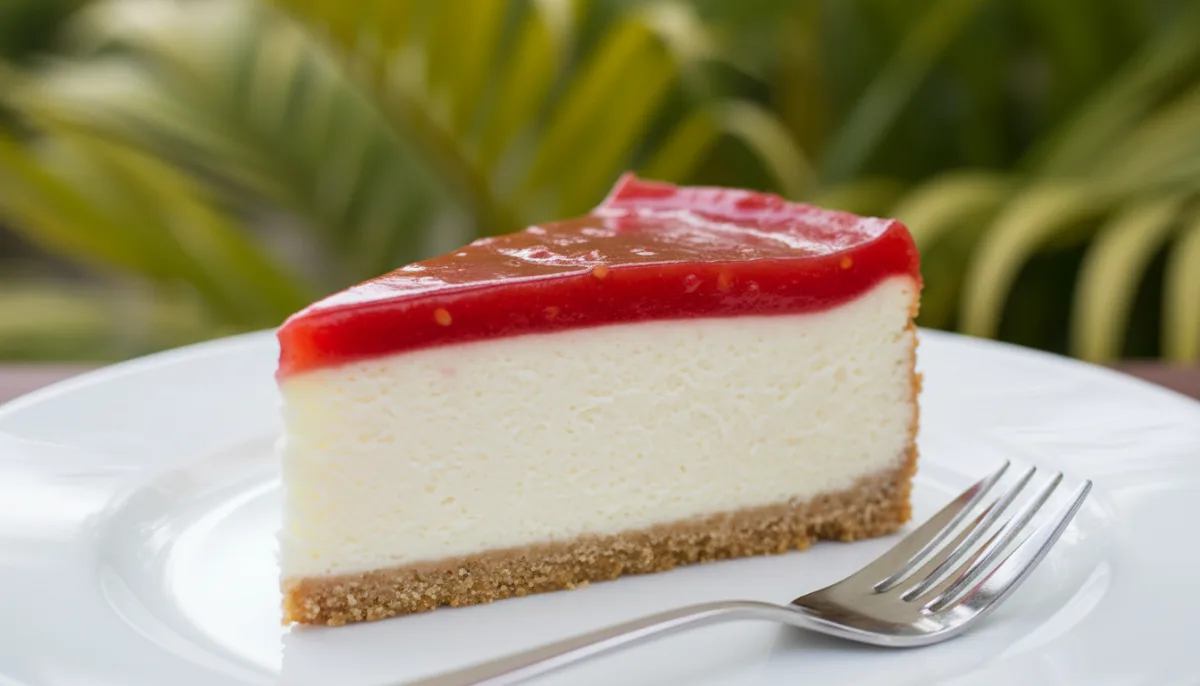
This Trinidadian Guava Cheesecake offers a delightful fusion of creamy cheesecake with the tropical sweetness of guava, all nestled in a classic graham cracker crust. A vibrant guava glaze adds a beautiful finish and an extra burst of island flavor.

✎
HOW TO MAKE IT

Let's cook.

01

Combine 1 1/2 cups graham cracker crumbs, 1/4 cup granulated sugar, and 6 tablespoons melted butter in a medium bowl. Press the mixture firmly into the bottom of a 9-inch springform pan.

02

Bake the crust at 350°F (175°C) for 8 minutes, then remove from oven and let cool slightly.

03

In a large bowl, beat 24 ounces softened cream cheese with 1 cup granulated sugar until smooth. Beat in 3 large eggs one at a time, mixing until just combined after each addition.

04

Gently fold in 1/2 cup softened guava paste and 1/4 cup heavy cream until evenly distributed.

05

Pour the cheesecake filling over the cooled crust in the springform pan. Place the springform pan in a larger roasting pan and fill the roasting pan with 1 inch of hot water (this creates a water bath).

06

Bake at 325°F (160°C) for 50-60 minutes, or until the edges are set but the center still jiggles slightly. Turn off the oven and leave the cheesecake inside with the door ajar for 1 hour to cool slowly.

07

Remove the cheesecake from the oven and water bath, then cool completely on a wire rack. Once cool, refrigerate for at least 4 hours, or preferably overnight.

08

For the guava glaze, combine 1/2 cup guava jelly and 1 tablespoon water in a small saucepan. Heat over low heat, stirring constantly, until the jelly is melted and smooth. Let cool slightly.

09

Pour the cooled guava glaze over the chilled cheesecake before serving.

About This Recipe

This Trinidadian Guava Cheesecake offers a delightful fusion of creamy cheesecake with the tropical sweetness of guava, all nestled in a classic graham cracker crust. A vibrant guava glaze adds a beautiful finish and an extra burst of island flavor.
Trinidadian Guava Cheesecake with Graham Cracker Crust and Guava Glaze
Simple ingredients.
Big flavor.
✦
♨

Chef's Tips

Ensure all dairy ingredients are at room temperature for a smooth, lump-free cheesecake batter. For best results, use a water bath to prevent cracks in the cheesecake.
↔

Easy Substitutions

If guava paste is unavailable, you can use a thick guava jam, reducing the sugar in the filling slightly. For the crust, digestive biscuits can be used instead of graham crackers.
▱

Storage & Reheating

Store leftover cheesecake covered tightly in the refrigerator for up to 4 days. Cheesecake can also be frozen for up to 1 month; thaw in the refrigerator overnight before serving.

Serving Suggestions

Serve chilled slices with a dollop of whipped cream, a sprinkle of toasted coconut flakes, or a side of fresh tropical fruit like mango or pineapple. A light dusting of powdered sugar can also enhance its presentation.

Common Mistakes

Over-mixing the cheesecake batter can incorporate too much air, leading to cracks during baking. Over-baking will result in a dry, dense cheesecake; look for a slight jiggle in the center. Not chilling the cheesecake long enough will make it difficult to slice cleanly and affect its texture. Skipping the water bath often leads to cracks and an unevenly baked cheesecake.

Frequently Asked Questions

Can I make this cheesecake ahead of time?

Yes, this cheesecake is perfect for making a day or two in advance, as it needs ample chilling time to set properly.


What if my guava paste is too firm to fold in?

You can gently warm the guava paste in a microwave-safe bowl for 10-15 seconds, or until it's soft enough to mix easily.

How do I prevent the crust from becoming soggy?

Baking the crust for a few minutes before adding the filling helps to create a barrier and prevent sogginess.
MORE TO KNOW
The secret to a perfectly creamy cheesecake without cracks lies in the water bath and slow cooling. The water bath provides a moist, even cooking environment, preventing the edges from baking too quickly and drying out. Leaving the cheesecake in the cooling oven with the door ajar allows it to gradually adjust to room temperature, further minimizing the risk of cracks. This technique is essential for achieving that signature smooth, unblemished cheesecake top.
WHAT PEOPLE THINK

Reviews

☆

No reviews yet

Be the first person to review this recipe.

SHARE YOUR THOUGHTS

Made this recipe?

Tell us how it turned out.

Your review will be checked before appearing publicly.