Home › Recipes › Breakfast ›Thai ›Thai Steamed Coconut Milk and Corn Pudding (Khanom Sod Sai Khao Pod)
BREAKFAST

Thai Steamed Coconut Milk and Corn Pudding (Khanom Sod Sai Khao Pod)

This delightful Thai steamed pudding combines the sweetness of fresh corn with rich coconut milk, creating a unique and comforting breakfast or dessert. It's a simple yet flavorful dish, perfect for a taste of Thailand at home.

✎
HOW TO MAKE IT

Let's cook.

01

In a medium saucepan, whisk together the coconut milk, granulated sugar, and salt over medium heat until the sugar dissolves. Do not boil.

02

In a small bowl, dissolve the cornstarch in 1/4 cup of cold water to create a slurry. Add the cornstarch slurry to the coconut milk mixture, whisking constantly until the mixture thickens to a pudding-like consistency, about 3-5 minutes.

03

Remove the saucepan from the heat and stir in the corn kernels. Mix well to distribute the corn evenly throughout the pudding.

04

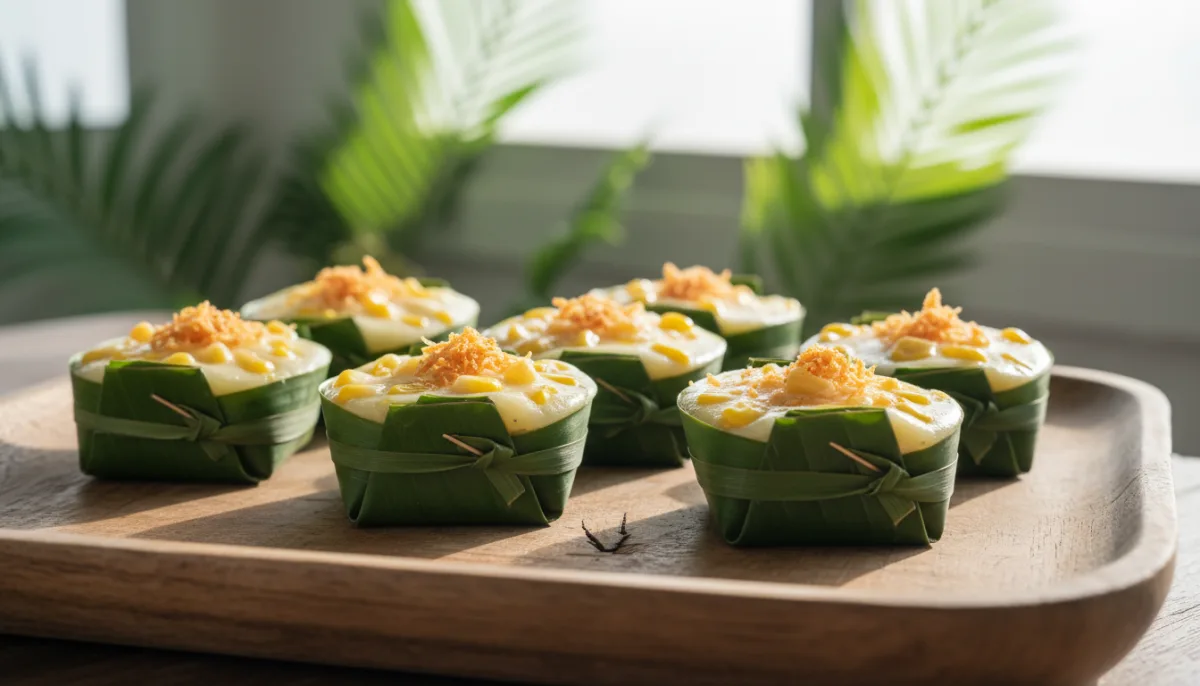
If using banana leaves, soften them by briefly passing them over a low flame or dipping them in hot water. Fold each banana leaf square into a cup shape or use small heatproof ramekins.

05

Spoon the corn pudding mixture into the prepared banana leaf cups or ramekins. Fill each about two-thirds full.

06

Arrange the filled cups or ramekins in a steamer basket. Steam over boiling water for 15-20 minutes, or until the pudding is firm and set. Ensure the water in the steamer does not run dry.

07

Carefully remove the steamed puddings from the steamer. Let them cool slightly before serving warm, or chill completely for a refreshing cold treat.

About This Recipe

This delightful Thai steamed pudding combines the sweetness of fresh corn with rich coconut milk, creating a unique and comforting breakfast or dessert. It's a simple yet flavorful dish, perfect for a taste of Thailand at home.
Thai Steamed Coconut Milk and Corn Pudding (Khanom Sod Sai Khao Pod)
Simple ingredients.
Big flavor.
✦
♨

Chef's Tips

For extra fragrance, you can add 1/2 teaspoon of pandan extract to the coconut milk mixture. If fresh corn is unavailable, well-drained canned corn can be used as a last resort, though fresh or frozen will yield better texture and flavor.
↔

Easy Substitutions

You can substitute some of the corn with other sweet vegetables like taro or pumpkin for a different flavor profile. For a richer taste, a small amount of coconut cream can be added to the mixture.
▱

Storage & Reheating

Store leftover pudding in an airtight container in the refrigerator for up to 3 days. It can be enjoyed cold or gently reheated in a microwave or steamer.

Serving Suggestions

Serve these puddings as a light breakfast, a delightful snack, or a unique dessert. They pair wonderfully with a cup of hot Thai iced tea or coffee. Garnish with a sprinkle of toasted coconut flakes for added texture and flavor. For a more substantial breakfast, serve alongside fresh tropical fruits like mango or pineapple. Enjoy them warm straight from the steamer or chilled from the refrigerator.

Common Mistakes

Overcooking the coconut milk mixture: This can cause the coconut milk to separate. Whisk constantly and remove from heat once thickened. Not dissolving cornstarch properly: Lumps will form if cornstarch is added directly to hot liquid. Always make a slurry with cold water first. Overfilling the cups: This can lead to spillage during steaming. Fill only two-thirds full to allow for expansion. Not softening banana leaves: Unsoftened leaves will crack and tear when folded. Briefly heat or soak them to make them pliable. Steaming with insufficient water: Ensure there's enough water in the steamer to last the entire cooking time to prevent burning.

Frequently Asked Questions

Can I make this recipe without banana leaves?

Yes, you can use small heatproof ramekins, ceramic bowls, or even silicone muffin molds instead of banana leaves.


What kind of corn should I use?

Fresh corn kernels are best for flavor and texture. Frozen corn kernels, thawed, are a good alternative. Canned corn can be used but may result in a slightly softer texture.

How do I know when the pudding is cooked?

The pudding is cooked when it is firm to the touch and set. A toothpick inserted into the center should come out clean.
MORE TO KNOW
The use of banana leaves for steaming not only imparts a subtle, earthy aroma to the pudding but also makes for a beautiful and traditional presentation. If you're new to working with banana leaves, softening them is key to prevent tearing. Simply pass them quickly over a low flame or dip them in hot water until they become pliable. This traditional method enhances the overall experience of this Thai dessert.
WHAT PEOPLE THINK

Reviews

☆

No reviews yet

Be the first person to review this recipe.

SHARE YOUR THOUGHTS

Made this recipe?

Tell us how it turned out.

Your review will be checked before appearing publicly.