Home › Recipes › Breakfast ›Portuguese ›Portuguese Sweet Bread with Raisins and Orange Zest (Pão Doce)
BREAKFAST

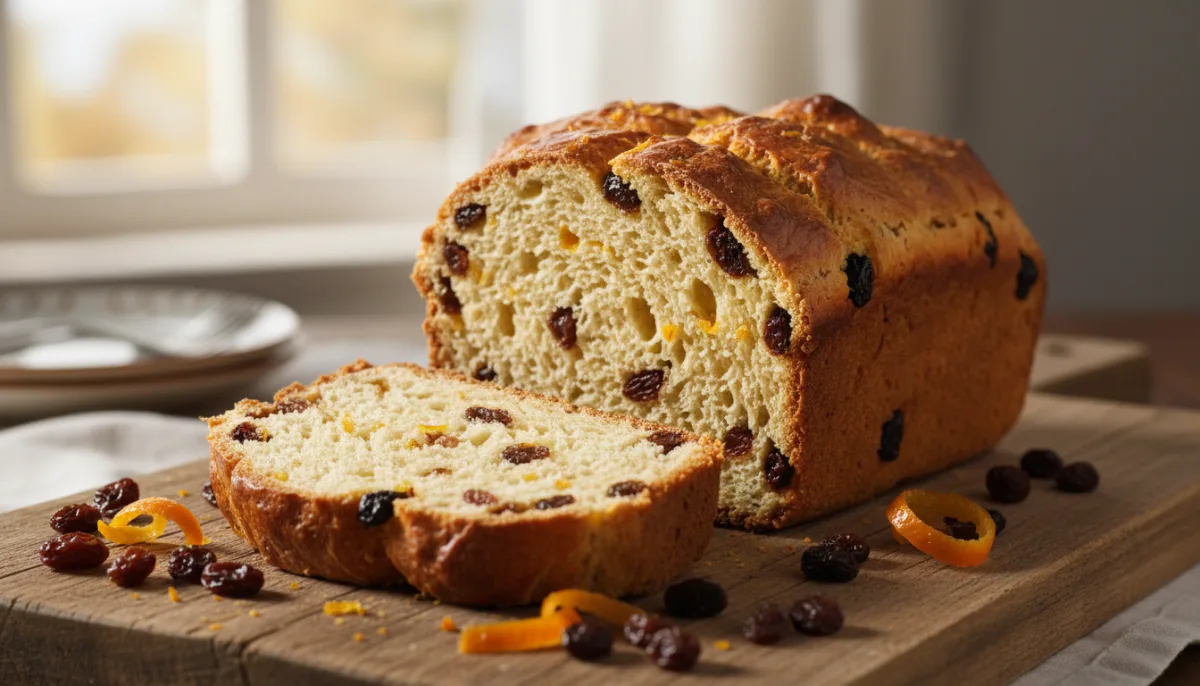
Portuguese Sweet Bread with Raisins and Orange Zest (Pão Doce)

This traditional Portuguese sweet bread, known as Pão Doce, is a delightful treat for breakfast or brunch. Infused with plump raisins and fragrant orange zest, it offers a soft, slightly sweet crumb that pairs perfectly with coffee or tea.

✎
HOW TO MAKE IT

Let's cook.

01

In a large bowl, combine the warm milk, yeast, and 1 tablespoon of the granulated sugar. Let stand for 5-10 minutes until foamy.

02

Add the remaining granulated sugar, flour, salt, eggs, and melted butter to the yeast mixture. Mix until a shaggy dough forms.

03

Turn the dough out onto a lightly floured surface and knead for 8-10 minutes until smooth and elastic. Incorporate the raisins and orange zest during the last 2 minutes of kneading.

04

Place the dough in a lightly oiled bowl, turning once to coat. Cover with plastic wrap and let rise in a warm place for 1.5-2 hours, or until doubled in size.

05

Gently punch down the dough and shape it into a round or oval loaf. Place on a parchment-lined baking sheet.

06

Cover the loaf loosely with plastic wrap and let it rise again for 45-60 minutes, or until nearly doubled.

07

Bake the bread in a preheated oven at 375°F (190°C) for 25-30 minutes, or until golden brown and hollow-sounding when tapped on the bottom.

About This Recipe

This traditional Portuguese sweet bread, known as Pão Doce, is a delightful treat for breakfast or brunch. Infused with plump raisins and fragrant orange zest, it offers a soft, slightly sweet crumb that pairs perfectly with coffee or tea.
Portuguese Sweet Bread with Raisins and Orange Zest (Pão Doce)
Simple ingredients.
Big flavor.
✦
♨

Chef's Tips

For extra flavor, brush the top of the bread with an egg wash (1 egg beaten with 1 tablespoon water) before baking. You can also sprinkle with a little extra sugar for a sweet crust.
↔

Easy Substitutions

Dried cranberries or chopped dried apricots can be used instead of raisins. Lemon zest can replace orange zest for a different citrus note. For a dairy-free version, use plant-based milk and vegan butter.
▱

Storage & Reheating

Store Portuguese Sweet Bread in an airtight container at room temperature for up to 3 days. For longer storage, wrap tightly and freeze for up to 1 month. Thaw at room temperature before serving.

Serving Suggestions

Serve slices of Pão Doce warm with butter and jam. It's also delicious toasted and can be used to make French toast. Enjoy it with a cup of coffee or a glass of milk for a traditional Portuguese breakfast.

Common Mistakes

1. Not activating the yeast: Ensure milk is warm (not hot) and yeast is fresh. If it doesn't foam, start over. 2. Over-flouring the dough: This can lead to a dense, dry bread. The dough should be slightly tacky. 3. Not kneading enough: Under-kneaded dough won't develop enough gluten, resulting in a crumbly texture. 4. Not allowing enough rise time: Rushing the rising process will result in a heavy, compact bread. Be patient and let the dough double in size. 5. Overbaking: This can dry out the bread. Bake until golden and a thermometer inserted into the center reads 200-210°F (93-99°C).

Frequently Asked Questions

Can I make this bread ahead of time?

Yes, you can prepare the dough the night before and let it rise slowly in the refrigerator overnight. Punch it down, shape, and allow it to come to room temperature and rise for the second time before baking.


What kind of flour is best for Pão Doce?

All-purpose flour works well, but bread flour can also be used for a chewier texture.

Why is my bread dense?

Density can be caused by old yeast, not enough kneading, or insufficient rising time. Ensure your yeast is active and follow the rising instructions carefully.

Can I add other dried fruits or nuts?

Absolutely! Chopped dried figs, apricots, or walnuts would be lovely additions, but keep the total quantity of add-ins to about 1 cup.
MORE TO KNOW
The key to a light and airy Pão Doce is proper kneading and sufficient rising time. The dough should be soft and slightly sticky after kneading, but not overly wet. If your kitchen is cool, you can create a warm environment for rising by placing the covered dough in a slightly warm (turned off) oven with the light on, or near a sunny window. The second rise, known as proofing, is crucial for the bread's final texture and volume.
WHAT PEOPLE THINK

Reviews

☆

No reviews yet

Be the first person to review this recipe.

SHARE YOUR THOUGHTS

Made this recipe?

Tell us how it turned out.

Your review will be checked before appearing publicly.