Home › Recipes › Dinner ›Nordic ›Pan-Seared Cod with Dill Butter and Roasted Asparagus
DINNER

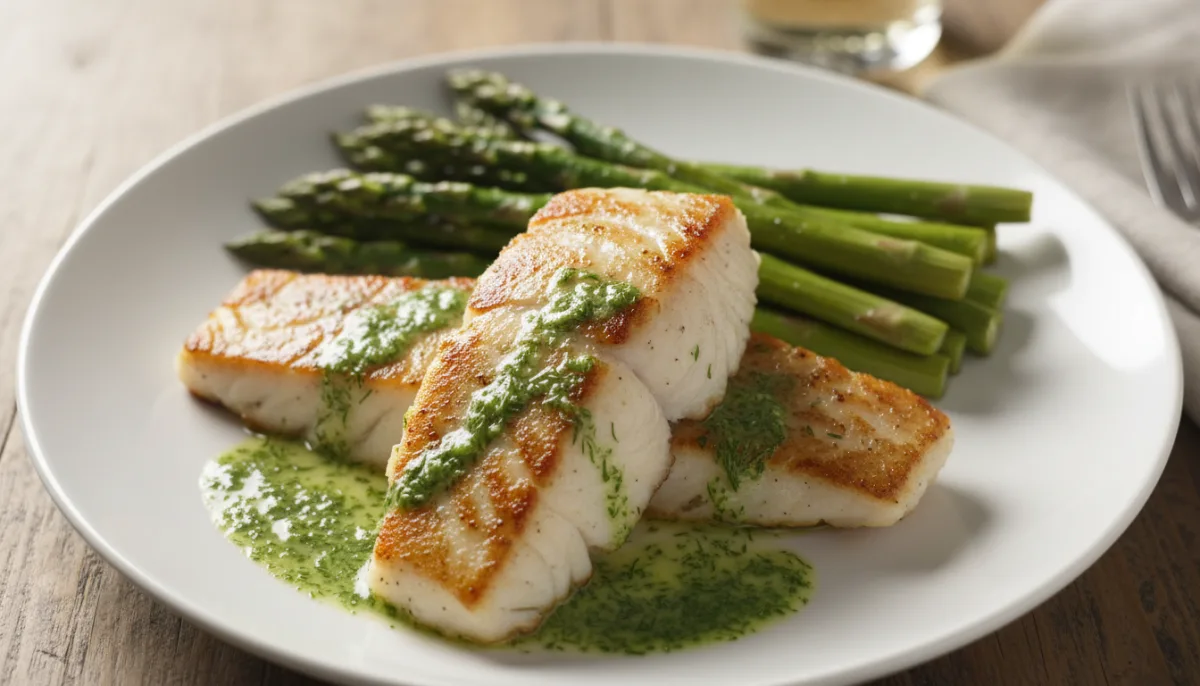
Pan-Seared Cod with Dill Butter and Roasted Asparagus

Discover a delightful and simple meal featuring perfectly pan-seared cod, complemented by a vibrant dill-infused butter sauce. Paired with tender roasted asparagus, this dish offers a taste of Nordic-inspired elegance, ideal for any occasion.

✎
HOW TO MAKE IT

Let's cook.

01

Preheat your oven to 400°F (200°C). On a baking sheet, toss the trimmed asparagus with 1 tablespoon of olive oil, 1/4 teaspoon of salt, and 1/8 teaspoon of black pepper. Roast for 10-12 minutes, or until tender-crisp.

02

While the asparagus roasts, pat the cod fillets dry with paper towels. Season both sides with the remaining 1/4 teaspoon of salt and 1/8 teaspoon of black pepper.

03

Heat the remaining 1 tablespoon of olive oil in a large non-stick skillet over medium-high heat until shimmering.

04

Carefully place the cod fillets, skin-side down if applicable, into the hot skillet. Sear for 3-4 minutes until the skin is crispy and golden brown.

05

Flip the cod fillets and continue to cook for another 3-5 minutes, or until the fish is opaque and flakes easily with a fork.

06

Remove the cod from the skillet and set aside on a plate. Reduce the heat to low.

07

Add the unsalted butter to the same skillet. Once melted, stir in the fresh dill and lemon juice. Cook for 1 minute, allowing the flavors to meld.

08

Spoon the dill-infused butter sauce generously over the pan-seared cod. Serve immediately with the roasted asparagus.

About This Recipe

Discover a delightful and simple meal featuring perfectly pan-seared cod, complemented by a vibrant dill-infused butter sauce. Paired with tender roasted asparagus, this dish offers a taste of Nordic-inspired elegance, ideal for any occasion.
Pan-Seared Cod with Dill Butter and Roasted Asparagus
Simple ingredients.
Big flavor.
✦
♨

Chef's Tips

For extra crispy cod skin, ensure the fillets are very dry before searing and don't overcrowd the pan. A cast-iron skillet works wonderfully for achieving a perfect sear.
↔

Easy Substitutions

Haddock or salmon can be used instead of cod. If fresh dill is unavailable, use 1 teaspoon of dried dill, but fresh is highly recommended for flavor. Green beans or broccoli florets can replace asparagus.
▱

Storage & Reheating

Store leftover cod and asparagus in an airtight container in the refrigerator for up to 2 days. Reheat gently in a skillet over low heat or in the microwave to prevent drying out the fish.

Serving Suggestions

Serve this dish with a side of boiled new potatoes or a light quinoa salad. A crisp green salad with a simple vinaigrette would also complement the flavors beautifully. For a more substantial meal, add a slice of rye bread.

Common Mistakes

1. Not patting the fish dry: This prevents a good sear and crispy skin. Always use paper towels to remove excess moisture. 2. Overcrowding the pan: Cooking too many fillets at once lowers the pan's temperature, leading to steaming instead of searing. Cook in batches if necessary. 3. Overcooking the fish: Cod cooks quickly. Watch for the fish to become opaque and flake easily; don't cook beyond that point. 4. Burning the butter sauce: Keep the heat low when making the butter sauce to prevent the butter from browning too quickly and the dill from losing its fresh flavor.

Frequently Asked Questions

Can I use frozen cod for this recipe?

Yes, but ensure it's fully thawed and thoroughly patted dry before seasoning and searing.

What if I don't have fresh dill?

While fresh dill is preferred, you can substitute with 1 teaspoon of dried dill. Add it to the butter sauce as directed.

Can I prepare the asparagus ahead of time?

You can trim the asparagus a day in advance and store it in the refrigerator. Roasting is best done just before serving for optimal texture.

How do I know when the cod is cooked through?

The cod should be opaque throughout and flake easily with a fork. An internal temperature of 145°F (63°C) indicates it's fully cooked.
MORE TO KNOW
Achieving a beautiful sear on fish is all about heat management and moisture control. Ensure your skillet is hot enough before adding the fish, and pat the fillets thoroughly dry. The initial high heat creates a crust, while finishing at a slightly lower temperature ensures the fish cooks through without burning the exterior. The dill butter sauce is best made fresh, as its vibrant flavors are most potent right after preparation.
WHAT PEOPLE THINK

Reviews

☆

No reviews yet

Be the first person to review this recipe.

SHARE YOUR THOUGHTS

Made this recipe?

Tell us how it turned out.

Your review will be checked before appearing publicly.