Home › Recipes › Breakfast ›Nepalese ›Hearty Nepalese Millet Porridge with Dried Fruits and Nuts (Kodo ko Dhido)
BREAKFAST

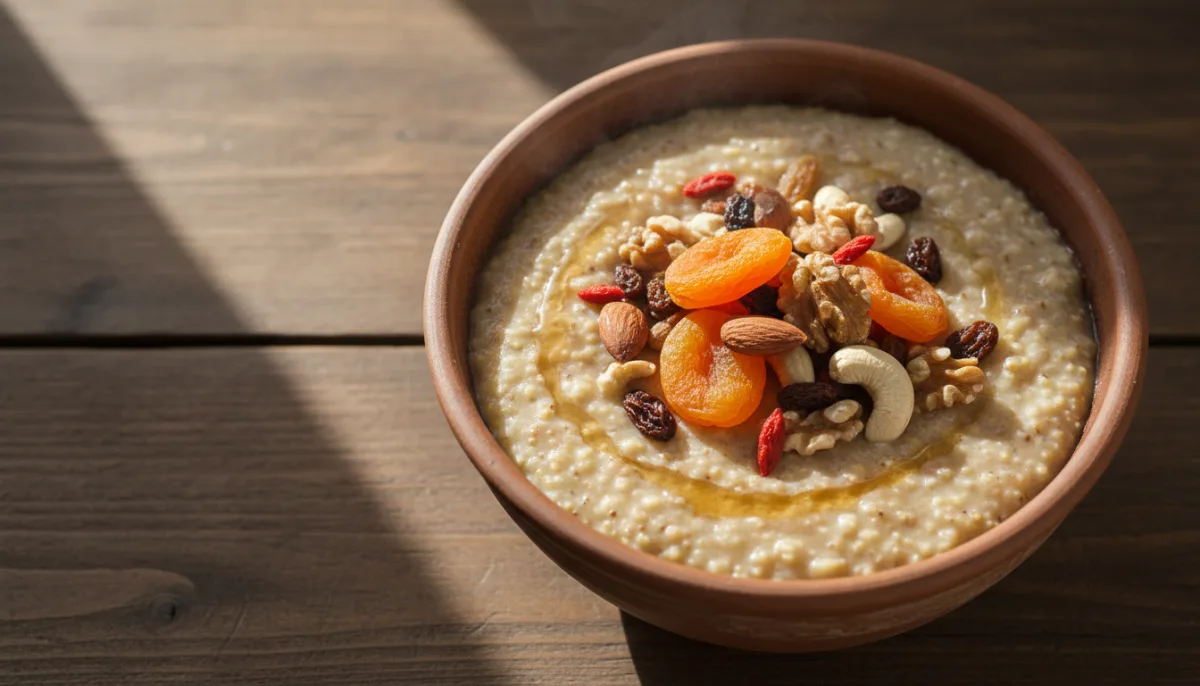
Hearty Nepalese Millet Porridge with Dried Fruits and Nuts (Kodo ko Dhido)

Warm up with a bowl of Kodo ko Dhido, a traditional Nepalese millet porridge. This naturally gluten-free dish is brimming with the wholesome goodness of millet, complemented by a delightful mix of dried fruits and crunchy nuts, making it a truly nourishing start to your day.

✎
HOW TO MAKE IT

Let's cook.

01

In a medium saucepan, bring 2 cups of water to a boil over medium-high heat.

02

In a small bowl, whisk the millet flour with the remaining 1 cup of cold water until a smooth slurry forms. This prevents lumps.

03

Once the water in the saucepan is boiling, slowly pour in the millet slurry while continuously stirring with a whisk or wooden spoon. Reduce heat to medium-low.

04

Continue stirring constantly for 15-20 minutes, or until the porridge thickens considerably and the millet is cooked through, losing its raw flour taste. It should pull away from the sides of the pan.

05

Stir in the mixed dried fruits, mixed nuts, ghee, jaggery, and cardamom powder. Cook for another 3-5 minutes, stirring occasionally, until the jaggery is fully dissolved and the fruits are softened.

06

Remove from heat and let it rest for a few minutes to set slightly before serving.

About This Recipe

Warm up with a bowl of Kodo ko Dhido, a traditional Nepalese millet porridge. This naturally gluten-free dish is brimming with the wholesome goodness of millet, complemented by a delightful mix of dried fruits and crunchy nuts, making it a truly nourishing start to your day.
Hearty Nepalese Millet Porridge with Dried Fruits and Nuts (Kodo ko Dhido)
Simple ingredients.
Big flavor.
✦
♨

Chef's Tips

For a creamier texture, you can substitute half of the water with milk. Adjust the sweetness of the jaggery or brown sugar to your preference. A pinch of salt can enhance the flavors.
↔

Easy Substitutions

If finger millet flour is unavailable, you can use pearl millet flour or even coarse cornmeal, though the flavor and texture will differ. Any combination of dried fruits and nuts can be used. Coconut oil can replace ghee for a vegan option.
▱

Storage & Reheating

Store leftover millet porridge in an airtight container in the refrigerator for up to 2 days. Reheat gently on the stovetop with a splash of water or milk to loosen its consistency.

Serving Suggestions

Serve the warm Nepalese Millet Porridge with a dollop of yogurt or a drizzle of honey. It pairs wonderfully with a side of fresh fruit like sliced apples or bananas. For an extra treat, sprinkle with toasted sesame seeds.

Common Mistakes

1. Not stirring constantly: This leads to lumpy porridge. Always stir continuously, especially when adding the millet slurry. 2. Not cooking long enough: Millet needs sufficient cooking time to lose its raw taste and achieve a smooth, thick consistency. 3. Too much liquid initially: Adding all the water at once can make it difficult to control consistency. Start with boiling water and add slurry slowly. 4. Over-sweetening: Jaggery's sweetness can vary, so add it gradually and taste as you go. 5. Using cold water for slurry: Using cold water for the slurry is crucial to prevent immediate clumping when it hits the hot water.

Frequently Asked Questions

Can I make this porridge savory?

Yes, you can omit the jaggery, dried fruits, and cardamom. Instead, add a pinch of salt, some finely chopped ginger, garlic, and green chilies, and serve with a savory curry or pickle.


Is millet gluten-free?

Yes, millet is naturally gluten-free, making this porridge a great option for those with gluten sensitivities.

What is dhido?

Dhido is a traditional Nepalese dish, often a thick porridge made from millet, corn, or buckwheat flour, typically served with curries or pickles.

Can I prepare this in advance?

While best served fresh, you can prepare it a day ahead and reheat it. You might need to add a little extra liquid (water or milk) when reheating as it will thicken considerably.
MORE TO KNOW
Kodo ko Dhido is a staple in Nepalese cuisine, particularly in hilly regions, valued for its nutritional benefits and sustained energy release. The key to a smooth dhido is continuous stirring to prevent lumps and ensure even cooking. The addition of ghee not only adds richness but also helps in the absorption of fat-soluble vitamins from the millet.
WHAT PEOPLE THINK

Reviews

☆

No reviews yet

Be the first person to review this recipe.

SHARE YOUR THOUGHTS

Made this recipe?

Tell us how it turned out.

Your review will be checked before appearing publicly.