Home › Recipes › Breakfast ›Malaysian ›Nasi Dagang with Spicy Tuna Curry
BREAKFAST

Nasi Dagang with Spicy Tuna Curry

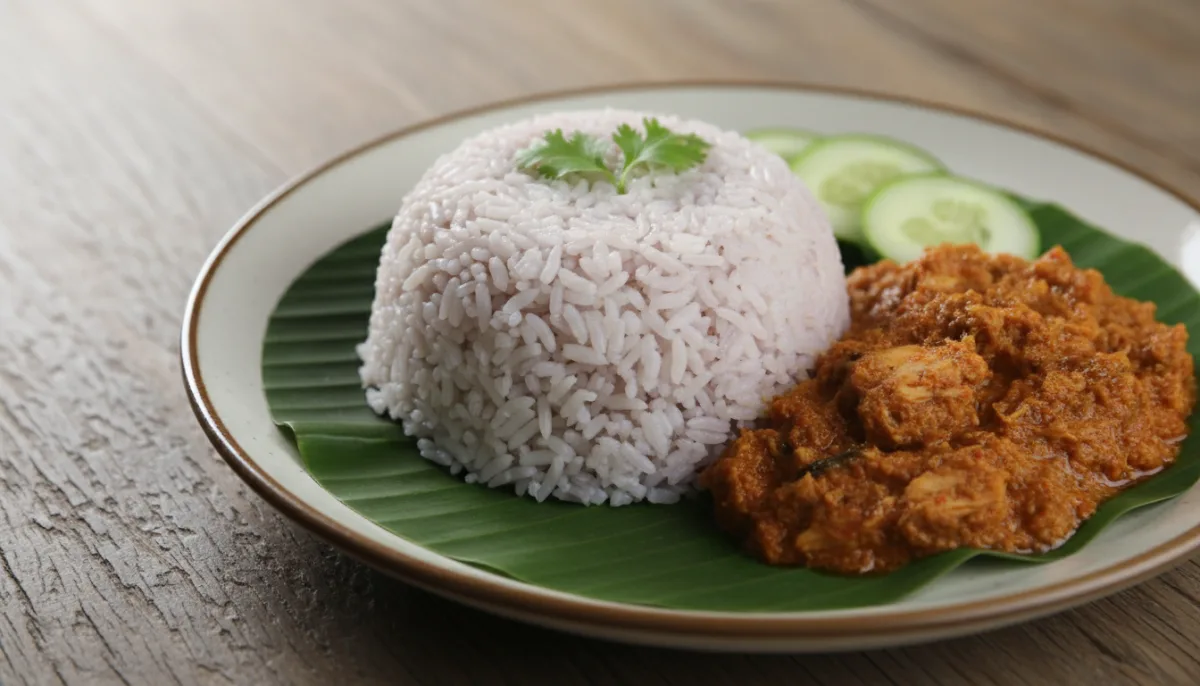
Transport your taste buds to Malaysia with this traditional Nasi Dagang. Fragrant, steamed glutinous rice is the perfect canvas for a vibrant, spicy tuna curry, creating a breakfast experience that's rich in both flavor and cultural heritage. It's a truly satisfying way to start your day.

✎
HOW TO MAKE IT

Let's cook.

01

Combine the soaked glutinous rice and basmati rice in a large bowl. Steam the mixed rice for 20 minutes over medium-high heat until partially cooked.

02

While the rice steams, prepare the coconut milk mixture. In a saucepan, gently heat 1/2 cup of coconut milk with fenugreek seeds and 1/4 teaspoon of salt until warm, not boiling. Remove from heat.

03

Transfer the partially steamed rice to a bowl. Pour the warm coconut milk mixture over the rice and gently mix until well combined. Return the rice to the steamer and steam for another 20-25 minutes, or until the rice is fully cooked and tender.

04

For the tuna curry, heat a large pan over medium heat. Add the red curry paste and sauté for 2 minutes until fragrant. Pour in the remaining 1/2 cup of coconut milk and 1 cup of water, stirring well to combine.

05

Add the drained tuna, tamarind paste, and palm sugar to the curry. Bring to a gentle simmer and cook for 10-15 minutes, stirring occasionally, until the sauce thickens slightly and the flavors meld. Season with the remaining 1/4 teaspoon of salt.

06

Serve the warm Nasi Dagang rice immediately with generous portions of the Malaysian Tuna Curry. Garnish with fresh herbs if desired.

About This Recipe

Transport your taste buds to Malaysia with this traditional Nasi Dagang. Fragrant, steamed glutinous rice is the perfect canvas for a vibrant, spicy tuna curry, creating a breakfast experience that's rich in both flavor and cultural heritage. It's a truly satisfying way to start your day.
Nasi Dagang with Spicy Tuna Curry
Simple ingredients.
Big flavor.
✦
♨

Chef's Tips

For extra fluffy rice, ensure the glutinous rice is soaked overnight. Gently fold the coconut milk into the rice to avoid mashing the grains. Adjust the red curry paste quantity to your preferred spice level.
↔

Easy Substitutions

If glutinous rice is unavailable, you can use all basmati rice, though the texture will be different. For a vegetarian option, substitute the tuna with firm tofu or chickpeas. Any mild white fish can replace tuna if preferred.
▱

Storage & Reheating

Store leftover Nasi Dagang and Tuna Curry separately in airtight containers in the refrigerator for up to 2 days. Reheat the rice by steaming or microwaving with a splash of water. Reheat the curry gently on the stovetop.

Serving Suggestions

Serve with a side of hard-boiled eggs, sliced cucumbers, and a sprinkle of fried shallots for added texture and flavor. A small bowl of sambal belacan (shrimp paste chili) can be offered for those who enjoy extra heat. Pickled vegetables (acar) also make a refreshing accompaniment.

Common Mistakes

Not soaking the glutinous rice long enough can result in hard, undercooked grains. Overcooking the rice can make it mushy; monitor steaming times closely. Adding too much liquid to the curry too quickly can dilute the flavors; build the sauce gradually. Not stirring the curry occasionally can lead to it sticking to the bottom of the pan. Using canned tuna that is not drained properly can make the curry oily.

Frequently Asked Questions

Can I use fresh tuna instead of canned tuna?

Yes, you can use fresh tuna fillets. Sear them lightly before adding to the curry paste and coconut milk, then flake them into the sauce as it simmers.


What if I don't have a steamer?

You can cook the rice in a rice cooker using the 'steam' function, or use a pot with a steamer basket insert over boiling water.

Is Nasi Dagang always served for breakfast?

While traditionally a breakfast dish, it's also enjoyed for lunch or dinner due to its hearty and satisfying nature.

Can I make the curry less spicy?

Absolutely. Reduce the amount of red curry paste to 1-2 tablespoons, or use a milder curry paste.
MORE TO KNOW
Nasi Dagang is traditionally a breakfast dish from the East Coast of Peninsular Malaysia, particularly Terengganu and Kelantan. The unique blend of glutinous and basmati rice gives it a distinct texture, while the fenugreek seeds impart a subtle, aromatic flavor. The steaming process is crucial for achieving the perfect consistency, ensuring each grain is tender yet separate. The tuna curry, known as 'Gulai Ikan Tongkol', is a staple accompaniment, offering a rich, spicy, and slightly tangy counterpoint to the mild rice. Mastering the balance of spices in the curry is key to an authentic taste.
WHAT PEOPLE THINK

Reviews

☆

No reviews yet

Be the first person to review this recipe.

SHARE YOUR THOUGHTS

Made this recipe?

Tell us how it turned out.

Your review will be checked before appearing publicly.