Home › Recipes › Dinner ›Latvian ›Latvian Pork and Sauerkraut Stew (Skābētu Kāpostu Zupa) with Dill
DINNER

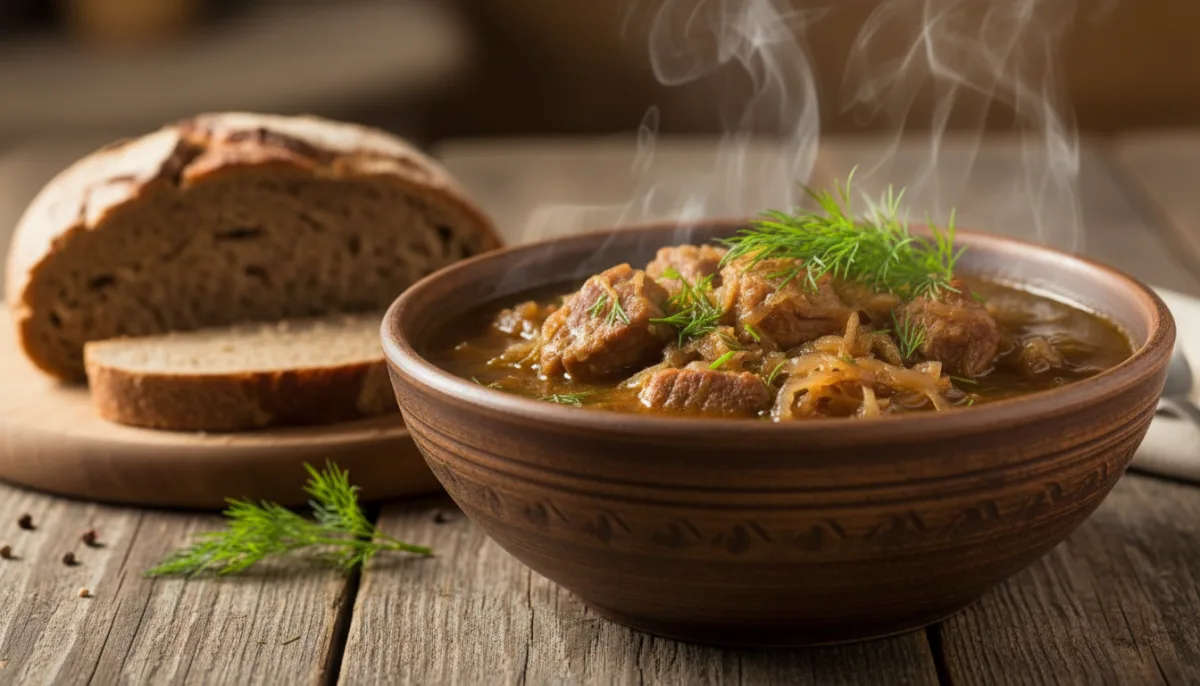
Latvian Pork and Sauerkraut Stew (Skābētu Kāpostu Zupa) with Dill

This hearty Latvian stew combines tender pork, tangy sauerkraut, and aromatic dill for a comforting and flavorful meal. It's a traditional dish perfect for a chilly evening, offering a delightful balance of savory and sour notes.

✎
HOW TO MAKE IT

Let's cook.

01

Pat the pork cubes dry with paper towels. Heat 1 tablespoon of vegetable oil in a large Dutch oven or heavy-bottomed pot over medium-high heat. Brown the pork in batches for 5-7 minutes per batch, until golden on all sides. Remove the browned pork and set aside.

02

Reduce heat to medium. Add the chopped onion to the pot and cook for 5-7 minutes, stirring occasionally, until softened and translucent.

03

Add the minced garlic and caraway seeds to the pot. Cook for 1 minute, stirring constantly, until fragrant.

04

Return the browned pork to the pot. Add the drained sauerkraut, beef broth, and black pepper. Stir to combine all ingredients.

05

Bring the stew to a simmer, then reduce the heat to low, cover the pot, and cook for 75-80 minutes, or until the pork is very tender.

06

Stir in the fresh chopped dill during the last 5 minutes of cooking. Taste and adjust seasoning if necessary, adding salt if needed (sauerkraut can be salty).

07

Serve hot and enjoy this comforting Latvian stew.

About This Recipe

This hearty Latvian stew combines tender pork, tangy sauerkraut, and aromatic dill for a comforting and flavorful meal. It's a traditional dish perfect for a chilly evening, offering a delightful balance of savory and sour notes.
Latvian Pork and Sauerkraut Stew (Skābētu Kāpostu Zupa) with Dill
Simple ingredients.
Big flavor.
✦
♨

Chef's Tips

For extra flavor, you can add 1-2 bay leaves during the simmering process and remove them before serving. A touch of smoked paprika can also enhance the depth of flavor.
↔

Easy Substitutions

If pork shoulder is unavailable, boneless pork loin or country-style ribs can be used, though cooking time may vary. Vegetable broth can replace beef broth for a lighter flavor. Fresh parsley can be used if dill is not preferred, but dill is traditional.
▱

Storage & Reheating

Store leftover stew in an airtight container in the refrigerator for up to 3-4 days. Reheat gently on the stovetop over medium-low heat until warmed through, or in the microwave.

Serving Suggestions

Serve this hearty stew with a dollop of sour cream or plain yogurt. It pairs wonderfully with boiled potatoes or crusty rye bread for soaking up the delicious broth. A simple green salad with a light vinaigrette can provide a fresh contrast.

Common Mistakes

Over-salting: Sauerkraut can be very salty, so taste before adding extra salt. Not browning the pork: Browning adds a crucial layer of flavor and color to the stew. Not simmering long enough: The pork needs ample time to become tender, so don't rush the cooking process. Over-rinsing sauerkraut: While rinsing helps with saltiness, too much can remove all its characteristic tang.

Frequently Asked Questions

Can I make this stew in a slow cooker?

Yes, you can brown the pork and sauté the aromatics on the stovetop, then transfer everything to a slow cooker and cook on low for 6-8 hours or on high for 3-4 hours, until the pork is tender.


What kind of sauerkraut should I use?

Look for good quality, fermented sauerkraut, preferably in a jar or from the refrigerated section of your grocery store, rather than canned.

Can I freeze this stew?

Yes, this stew freezes well. Allow it to cool completely, then transfer to freezer-safe containers and freeze for up to 3 months. Thaw in the refrigerator overnight before reheating.
MORE TO KNOW
The key to a great Skābētu Kāpostu Zupa is the slow simmering, which allows the pork to become incredibly tender and the flavors to meld beautifully. Rinsing the sauerkraut is important to control the saltiness and acidity, so adjust based on your preference and the sauerkraut brand. The caraway seeds are essential for the authentic Latvian flavor profile, providing a warm, slightly anise-like note that complements the pork and sauerkraut perfectly.
WHAT PEOPLE THINK

Reviews

☆

No reviews yet

Be the first person to review this recipe.

SHARE YOUR THOUGHTS

Made this recipe?

Tell us how it turned out.

Your review will be checked before appearing publicly.