Home › Recipes › Dinner ›Latvian ›Latvian Aukstā Zupa (Cold Beet Soup) with Hard-Boiled Eggs and Fresh Herbs
DINNER

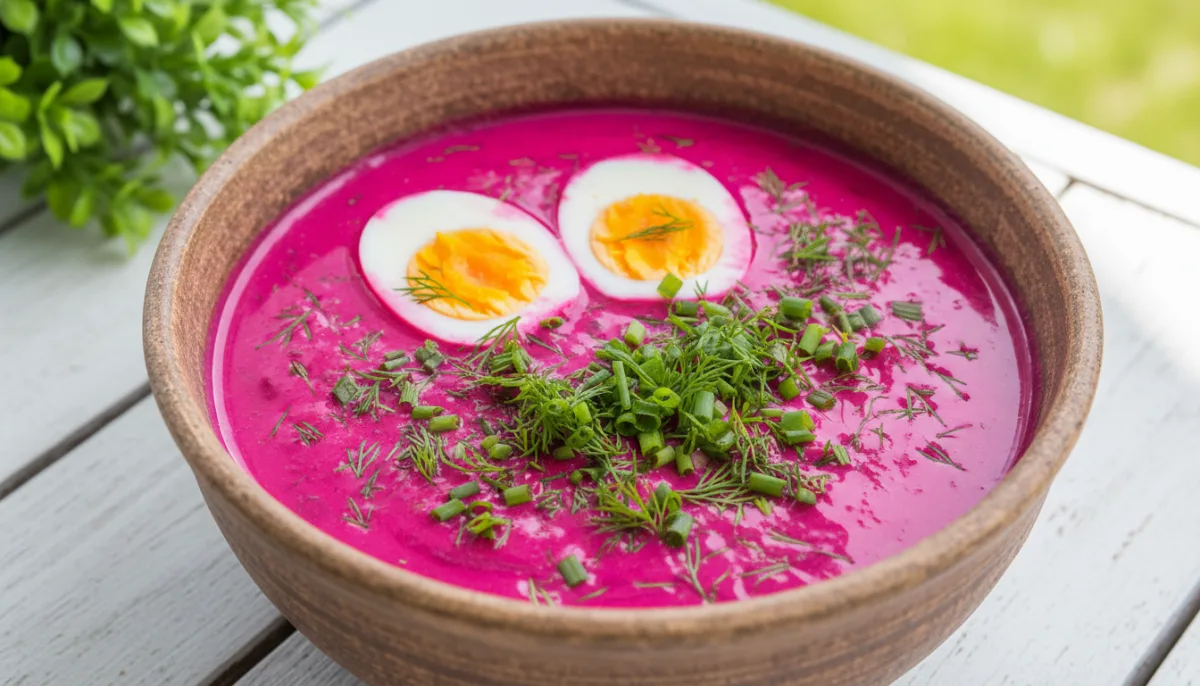
Latvian Aukstā Zupa (Cold Beet Soup) with Hard-Boiled Eggs and Fresh Herbs

This vibrant and refreshing Latvian cold beet soup is perfect for a warm day. It combines earthy beets with tangy kefir, crunchy cucumber, and a generous sprinkle of fresh dill and chives, topped with hearty hard-boiled eggs.

✎
HOW TO MAKE IT

Let's cook.

01

To prepare the beets, place them in a pot, cover with water, and bring to a boil over high heat. Reduce heat to medium-low and simmer for 20-25 minutes, or until tender when pierced with a fork. Drain, cool, peel, and grate the cooked beets.

02

In a large bowl, combine the grated beets, kefir, finely diced cucumber, white vinegar, salt, and black pepper. Stir well to combine all ingredients.

03

Finely chop the fresh dill and chives. Add half of the chopped herbs to the soup mixture and stir.

04

Peel the hard-boiled eggs and quarter them or cut them into smaller pieces.

05

Taste the soup and adjust seasoning if necessary, adding more salt, pepper, or vinegar to your preference.

06

Chill the soup in the refrigerator for at least 30 minutes to allow the flavors to meld and for it to become thoroughly cold.

07

Serve the cold beet soup in individual bowls, garnishing each serving with the remaining fresh dill, chives, and hard-boiled egg pieces.

About This Recipe

This vibrant and refreshing Latvian cold beet soup is perfect for a warm day. It combines earthy beets with tangy kefir, crunchy cucumber, and a generous sprinkle of fresh dill and chives, topped with hearty hard-boiled eggs.
Latvian Aukstā Zupa (Cold Beet Soup) with Hard-Boiled Eggs and Fresh Herbs
Simple ingredients.
Big flavor.
✦
♨

Chef's Tips

For an extra tangy flavor, you can add a spoonful of sour cream or plain yogurt to each serving. Adjust the amount of vinegar or lemon juice to achieve your desired level of tartness. The soup can be made a day ahead for even better flavor.
↔

Easy Substitutions

If kefir is unavailable, use buttermilk or a mixture of plain yogurt and water. Radishes can be added for extra crunch. For a vegetarian option, omit the eggs or replace them with crumbled feta cheese.
▱

Storage & Reheating

Store leftover Aukstā Zupa in an airtight container in the refrigerator for up to 3 days. It is best consumed cold.

Serving Suggestions

Serve Aukstā Zupa with a side of crispy rye bread or boiled new potatoes. It pairs wonderfully with a light green salad. For a heartier meal, offer it alongside smoked fish or grilled chicken.

Common Mistakes

1. Not chilling the soup enough: This soup is meant to be served very cold; insufficient chilling will result in a less refreshing experience. 2. Overcooking the beets: Beets should be tender but not mushy. Overcooked beets can make the soup watery. 3. Not adjusting seasoning: Kefir and beets vary in sweetness and tanginess, so always taste and adjust salt, pepper, and vinegar before serving. 4. Adding all herbs too early: Reserve some fresh herbs for garnish to maintain their vibrant color and fresh aroma.

Frequently Asked Questions

Can I use raw beets for this recipe?

While some recipes use raw beets, cooking them first makes them tender and releases their sweet, earthy flavor, which is traditional for Aukstā Zupa.


What is kefir?

Kefir is a fermented milk drink, similar to a thin yogurt, known for its tangy taste and probiotic benefits. It's widely available in most grocery stores.

Can I make this soup vegan?

Yes, you can substitute the kefir with a plant-based yogurt or buttermilk alternative and omit the hard-boiled eggs.

How long does it take to hard-boil eggs?

Place eggs in a pot, cover with water, bring to a rolling boil over high heat, then immediately remove from heat, cover, and let stand for 10-12 minutes. Transfer to an ice bath to cool.
MORE TO KNOW
Aukstā Zupa, meaning 'cold soup' in Latvian, is a beloved summer dish across the Baltics and Eastern Europe. Its vibrant pink color comes from the beets, which are often cooked and then grated or finely diced. The key to its refreshing quality is the use of a fermented dairy base like kefir or buttermilk, which provides a pleasant tang that balances the sweetness of the beets. The addition of fresh herbs and crunchy vegetables makes it a light yet satisfying meal.
WHAT PEOPLE THINK

Reviews

☆

No reviews yet

Be the first person to review this recipe.

SHARE YOUR THOUGHTS

Made this recipe?

Tell us how it turned out.

Your review will be checked before appearing publicly.