Home › Recipes › Lunch ›Georgian ›Georgian Khinkali with Savory Beef and Pork Filling
LUNCH

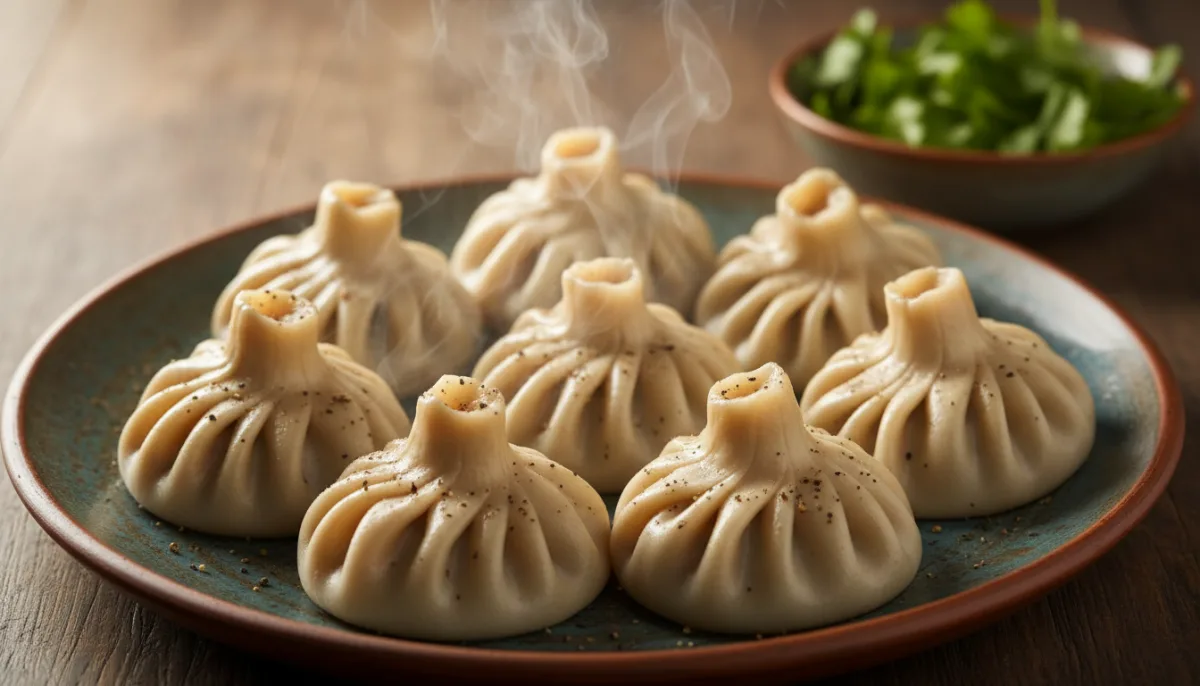
Georgian Khinkali with Savory Beef and Pork Filling

Discover the culinary delight of Khinkali, Georgia's beloved soup dumplings. This recipe guides you through crafting tender, pleated parcels brimming with a richly spiced beef and pork filling, promising a truly comforting and satisfying meal.

✎
HOW TO MAKE IT

Let's cook.

01

To make the dough, combine 2 cups all-purpose flour and 1/2 teaspoon salt in a large bowl. Gradually add 3/4 cup cold water, mixing until a shaggy dough forms. Knead on a lightly floured surface for 8-10 minutes until smooth and elastic. Cover with plastic wrap and let rest for 30 minutes.

02

While the dough rests, prepare the filling. In a separate bowl, combine 1/2 pound ground beef, 1/2 pound ground pork, 1 finely minced medium onion, 1/4 cup chopped fresh cilantro, 1/4 cup cold water, 1 teaspoon ground cumin, 1/2 teaspoon red pepper flakes, 1 teaspoon salt, and 1/2 teaspoon black pepper. Mix thoroughly until well combined.

03

Divide the rested dough into 4 equal pieces. Roll each piece into a thin log, then cut each log into 6-8 smaller pieces. Roll each small piece into a thin, 4-5 inch diameter circle.

04

Place about 1 tablespoon of the meat filling in the center of each dough circle. Gather the edges of the dough, pleating them upwards to form a small pouch, twisting the top to seal it completely. Ensure no gaps remain to keep the juices inside.

05

Bring a large pot of salted water to a rolling boil over high heat. Carefully drop the khinkali into the boiling water, ensuring not to overcrowd the pot. Cook for 10-12 minutes, or until the khinkali float to the surface and the dough is tender.

06

Remove the cooked khinkali with a slotted spoon and serve immediately. Sprinkle with freshly ground black pepper if desired.

About This Recipe

Discover the culinary delight of Khinkali, Georgia's beloved soup dumplings. This recipe guides you through crafting tender, pleated parcels brimming with a richly spiced beef and pork filling, promising a truly comforting and satisfying meal.
Georgian Khinkali with Savory Beef and Pork Filling
Simple ingredients.
Big flavor.
✦
♨

Chef's Tips

The key to juicy khinkali is to keep the filling moist; the cold water added to the meat helps create the "soup" inside. When pleating, aim for at least 18-20 pleats for an authentic look and a strong seal. Do not overcook, as this can cause the dumplings to burst.
↔

Easy Substitutions

For a leaner option, use all ground beef or ground chicken. If fresh cilantro is unavailable, fresh parsley can be used, though the flavor profile will be slightly different. Adjust red pepper flakes to your preferred spice level.
▱

Storage & Reheating

Cooked khinkali are best enjoyed immediately. Leftovers can be stored in an airtight container in the refrigerator for up to 2 days. Reheat gently by steaming or pan-frying until warmed through. Uncooked khinkali can be frozen on a floured baking sheet until solid, then transferred to a freezer bag for up to 1 month. Cook from frozen in boiling water, adding a few extra minutes to the cooking time.

Serving Suggestions

Serve khinkali hot with a generous sprinkle of freshly ground black pepper. A side of plain yogurt or sour cream can offer a cooling contrast. A simple green salad with a light vinaigrette also pairs well. For a more traditional Georgian experience, serve with a glass of dry red wine.

Common Mistakes

Overfilling the dough can lead to bursting during cooking, so use about 1 tablespoon of filling per dumpling. Not sealing the pleats properly will cause the broth to escape, resulting in dry khinkali. Overcooking will make the dough mushy and potentially cause the dumplings to fall apart. Not adding enough cold water to the filling will result in less "soup" inside the dumpling. Rolling the dough too thick will make the khinkali heavy and less enjoyable.

Frequently Asked Questions

Can I make the dough ahead of time?

Yes, the dough can be made up to 24 hours in advance and stored in the refrigerator, tightly wrapped in plastic wrap. Let it come to room temperature for about 15-20 minutes before rolling.


What is the best way to eat khinkali?

Hold the khinkali by the pleated top, take a small bite from the side, slurp out the hot broth, then eat the rest of the dumpling. The pleated top is typically discarded.

Why is cold water added to the meat filling?

The cold water helps create the savory broth inside the khinkali as it cooks, making the dumplings juicy and flavorful.
MORE TO KNOW
The art of pleating khinkali takes practice, but don't be discouraged if your first few aren't perfect. The goal is to create a tight seal at the top to trap the flavorful broth inside. Many Georgians hold the khinkali by the pleated top (the "kudi" or "hat") while eating, biting into the side to slurp the broth first, then eating the rest of the dumpling. The kudi is often left on the plate. This method prevents the delicious broth from spilling out.
WHAT PEOPLE THINK

Reviews

☆

No reviews yet

Be the first person to review this recipe.

SHARE YOUR THOUGHTS

Made this recipe?

Tell us how it turned out.

Your review will be checked before appearing publicly.