Home›Recipes›Lunch›Kazakh›Kazakh Beshbarmak (Five Finger Dish) with Lamb and Noodles
LUNCH
Kazakh Beshbarmak (Five Finger Dish) with Lamb and Noodles
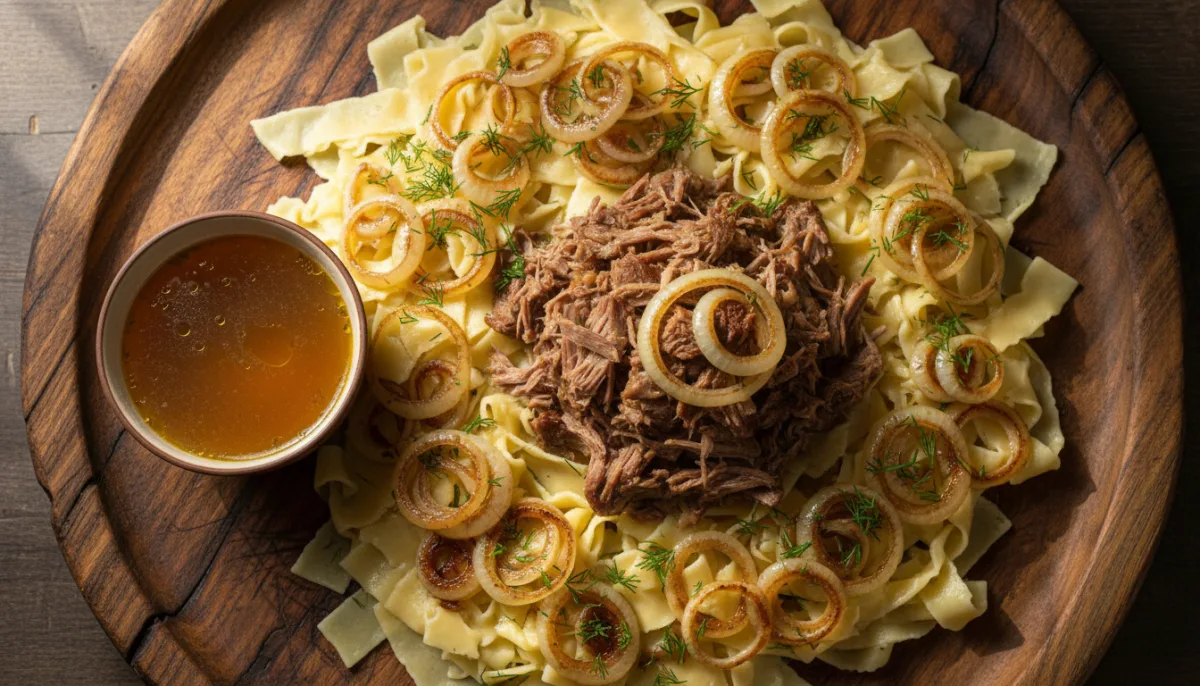
Beshbarmak, meaning 'five fingers', is a traditional Kazakh dish eaten with the hands. This hearty version features tender lamb simmered in a flavorful broth, served over wide, homemade noodles and topped with caramelized onions.
Place the lamb shoulder pieces in a large pot and cover with 8 cups of cold water. Add 1 tablespoon of salt and the quartered onion. Bring to a boil over high heat, then reduce heat to low, cover, and simmer for 2 hours, or until the lamb is very tender and easily pulls from the bone. Skim any foam that rises to the surface during the first 30 minutes of cooking.
02
While the lamb simmers, prepare the noodles. In a large bowl, combine the flour, eggs, and 1/4 cup of water. Mix until a shaggy dough forms, then turn out onto a lightly floured surface and knead for 5-7 minutes until smooth and elastic. Cover the dough with a clean kitchen towel and let it rest for 30 minutes.
03
Once the lamb is tender, carefully remove it from the broth and set aside to cool slightly. Strain the broth through a fine-mesh sieve into a clean pot, discarding the cooked onion. Keep the broth warm over low heat.
04
Shred the cooled lamb meat into bite-sized pieces, discarding any bones or excess fat.
05
Roll out the noodle dough very thinly on a lightly floured surface, aiming for a thickness of about 1/16 inch. Cut the dough into wide, rectangular noodles, approximately 2 inches by 3 inches.
06
In a separate skillet, heat the vegetable oil over medium heat. Add the thinly sliced onion and cook for 10-12 minutes, stirring occasionally, until deeply caramelized and golden brown.
07
Bring a portion of the lamb broth to a rolling boil in a wide pot. Cook the noodles in batches for 2-3 minutes, or until al dente. Remove the cooked noodles with a slotted spoon and arrange them on a large serving platter.
08
Arrange the shredded lamb meat over the noodles. Ladle some of the hot broth over the lamb and noodles. Top generously with the caramelized onions and chopped fresh dill. Serve immediately with additional broth on the side for dipping or sipping.
09
Traditionally, Beshbarmak is eaten with your hands, combining a piece of noodle, lamb, and onion. Enjoy!
About This Recipe
Beshbarmak, meaning 'five fingers', is a traditional Kazakh dish eaten with the hands. This hearty version features tender lamb simmered in a flavorful broth, served over wide, homemade noodles and topped with caramelized onions.
Simple ingredients. Big flavor.✦
♨
Chef's Tips
For a richer broth, you can brown the lamb pieces in a little oil before adding water and simmering. Ensure your noodle dough is rolled very thin; this is key to the dish's texture. Don't overcrowd the pot when cooking the noodles, as this can make them stick together.
↔
Easy Substitutions
Beef or horse meat can be used instead of lamb, following the same cooking times. If fresh dill is unavailable, fresh parsley can be a substitute, though the flavor profile will be slightly different. Store-bought wide egg noodles can be used in a pinch, but homemade noodles are highly recommended for authenticity.
▱
Storage & Reheating
Leftover Beshbarmak components (lamb, noodles, broth) should be stored separately in airtight containers in the refrigerator for up to 3 days. Reheat the lamb and noodles gently in a pan with some broth, or microwave until warmed through. The broth can be reheated on the stovetop.
Serving Suggestions
Serve with small bowls of the hot lamb broth (sorpa) on the side. A simple green salad with a light vinaigrette can offer a fresh contrast. Pickled vegetables, such as pickled cucumbers or cabbage, are also a traditional accompaniment. A sprinkle of freshly ground black pepper over the top just before serving enhances the flavor.
Common Mistakes
Overcooking the lamb: While it needs to be tender, don't let it disintegrate. Simmer gently until it pulls apart easily. Not resting the noodle dough: This makes the dough difficult to roll thinly and can result in tough noodles. Overcrowding the pot when cooking noodles: This lowers the water temperature and can lead to sticky, unevenly cooked noodles. Not skimming the broth: This can result in a cloudy broth with impurities. Undercooking or overcooking the noodles: They should be al dente, firm yet tender.
Frequently Asked Questions
Can I make the noodles ahead of time?
Yes, you can make the noodle dough, roll it out, and cut it. Let the cut noodles dry on a floured surface for a few hours, then store them in an airtight container at room temperature for up to 2 days, or freeze for longer storage.
What kind of lamb is best for Beshbarmak?
Bone-in lamb shoulder or leg is ideal as the bones add depth of flavor to the broth. Look for cuts with a good amount of meat and some fat for richness.
Is it really eaten with hands?
Traditionally, yes! The name 'Beshbarmak' literally means 'five fingers', referring to the custom of eating it by hand. However, using a fork is perfectly acceptable if preferred.
Can I use a pressure cooker for the lamb?
Yes, a pressure cooker can significantly reduce the cooking time for the lamb. Cook for about 45-60 minutes under high pressure, then naturally release the pressure.
MORE TO KNOW
The art of making Beshbarmak noodles lies in achieving a thin, yet resilient texture. After kneading, allowing the dough to rest is crucial for gluten relaxation, making it easier to roll out. When rolling, use plenty of flour to prevent sticking, and aim for a uniform thickness. The wide, flat shape is characteristic of Beshbarmak, designed to be easily picked up with the fingers along with the meat. The broth, known as 'sorpa', is often served on the side in small bowls for sipping, complementing the rich flavors of the meat and noodles.