Home › Recipes › Dinner ›Iraqi ›Iraqi Lamb and Okra Stew (Bamya) with Rice
DINNER

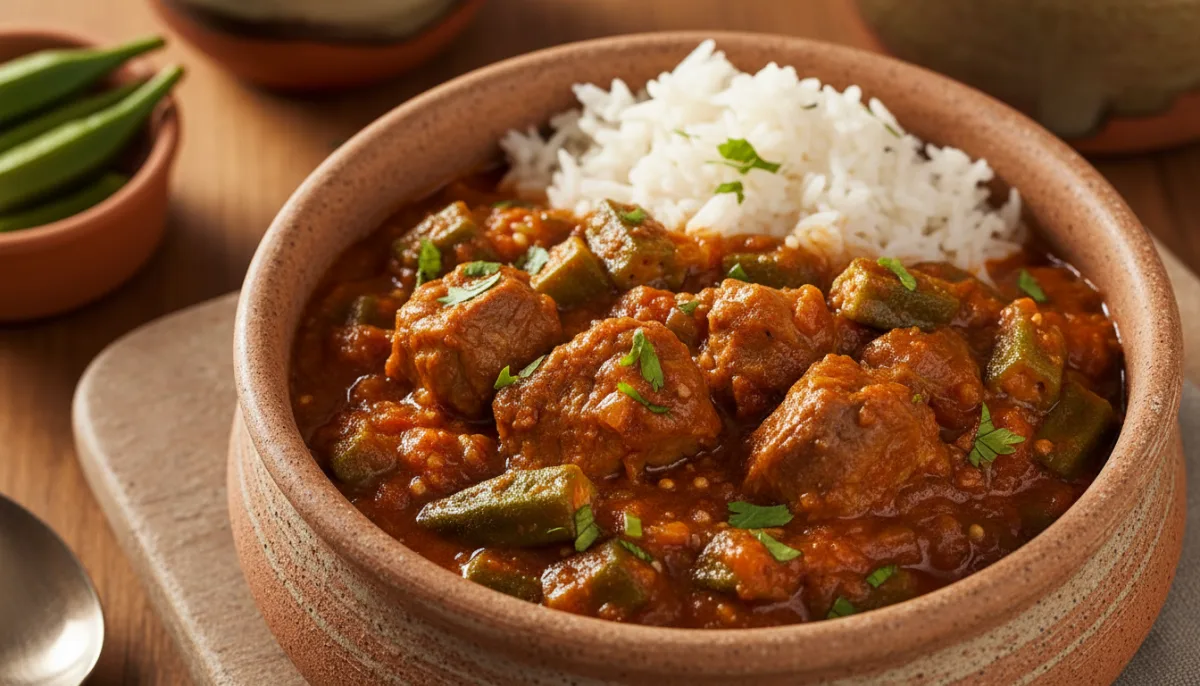
Iraqi Lamb and Okra Stew (Bamya) with Rice

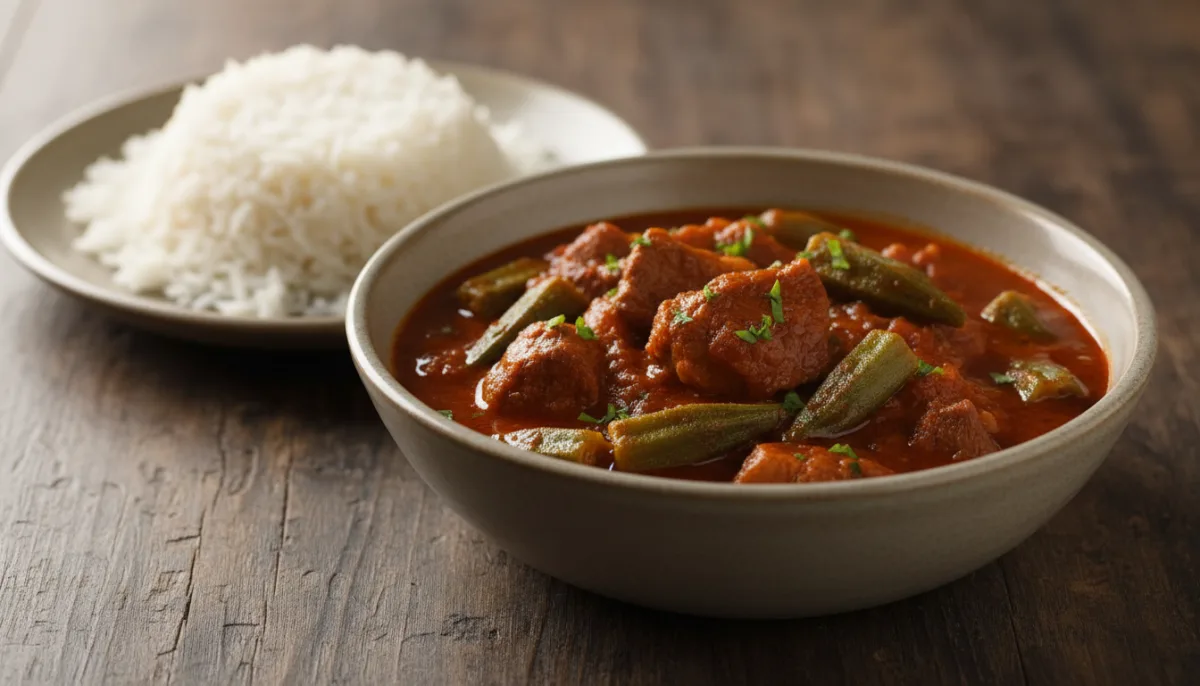
This hearty Iraqi Lamb and Okra Stew, known as Bamya, features tender lamb and okra simmered in a rich tomato-based sauce, traditionally served over fluffy rice. It's a comforting and flavorful dish perfect for a family dinner.

✎
HOW TO MAKE IT

Let's cook.

01

Heat 1 tablespoon of olive oil in a large pot or Dutch oven over medium-high heat. Add the 1 pound of lamb cubes and sear until browned on all sides, about 5-7 minutes. Remove the lamb from the pot and set aside.

02

Add 1 medium chopped yellow onion to the pot and cook over medium heat until softened and translucent, about 5 minutes. Add 3 minced cloves of garlic and cook for 1 minute more until fragrant.

03

Stir in the 1 can of crushed tomatoes and 1 cup of water. Bring the mixture to a simmer, then return the seared lamb to the pot. Season with 1 teaspoon of salt and 1/2 teaspoon of black pepper.

04

Reduce the heat to low, cover the pot, and simmer for 60 minutes, or until the lamb is tender. Stir occasionally to prevent sticking.

05

Add the 1 pound of trimmed okra to the stew. Increase the heat to medium-low, cover, and continue to simmer for another 20-25 minutes, or until the okra is tender but not mushy.

06

Taste and adjust seasoning as needed. Serve the Iraqi Lamb and Okra Stew hot, traditionally alongside fluffy white rice.

About This Recipe

This hearty Iraqi Lamb and Okra Stew, known as Bamya, features tender lamb and okra simmered in a rich tomato-based sauce, traditionally served over fluffy rice. It's a comforting and flavorful dish perfect for a family dinner.
Iraqi Lamb and Okra Stew (Bamya) with Rice
Simple ingredients.
Big flavor.
✦
♨

Chef's Tips

For best results, use fresh okra and trim the caps carefully to avoid cutting into the pods, which can release too much mucilage. If using frozen okra, do not thaw before adding to the stew.
↔

Easy Substitutions

Beef stew meat can be used instead of lamb. For a vegetarian version, use chickpeas and potatoes instead of meat. A squeeze of fresh lemon juice at the end can brighten the flavors.
▱

Storage & Reheating

Store leftover Bamya in an airtight container in the refrigerator for up to 3 days. Reheat gently on the stovetop over medium-low heat until warmed through, adding a splash of water if needed.

Serving Suggestions

Serve this Iraqi Lamb and Okra Stew with a side of plain white basmati rice to soak up the delicious sauce. A simple side salad with a lemon-tahini dressing or fresh flatbread (khubz) would also be excellent accompaniments. A sprinkle of fresh cilantro or parsley before serving adds a nice touch of color and freshness.

Common Mistakes

Overcooking the okra can make it slimy; add it towards the end of the cooking process and cook until just tender. Not searing the lamb properly can result in less flavor; ensure a good brown crust before simmering. Not simmering long enough will leave the lamb tough; allow ample time for the meat to become fork-tender. Forgetting to season the stew adequately can lead to a bland dish; taste and adjust salt and pepper as you go.

Frequently Asked Questions

Can I use canned okra?

While fresh or frozen okra is preferred for texture, canned okra can be used. Drain and rinse it thoroughly before adding it to the stew, and reduce the final cooking time for the okra to prevent it from becoming too soft.


What kind of lamb is best for this stew?

Boneless lamb shoulder or leg are excellent choices as they become very tender when slow-cooked. Cut them into uniform 1-inch cubes for even cooking.

Can I make this stew spicier?

Yes, you can add a pinch of red pepper flakes or a small amount of a mild chili paste along with the garlic and onion for a spicier kick.
MORE TO KNOW
Iraqi Bamya is a staple in Middle Eastern cuisine, cherished for its comforting qualities and rich, savory flavors. The key to a great Bamya lies in the slow simmering of the lamb, allowing it to become incredibly tender, and the careful cooking of the okra to maintain its texture. Some variations include a touch of tamarind paste for a subtle tang, which complements the tomato base beautifully. This recipe provides a foundational approach to this beloved dish, perfect for those new to Iraqi cooking.
WHAT PEOPLE THINK

Reviews

☆

No reviews yet

Be the first person to review this recipe.

SHARE YOUR THOUGHTS

Made this recipe?

Tell us how it turned out.

Your review will be checked before appearing publicly.