Home › Recipes › Dinner ›Hong Kong ›Hong Kong Braised Goose with Dried Oysters and Black Moss
DINNER

Hong Kong Braised Goose with Dried Oysters and Black Moss

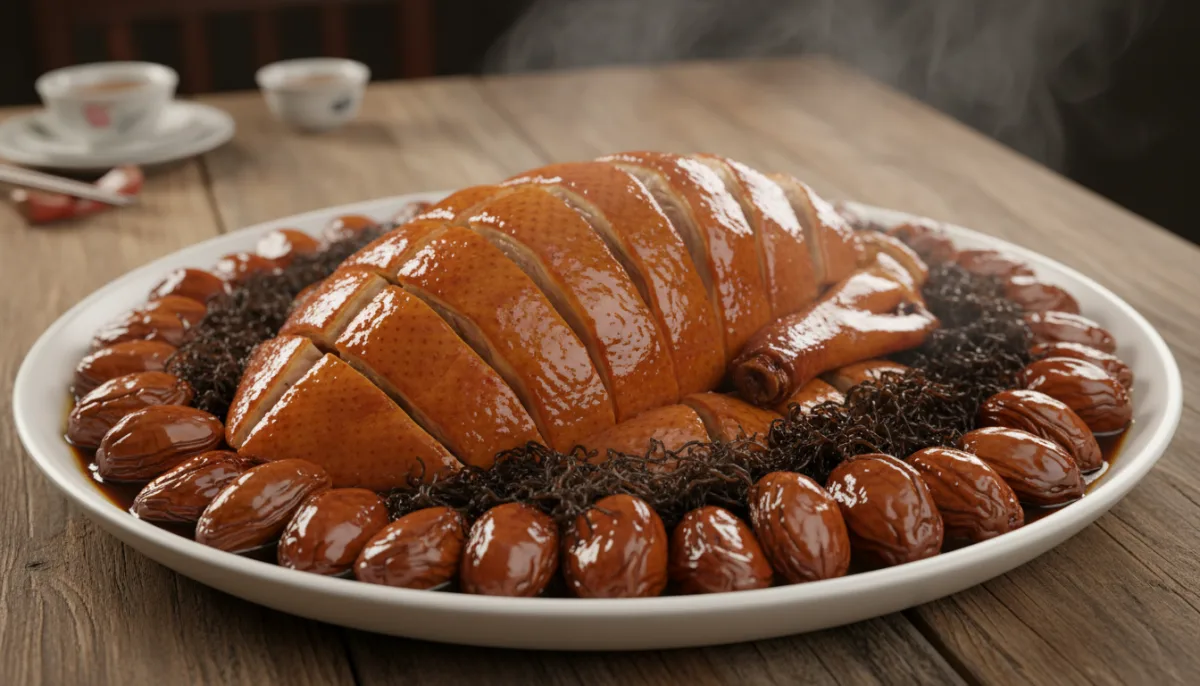
Experience the rich culinary heritage of Hong Kong with this exquisite braised goose. Tender, succulent goose is slow-cooked to perfection alongside savory dried oysters and earthy black moss, creating a dish brimming with deep, complex flavors. Often reserved for festive gatherings, this recipe embodies tradition and celebration.

✎
HOW TO MAKE IT

Let's cook.

01

Blanch the whole goose in a large pot of boiling water for 5 minutes, then rinse thoroughly under cold water and pat dry. This helps to remove impurities and tighten the skin.

02

In a large Dutch oven or heavy-bottomed pot, combine the oyster sauce, dark soy sauce, light soy sauce, rock sugar, chicken broth, ginger slices, and smashed garlic. Bring the mixture to a simmer over medium heat, stirring until the rock sugar dissolves.

03

Carefully place the blanched goose into the simmering sauce. Ensure the goose is mostly submerged; add more chicken broth if necessary. Bring the liquid back to a gentle simmer.

04

Cover the pot tightly and braise the goose over low heat for 2 hours, turning the goose every 30 minutes to ensure even cooking and flavor absorption. The goose should be very tender.

05

Drain the soaked dried oysters and black moss. Add them to the pot with the goose during the last 30 minutes of braising. Continue to simmer gently until the oysters are plump and the black moss is tender.

06

Carefully remove the goose from the pot and let it rest for 10 minutes before carving. Skim any excess fat from the braising liquid. Serve the carved goose with the dried oysters, black moss, and a generous amount of the rich braising sauce.

About This Recipe

Experience the rich culinary heritage of Hong Kong with this exquisite braised goose. Tender, succulent goose is slow-cooked to perfection alongside savory dried oysters and earthy black moss, creating a dish brimming with deep, complex flavors. Often reserved for festive gatherings, this recipe embodies tradition and celebration.
Hong Kong Braised Goose with Dried Oysters and Black Moss
Simple ingredients.
Big flavor.
✦
♨

Chef's Tips

For extra crispy skin, after blanching, you can roast the goose at 400°F/200°C for 20-30 minutes before braising. This step is optional but adds a lovely texture. Ensure your dried oysters and black moss are thoroughly rinsed to remove any grit.
↔

Easy Substitutions

If a whole goose is unavailable, you can use a large duck, adjusting the braising time as needed. For dried oysters, dried shiitake mushrooms can offer a similar umami depth, though the flavor profile will differ. Fresh black moss can be used if available, reducing soaking time.
▱

Storage & Reheating

Store leftover braised goose, oysters, and black moss in an airtight container with some of the braising liquid in the refrigerator for up to 3 days. Reheat gently on the stovetop over low heat until warmed through.

Serving Suggestions

Serve this rich braised goose with steamed jasmine rice to soak up the delicious sauce. Blanched gai lan (Chinese broccoli) or bok choy makes an excellent green vegetable accompaniment. A side of pickled ginger can offer a refreshing contrast to the richness of the dish. This dish is also perfect with a glass of aged Shaoxing wine.

Common Mistakes

One common mistake is not blanching the goose, which can result in a greasy dish and less clean flavor. Another error is not braising long enough, leading to tough meat; ensure the goose is fork-tender. Over-salting is also a risk, as dried oysters and soy sauces are already salty, so taste the braising liquid before adding extra salt. Not rinsing the dried black moss thoroughly can leave a gritty texture. Finally, cooking the dried oysters and black moss for too long can make them mushy; add them towards the end of the braising time.

Frequently Asked Questions

Can I prepare this dish in advance?

Yes, this dish often tastes even better the next day as the flavors have more time to meld. You can braise the goose a day ahead and reheat it.


What is black moss (fat choy)?

Black moss, or fat choy, is an edible terrestrial cyanobacterium. It's valued in Chinese cuisine for its unique texture and is often consumed during Lunar New Year for its auspicious name, which sounds like 'fa cai' (to get rich).

Why is rock sugar used instead of granulated sugar?

Rock sugar provides a smoother, less cloying sweetness and helps to give the braising liquid a beautiful glossy finish. It also balances the savory notes more subtly.
MORE TO KNOW
The preparation of dried ingredients like oysters and black moss is crucial for this dish. Dried oysters should be soaked until pliable, and the soaking water can be strained and added to the braising liquid for extra flavor. Black moss, also known as 'fat choy' in Cantonese, is highly prized for its texture and symbolic meaning of prosperity. Gently massaging it during rinsing helps remove any impurities. The long, slow braising process is key to achieving a tender, flavorful goose that absorbs all the aromatic nuances of the sauce.
WHAT PEOPLE THINK

Reviews

☆

No reviews yet

Be the first person to review this recipe.

SHARE YOUR THOUGHTS

Made this recipe?

Tell us how it turned out.

Your review will be checked before appearing publicly.