Home › Recipes › Lunch ›Hong Kong ›Classic Hong Kong Braised Duck with Taro
LUNCH

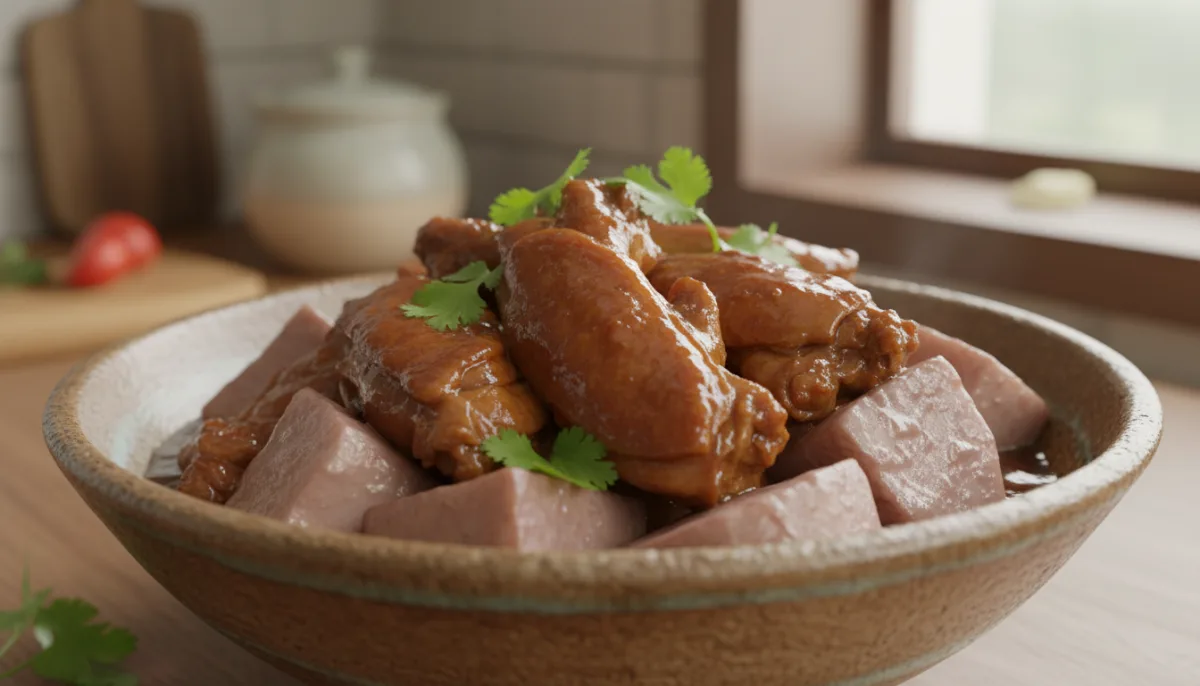
Classic Hong Kong Braised Duck with Taro

Savor the authentic taste of Hong Kong with this comforting braised duck and taro dish. Succulent duck is slow-cooked to perfection, soaking up a rich, aromatic sauce, while the taro transforms into a creamy, flavorful accompaniment.

✎
HOW TO MAKE IT

Let's cook.

01

Blanch the duck pieces in a large pot of boiling water for 5 minutes. Drain and rinse thoroughly under cold water to remove impurities. Pat dry with paper towels.

02

Heat 2 tablespoons of vegetable oil in a large pot or Dutch oven over medium-high heat. Sear the duck pieces until golden brown on all sides, about 3-4 minutes per side. Remove the duck and set aside.

03

In the same pot, add minced garlic and sliced ginger. Sauté for 1 minute until fragrant. Return the seared duck to the pot.

04

Add soy sauce, oyster sauce, Shaoxing wine, and sugar to the pot. Stir to coat the duck evenly. Pour in 2 cups of chicken broth, ensuring the duck is mostly submerged. Bring to a boil.

05

Reduce heat to low, cover the pot, and simmer for 60 minutes, stirring occasionally.

06

Add the taro chunks to the pot, ensuring they are submerged in the braising liquid. Continue to simmer, covered, for another 45-60 minutes, or until the duck is very tender and the taro is soft and creamy.

07

Taste and adjust seasoning if necessary. Serve hot with steamed rice.

About This Recipe

Savor the authentic taste of Hong Kong with this comforting braised duck and taro dish. Succulent duck is slow-cooked to perfection, soaking up a rich, aromatic sauce, while the taro transforms into a creamy, flavorful accompaniment.
Classic Hong Kong Braised Duck with Taro
Simple ingredients.
Big flavor.
✦
♨

Chef's Tips

For extra flavor, you can add 1-2 star anise pods to the braising liquid. Ensure the taro is cut into uniform pieces for even cooking. If the sauce becomes too thick, add a splash more chicken broth or water.
↔

Easy Substitutions

If Shaoxing wine is unavailable, dry sherry can be used as a substitute. Chicken thighs or pork belly can be used instead of duck, though cooking times will vary. Sweet potato can replace taro for a slightly different flavor and texture.
▱

Storage & Reheating

Store leftover braised duck and taro in an airtight container in the refrigerator for up to 3 days. Reheat gently on the stovetop over medium-low heat or in the microwave until warmed through.

Serving Suggestions

Serve this hearty braised duck with steamed jasmine rice to soak up the delicious sauce. A side of blanched gai lan (Chinese broccoli) or bok choy provides a fresh, green contrast. You can also garnish with chopped fresh cilantro for a pop of color and herbaceous note. For a complete meal, consider serving with a light, clear soup.

Common Mistakes

Not blanching the duck properly can lead to a greasy or gamey flavor in the final dish. Overcooking the taro can cause it to completely disintegrate into the sauce; add it only after the duck has had a good head start. Not simmering on low heat can result in tough duck and a reduced, overly salty sauce. Forgetting to adjust seasoning at the end can leave the dish bland or unbalanced.

Frequently Asked Questions

Can I make this dish ahead of time?

Yes, this dish often tastes even better the next day as the flavors have more time to meld. Reheat gently on the stovetop.


What kind of duck should I use?

A whole duck, cut into pieces, works best. You can ask your butcher to do this for you.

Why is my taro still hard?

Ensure your taro pieces are not too large and that they are fully submerged in the braising liquid. Continue simmering until fork-tender.

Can I use a slow cooker?

Yes, after searing the duck and sautéing aromatics, transfer everything to a slow cooker and cook on low for 4-6 hours, or until duck is tender.
MORE TO KNOW
The blanching step for the duck is crucial for achieving a clean, rich flavor in the final dish. It helps remove impurities and excess fat, resulting in a clearer and more aromatic braising liquid. Don't skip this step, and make sure to rinse the duck thoroughly afterward. The taro will absorb a lot of the braising liquid, becoming incredibly flavorful and tender, almost melting into the sauce. This is a hallmark of a well-made Hong Kong-style braise.
WHAT PEOPLE THINK

Reviews

☆

No reviews yet

Be the first person to review this recipe.

SHARE YOUR THOUGHTS

Made this recipe?

Tell us how it turned out.

Your review will be checked before appearing publicly.