Home›Recipes›Breakfast›Filipino›Filipino Pan de Sal with Creamy Kesong Puti
BREAKFAST
Filipino Pan de Sal with Creamy Kesong Puti
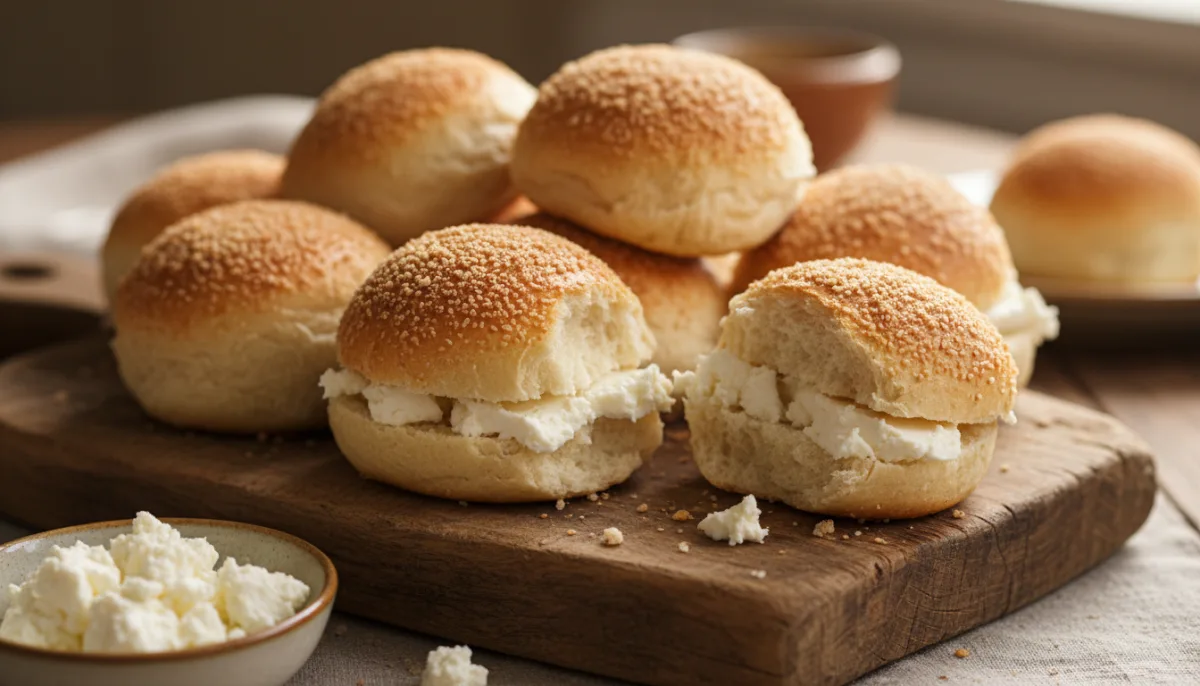
Enjoy a classic Filipino breakfast with soft, slightly sweet Pan de Sal rolls, freshly baked and served warm. These delightful bread rolls are perfectly paired with creamy, tangy Kesong Puti, a traditional white cheese, for a comforting and authentic experience.
In a large bowl, combine the warm water, yeast, and 1 tablespoon of the sugar. Let it sit for 5 minutes until foamy.
02
Add the remaining sugar, flour, salt, and melted butter to the yeast mixture. Mix until a shaggy dough forms, then knead on a lightly floured surface for 5-7 minutes until smooth and elastic.
03
Place the dough in a lightly oiled bowl, cover with a clean cloth, and let it rise in a warm place for 1 hour, or until doubled in size.
04
Punch down the dough and divide it into 12 equal pieces. Roll each piece into a log, then roll in bread crumbs to coat evenly.
05
Arrange the coated dough logs on a baking sheet lined with parchment paper. Cover and let rise for another 30 minutes.
06
Preheat your oven to 375°F (190°C). Bake the pan de sal for 12-15 minutes, or until golden brown and cooked through.
07
Remove from the oven and serve immediately with slices or crumbles of creamy kesong puti.
About This Recipe
Enjoy a classic Filipino breakfast with soft, slightly sweet Pan de Sal rolls, freshly baked and served warm. These delightful bread rolls are perfectly paired with creamy, tangy Kesong Puti, a traditional white cheese, for a comforting and authentic experience.
Simple ingredients. Big flavor.✦
♨
Chef's Tips
For extra soft pan de sal, add 1/4 cup of milk powder to the dry ingredients. Ensure your water is not too hot, as it can kill the yeast. If you don't have a warm spot for rising, place the covered bowl in a slightly warm (turned off) oven.
↔
Easy Substitutions
If kesong puti is unavailable, a mild, fresh mozzarella or feta cheese can be used as a substitute, though the flavor will differ. For the bread crumbs, panko can be used for a crispier exterior. You can also use whole wheat flour for a portion of the all-purpose flour for a healthier option.
▱
Storage & Reheating
Pan de sal is best enjoyed fresh and warm. Leftovers can be stored in an airtight container at room temperature for up to 2 days. Reheat in a toaster oven or microwave for a few seconds to restore softness. Kesong puti should be stored in the refrigerator and consumed within its expiration date.
Serving Suggestions
Serve warm Pan de Sal with kesong puti alongside a cup of hot coffee or chocolate. It also makes a great base for a simple breakfast sandwich with fried eggs or ham. For a sweet and savory twist, drizzle a little honey over the kesong puti.
Common Mistakes
1. Using water that is too hot or too cold for the yeast, which can prevent it from activating or kill it. Ensure the water is between 105-115°F (40-46°C). 2. Not kneading the dough enough, resulting in dense bread. Knead until the dough is smooth and elastic. 3. Over-baking the rolls, which can make them dry. Keep an eye on them and remove once golden brown. 4. Not allowing sufficient rising time, leading to heavy, compact rolls. Patience is key for light and fluffy bread. 5. Forgetting the bread crumb coating, which is essential for the traditional Pan de Sal texture and appearance.
Frequently Asked Questions
Can I make the dough ahead of time?
Yes, you can prepare the dough up to the first rise, then punch it down, cover tightly, and refrigerate overnight. Let it come to room temperature for about 30 minutes before shaping and proceeding with the recipe.
What is kesong puti?
Kesong puti is a soft, unripened white cheese made from carabao's milk (water buffalo milk) in the Philippines. It has a mild, slightly salty, and tangy flavor.
Can I freeze Pan de Sal?
Yes, you can freeze baked Pan de Sal. Once cooled, place them in an airtight freezer bag for up to 1 month. Thaw at room temperature and reheat for best results.
Why are my Pan de Sal rolls dense?
Density can be caused by insufficient kneading, not enough rising time, or using too much flour during kneading. Ensure your yeast is active and follow the rising times.
MORE TO KNOW
The secret to perfect Pan de Sal lies in the kneading and rising. Proper kneading develops the gluten, giving the bread its characteristic chewiness, while adequate rising ensures a light and airy texture. Don't rush these steps. The bread crumb coating is traditional and adds a subtle crunch and visual appeal. For a richer flavor, you can brush the tops of the rolls with a little melted butter before baking.