Home › Recipes › Breakfast ›Indonesian ›Traditional Egyptian Feteer Meshaltet with Honey and Cream
BREAKFAST

Traditional Egyptian Feteer Meshaltet with Honey and Cream

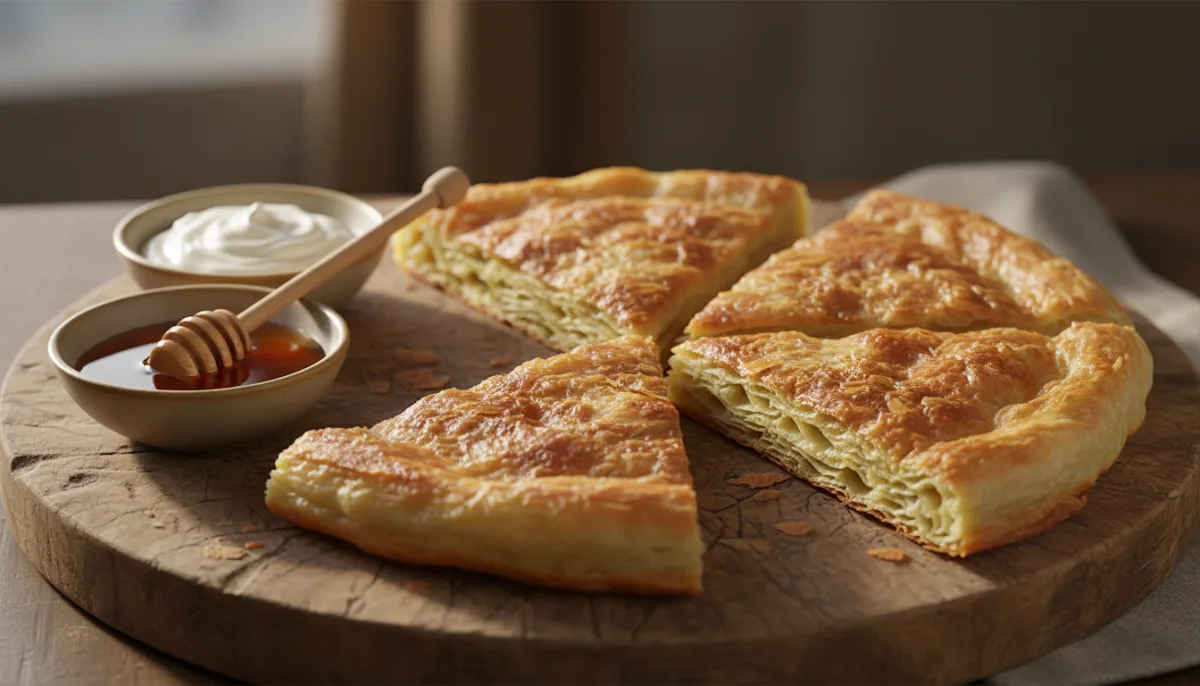
Experience the authentic taste of Egypt with this recipe for Feteer Meshaltet, a beloved layered pastry. Its signature flaky texture and buttery richness make it an ideal centerpiece for a memorable breakfast or brunch, especially when served with a drizzle of honey and a dollop of cream.

✎
HOW TO MAKE IT

Let's cook.

01

In a large bowl, combine the all-purpose flour and salt. Gradually add the warm water, mixing until a shaggy dough forms. Knead the dough on a lightly floured surface for 5-7 minutes until it is smooth and elastic.

02

Divide the dough into 4 equal balls. Lightly grease a tray with vegetable oil, place the dough balls on it, and brush them with a little more oil. Cover with plastic wrap and let rest for 15 minutes.

03

On a lightly oiled clean surface, take one dough ball and flatten it with your hands, then stretch it very thinly into a large, translucent circle or rectangle. The dough should be almost see-through.

04

Drizzle 1 tablespoon of melted butter over the stretched dough. Fold the dough into a square or rectangle, bringing the sides towards the center, overlapping them. Repeat with the remaining dough balls.

05

Place the folded dough squares back on the oiled tray, cover, and let rest for another 10 minutes. This helps relax the gluten for easier stretching.

06

Take one folded dough square and gently stretch it again into a thinner square. Place it on a baking sheet lined with parchment paper. Repeat with the remaining dough squares.

07

Bake the feteer in an oven preheated to 400°F (200°C) for 15-20 minutes, or until golden brown and puffed up. The layers should be visible and flaky.

08

Remove from the oven and immediately brush with a little extra melted butter if desired. Serve warm with heavy cream and a drizzle of honey.

09

Repeat the baking process for any remaining feteer, ensuring they are baked until golden and flaky.

About This Recipe

Experience the authentic taste of Egypt with this recipe for Feteer Meshaltet, a beloved layered pastry. Its signature flaky texture and buttery richness make it an ideal centerpiece for a memorable breakfast or brunch, especially when served with a drizzle of honey and a dollop of cream.
Traditional Egyptian Feteer Meshaltet with Honey and Cream
Simple ingredients.
Big flavor.
✦
♨

Chef's Tips

For extra flakiness, chill the melted butter until it's just solid but still spreadable before drizzling onto the dough. This helps create distinct layers. Don't be afraid to really stretch the dough thin; the thinner it is, the flakier your feteer will be.
↔

Easy Substitutions

You can use ghee instead of butter for a more traditional flavor. For a savory version, omit the honey and cream and serve with cheese, olives, or a fried egg.
▱

Storage & Reheating

Store leftover feteer in an airtight container at room temperature for up to 2 days. Reheat in a warm oven (300°F/150°C) for 5-7 minutes until warmed through and crispy.

Serving Suggestions

Serve warm feteer with a side of clotted cream (Qeshta) and a generous drizzle of honey. It also pairs wonderfully with a sprinkle of powdered sugar or a side of savory toppings like feta cheese and olives for a balanced breakfast.

Common Mistakes

1. Not kneading the dough enough: This results in a tough, less elastic dough that's hard to stretch. Knead until smooth and pliable. 2. Not resting the dough: Insufficient resting time makes the dough difficult to stretch thinly without tearing. Allow adequate rest periods. 3. Not stretching the dough thin enough: Thick dough leads to a bready, rather than flaky, texture. Aim for translucence. 4. Using too much flour during stretching: This can dry out the dough and make it less pliable. Use oil instead. 5. Overbaking: This can make the feteer dry and brittle. Watch for a golden-brown color and puffed layers.

Frequently Asked Questions

Can I make the dough ahead of time?

Yes, you can prepare the dough balls and store them in an oiled, airtight container in the refrigerator for up to 24 hours. Bring to room temperature before stretching.


What if my dough tears while stretching?

Don't worry! Simply patch it up as best you can and continue folding. The layers will still form.

Can I make this recipe savory?

Absolutely! Omit the honey and cream. You can serve it with cheese, olives, eggs, or even a spiced ground meat filling.

What is the best way to stretch the dough?

Start by flattening it with your hands, then gently pull and stretch from the center outwards, rotating the dough as you go. You can also lift and gently slap the dough on the oiled surface to help it stretch.
MORE TO KNOW
The key to perfect Feteer Meshaltet lies in the stretching of the dough. Think of it like making phyllo dough; the thinner you can get it without tearing, the more delicate and numerous the layers will be. If the dough resists stretching, let it rest for a few more minutes to allow the gluten to relax. A large, lightly oiled surface is crucial for this step. You can also use a very lightly floured surface if you prefer, but oil helps prevent sticking while maintaining elasticity.
WHAT PEOPLE THINK

Reviews

☆

No reviews yet

Be the first person to review this recipe.

SHARE YOUR THOUGHTS

Made this recipe?

Tell us how it turned out.

Your review will be checked before appearing publicly.