Home › Recipes › Breakfast ›Dominican ›Dominican Yuca Arepitas with Anise and Guava Jam
BREAKFAST

Dominican Yuca Arepitas with Anise and Guava Jam

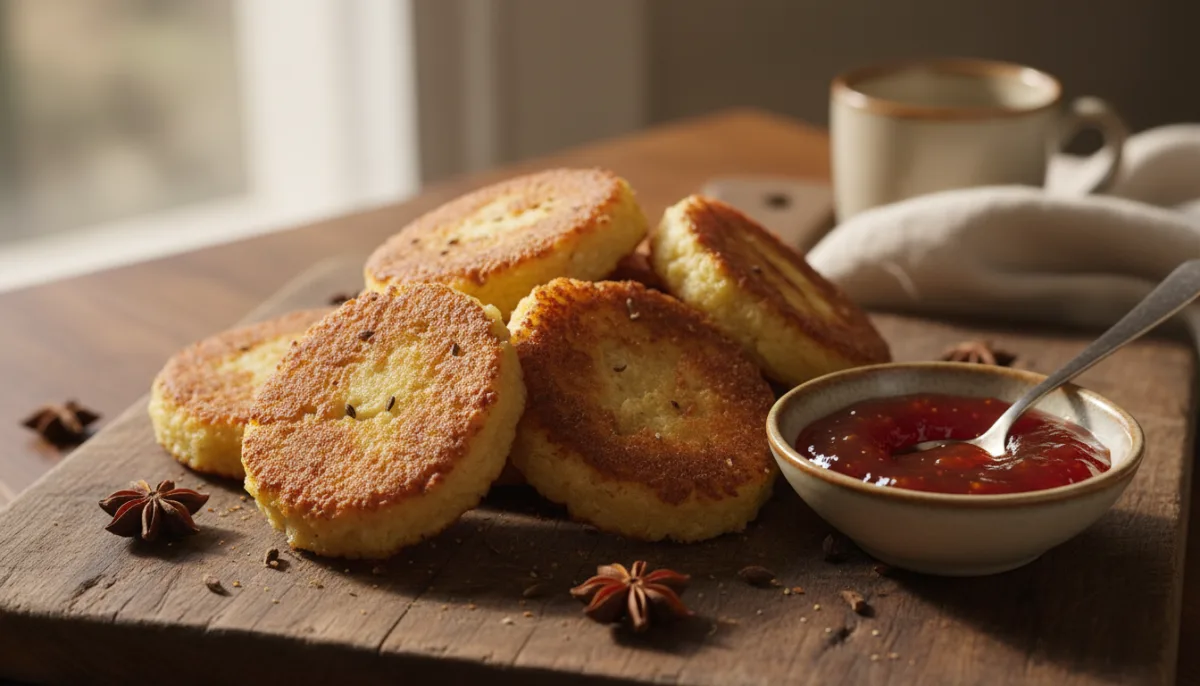
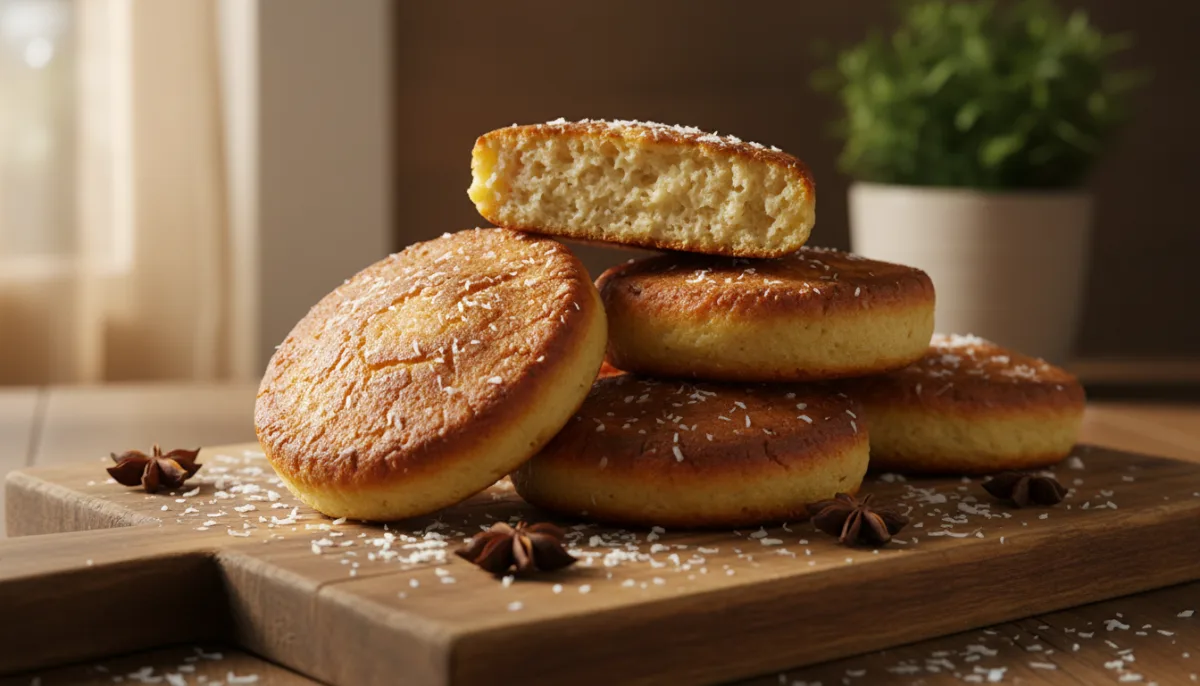
These delightful Dominican yuca arepitas are crafted from grated cassava, subtly flavored with warm anise, and served alongside a sweet, vibrant guava jam. They present a unique and satisfying take on a traditional breakfast, ideal for elevating any morning meal.

✎
HOW TO MAKE IT

Let's cook.

01

Boil the peeled yuca in salted water until very tender, about 15-20 minutes. Drain well and mash thoroughly with a fork or potato masher until smooth, removing any fibrous strands.

02

In a large bowl, combine the mashed yuca, all-purpose flour, anise seeds, salt, and sugar. Mix until a cohesive dough forms.

03

Divide the dough into 12 equal portions. Roll each portion into a small ball, then gently flatten into a disc about 1/2-inch thick.

04

In a small saucepan, combine the guava paste and water. Heat over low heat, stirring constantly, until the guava paste melts and forms a smooth, pourable jam. Set aside.

05

Heat the vegetable oil in a deep skillet or pot over medium-high heat until it reaches 350°F/175°C. Carefully place 3-4 arepitas into the hot oil, ensuring not to overcrowd the pan.

06

Fry the arepitas for 3-4 minutes per side, or until golden brown and cooked through. Remove with a slotted spoon and place on a paper towel-lined plate to drain excess oil.

07

Serve the warm arepitas immediately with the warm guava jam for dipping.

About This Recipe

These delightful Dominican yuca arepitas are crafted from grated cassava, subtly flavored with warm anise, and served alongside a sweet, vibrant guava jam. They present a unique and satisfying take on a traditional breakfast, ideal for elevating any morning meal.
Dominican Yuca Arepitas with Anise and Guava Jam
Simple ingredients.
Big flavor.
✦
♨

Chef's Tips

For extra flavor, you can lightly toast the anise seeds before adding them to the yuca dough. Ensure the yuca is mashed very smoothly to prevent lumps in your arepitas. A food processor can also be used for mashing if you prefer.
↔

Easy Substitutions

If yuca is unavailable, sweet potato can be used, though the texture will be slightly different. For the jam, any fruit jam can be substituted for guava, such as mango or pineapple. If you don't have anise seeds, a pinch of ground cinnamon or nutmeg can be used for a different warm spice note.
▱

Storage & Reheating

Leftover arepitas can be stored in an airtight container in the refrigerator for up to 3 days. Reheat in a toaster oven or air fryer for best results. The guava jam can be stored separately in the refrigerator for up to 1 week.

Serving Suggestions

Serve these arepitas as a delightful breakfast alongside a cup of strong Dominican coffee. They also make an excellent brunch item or a unique dessert when dusted with a little powdered sugar. For a savory twist, serve them with a sprinkle of crumbled queso fresco.

Common Mistakes

1. Not mashing the yuca thoroughly: This will result in lumpy arepitas. Ensure all fibrous strands are removed and the mash is smooth. 2. Overcrowding the pan: This lowers the oil temperature, leading to greasy arepitas. Fry in batches to maintain consistent heat. 3. Oil not hot enough: Arepitas will absorb too much oil and become soggy. Use a thermometer to ensure the oil is at 350°F/175°C. 4. Over-mixing the dough: While you want a cohesive dough, over-mixing can make it tough. Mix just until combined.

Frequently Asked Questions

Can I bake these arepitas instead of frying them?

While traditionally fried, you can bake them at 400°F/200°C for 15-20 minutes, flipping halfway, until golden. They will have a different texture, less crispy.


Can I make the dough ahead of time?

Yes, you can prepare the yuca dough up to 1 day in advance and store it covered in the refrigerator. Let it come to room temperature slightly before shaping and frying.

What kind of yuca should I use?

Fresh yuca is best. Look for firm, unblemished roots. Frozen yuca can also be used, just follow package directions for boiling.
MORE TO KNOW
Yuca, also known as cassava, is a staple root vegetable in many tropical cuisines. When preparing yuca, it's crucial to peel it thoroughly and remove the fibrous core before cooking. Boiling it until very tender is key to achieving a smooth, pliable dough for these arepitas. The natural starchiness of yuca helps bind the arepitas without needing excessive flour, resulting in a tender interior and a crispy exterior when fried.
WHAT PEOPLE THINK

Reviews

☆

No reviews yet

Be the first person to review this recipe.

SHARE YOUR THOUGHTS

Made this recipe?

Tell us how it turned out.

Your review will be checked before appearing publicly.