Home›Recipes›Dessert›Nordic›Traditional Swedish Saffron Buns (Lussekatter)
DESSERT
Traditional Swedish Saffron Buns (Lussekatter)
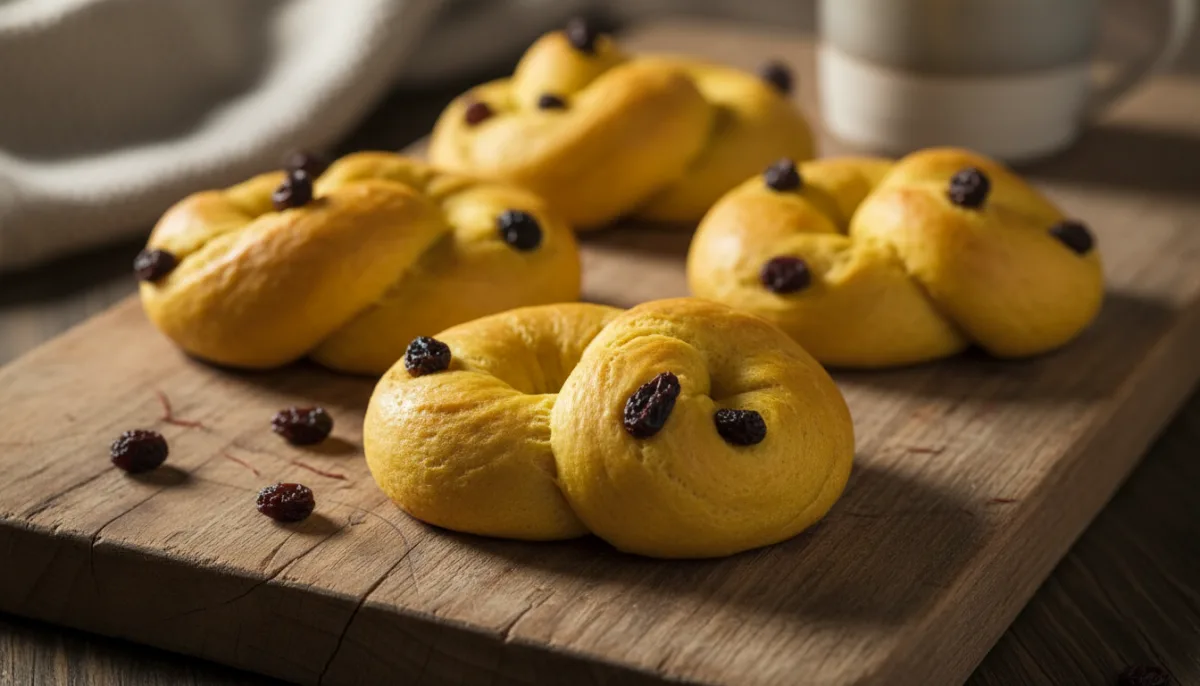
Embrace the festive spirit with these beloved Swedish saffron buns, known as Lussekatter. A staple during Advent and St. Lucia's Day celebrations, their iconic S-shape and vibrant golden color, imparted by precious saffron, make them a feast for the eyes and the palate. These soft, subtly sweet buns are perfect for enjoying with a warm beverage.
Crumble saffron threads into a small bowl and pour dark rum (or hot water) over them. Let steep for 10 minutes to release the color and flavor.
02
In a separate bowl, warm the milk slightly (to about 105-115°F/40-46°C). Stir in the granulated sugar, then sprinkle the active dry yeast over the top. Let it sit for 5-10 minutes until foamy.
03
Add the melted butter, the steeped saffron mixture, and the whole egg to the yeast mixture. Whisk until well combined.
04
In a large bowl, combine the flour and salt. Gradually add the wet ingredients to the dry ingredients, mixing until a shaggy dough forms. Turn the dough out onto a lightly floured surface and knead for 8-10 minutes until smooth and elastic. Place the dough in a lightly oiled bowl, cover with plastic wrap, and let rise in a warm place for 60-90 minutes, or until doubled in size.
05
Gently punch down the risen dough and divide it into 16 equal pieces. Roll each piece into a 6-inch rope, then curl both ends in opposite directions to form an 'S' shape. Press a raisin into the center of each curl.
06
Arrange the shaped buns on a baking sheet lined with parchment paper, leaving space between them. Cover loosely with plastic wrap and let rise for another 30 minutes.
07
Preheat your oven to 375°F/190°C. In a small bowl, whisk together the egg yolk and 1 tablespoon of milk for the egg wash. Brush the tops of the buns with the egg wash.
08
Bake the buns for 12-15 minutes at 375°F/190°C, or until golden brown and cooked through. Transfer to a wire rack to cool completely.
About This Recipe
Embrace the festive spirit with these beloved Swedish saffron buns, known as Lussekatter. A staple during Advent and St. Lucia's Day celebrations, their iconic S-shape and vibrant golden color, imparted by precious saffron, make them a feast for the eyes and the palate. These soft, subtly sweet buns are perfect for enjoying with a warm beverage.
Simple ingredients. Big flavor.✦
♨
Chef's Tips
For a richer saffron flavor, steep the saffron threads in the rum or hot water overnight. Ensure your milk is not too hot when activating the yeast, as this can kill it. If you don't have dark rum, hot water works perfectly fine to extract the saffron's color and aroma.
↔
Easy Substitutions
If you prefer not to use rum, hot water is an excellent substitute for steeping the saffron. For a dairy-free version, use plant-based milk and vegan butter. Dried cranberries can be used instead of raisins for a different fruity note.
▱
Storage & Reheating
Store cooled Lussekatter in an airtight container at room temperature for up to 3 days. For longer storage, freeze the baked buns for up to 3 months. Thaw at room temperature and warm gently in the oven before serving.
Serving Suggestions
Serve these saffron buns warm with a cup of strong coffee or traditional Swedish glögg. They are also delightful with a simple pat of butter or a light dusting of powdered sugar. Enjoy them as part of a festive breakfast or a cozy afternoon fika.
Common Mistakes
1. Not activating the yeast properly: Ensure the milk is at the correct temperature (105-115°F/40-46°C) and the yeast becomes foamy. If it doesn't, your yeast might be old or the milk too hot/cold. 2. Over-flouring the dough: Adding too much flour can result in dry, dense buns. Add flour gradually and stop once the dough is no longer excessively sticky. 3. Not letting the dough rise sufficiently: Rushing the rising process will lead to heavy, less airy buns. Allow the dough to double in size for both rises. 4. Over-baking: Baking for too long can dry out the buns. Keep an eye on them and remove them from the oven once they are golden brown.
Frequently Asked Questions
Can I make the dough ahead of time?
Yes, you can prepare the dough, let it complete its first rise, then punch it down and refrigerate it overnight. Allow it to come to room temperature for about 30 minutes before shaping and proceeding with the second rise.
What if I don't have saffron threads?
While saffron is key to the traditional flavor and color, you can omit it. The buns will still be delicious, but they won't have the characteristic golden hue or unique saffron aroma.
Can I use fresh yeast?
Yes, you can use fresh yeast. Use 21 grams (0.75 ounces) of fresh yeast for this recipe. Dissolve it in the warm milk and sugar mixture as you would with active dry yeast.
MORE TO KNOW
The distinctive 'S' shape of Lussekatter is not just for aesthetics; it's said to symbolize the curled tail of a cat, hence the name 'Lucia cats'. The saffron not only imparts a beautiful golden color but also a unique, subtle floral aroma and flavor that is characteristic of these traditional Swedish buns. When kneading, if the dough feels too sticky, add flour one tablespoon at a time until it reaches the right consistency. Over-kneading can make the buns tough, so stop once the dough is smooth and elastic.