Home › Recipes › Dessert ›Catalan ›Catalan Honey and Pine Nut Fritters (Bunyols de Vent)
DESSERT

Catalan Honey and Pine Nut Fritters (Bunyols de Vent)

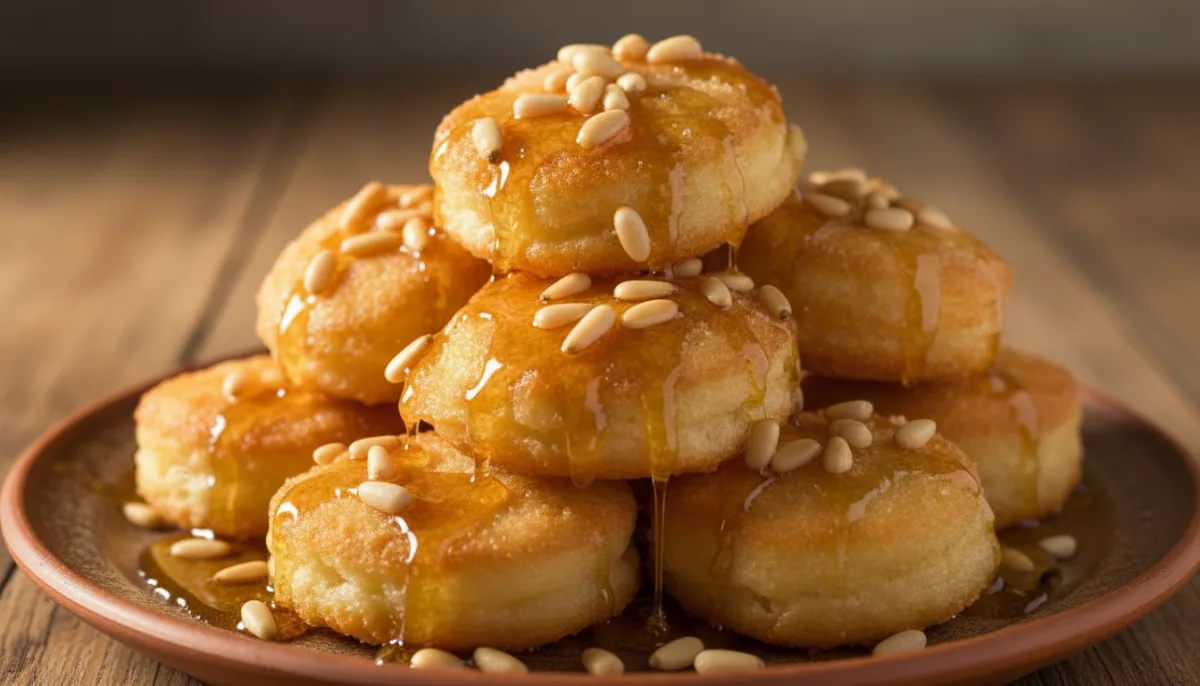
These light and airy Catalan fritters, known as Bunyols de Vent, are a delightful dessert. Infused with a hint of lemon and generously coated in honey and toasted pine nuts, they offer a perfect balance of sweet and nutty flavors.

✎
HOW TO MAKE IT

Let's cook.

01

In a medium saucepan, combine the water, butter, lemon zest, and salt. Bring the mixture to a rolling boil over medium-high heat.

02

Remove the saucepan from the heat and immediately add the flour all at once. Stir vigorously with a wooden spoon until the mixture forms a ball and pulls away from the sides of the pan.

03

Return the saucepan to low heat and continue to cook, stirring constantly for 1-2 minutes, to dry out the dough slightly. Remove from heat and let cool for 5 minutes.

04

Add the eggs one at a time, beating well after each addition until fully incorporated and the dough is smooth and glossy.

05

Heat the vegetable oil in a deep pot or Dutch oven to 350°F/175°C over medium heat. Drop spoonfuls of the dough (about 1 tablespoon each) into the hot oil, being careful not to overcrowd the pot.

06

Fry the fritters for 3-5 minutes, turning occasionally, until they are golden brown and puffed. Remove with a slotted spoon and drain on a paper towel-lined plate.

07

In a small saucepan, gently warm the honey over low heat until it is pourable. Arrange the warm fritters on a serving platter, drizzle generously with the warm honey, and sprinkle with toasted pine nuts.

About This Recipe

These light and airy Catalan fritters, known as Bunyols de Vent, are a delightful dessert. Infused with a hint of lemon and generously coated in honey and toasted pine nuts, they offer a perfect balance of sweet and nutty flavors.
Catalan Honey and Pine Nut Fritters (Bunyols de Vent)
Simple ingredients.
Big flavor.
✦
♨

Chef's Tips

Ensure your oil temperature is consistent for evenly cooked fritters. If the oil is too hot, they will brown too quickly on the outside and remain raw inside. If it's too cool, they will absorb too much oil and become greasy.
↔

Easy Substitutions

You can substitute orange zest for lemon zest for a different citrus note. Almond slivers or chopped walnuts can replace pine nuts for a similar nutty crunch.
▱

Storage & Reheating

Bunyols de Vent are best enjoyed fresh. If you have leftovers, store them in an airtight container at room temperature for up to 1 day. Reheat briefly in a warm oven (250°F/120°C for 5 minutes) to crisp them up.

Serving Suggestions

Serve these fritters warm as a delightful dessert or a special breakfast treat. They pair wonderfully with a cup of strong coffee or a glass of sweet dessert wine. For an extra touch, dust them lightly with powdered sugar before drizzling with honey.

Common Mistakes

Overcrowding the pot during frying can lower the oil temperature, leading to greasy fritters. Not drying out the dough enough in step 3 can result in dense fritters. Adding eggs too quickly can make the dough difficult to work with and affect the final texture. Using oil that isn't hot enough will make the fritters absorb too much oil.

Frequently Asked Questions

Can I make the dough ahead of time?

While best when fried fresh, you can prepare the dough up to step 4 and refrigerate it for a few hours. Let it come to room temperature before frying.


What kind of honey should I use?

A good quality, local honey will enhance the flavor. Orange blossom honey is particularly traditional in Catalan cuisine.

How do I know when the pine nuts are toasted?

Toast pine nuts in a dry skillet over medium-low heat for 2-3 minutes, stirring frequently, until fragrant and lightly golden. Watch them closely as they can burn quickly.
MORE TO KNOW
The key to light and airy Bunyols de Vent lies in the choux pastry technique. When adding the flour to the boiling liquid, it's crucial to stir quickly and thoroughly to prevent lumps and create a smooth dough. Cooking the dough briefly on low heat after adding the flour helps to dry it out, which contributes to the fritters' characteristic hollow interior. Adding the eggs one by one ensures proper emulsification and a consistent texture. Don't rush this step; each egg needs to be fully incorporated before adding the next.
WHAT PEOPLE THINK

Reviews

☆

No reviews yet

Be the first person to review this recipe.

SHARE YOUR THOUGHTS

Made this recipe?

Tell us how it turned out.

Your review will be checked before appearing publicly.