Home › Recipes › Lunch ›Basque ›Basque Marmitako (Tuna and Potato Stew)
LUNCH

Basque Marmitako (Tuna and Potato Stew)

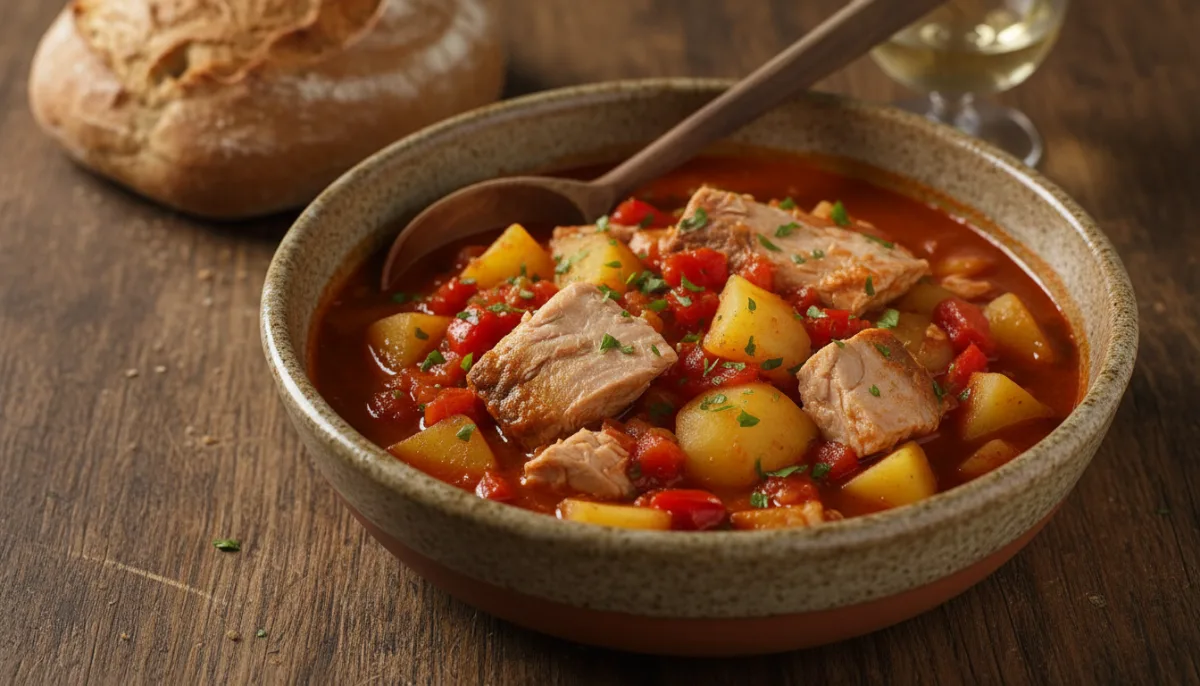
This hearty Basque Marmitako is a traditional tuna and potato stew, perfect for a comforting lunch. It features fresh tuna, tender potatoes, and a rich tomato-pepper broth, embodying the rustic flavors of the Basque Country.

✎
HOW TO MAKE IT

Let's cook.

01

Heat olive oil in a large Dutch oven or heavy-bottomed pot over medium heat. Add the chopped onion and cook until softened, about 5-7 minutes.

02

Stir in the minced garlic and diced red bell pepper. Cook for another 3-4 minutes until the bell pepper begins to soften.

03

Add the crushed tomatoes, fish broth, and smoked paprika to the pot. Bring the mixture to a simmer.

04

Add the potato chunks to the simmering broth. Reduce heat to medium-low, cover, and cook for 15-20 minutes, or until the potatoes are tender when pierced with a fork.

05

Gently add the tuna cubes to the stew. Cook for 3-5 minutes, or until the tuna is just cooked through and flakes easily. Be careful not to overcook the tuna.

06

Season the stew with salt and black pepper to taste. Ladle into bowls and garnish with fresh chopped parsley before serving.

About This Recipe

This hearty Basque Marmitako is a traditional tuna and potato stew, perfect for a comforting lunch. It features fresh tuna, tender potatoes, and a rich tomato-pepper broth, embodying the rustic flavors of the Basque Country.
Basque Marmitako (Tuna and Potato Stew)
Simple ingredients.
Big flavor.
✦
♨

Chef's Tips

For an extra layer of flavor, you can add a pinch of saffron threads soaked in a tablespoon of warm broth along with the smoked paprika. Ensure your tuna is fresh and high-quality for the best results.
↔

Easy Substitutions

If fresh tuna is unavailable, you can use high-quality canned tuna packed in olive oil, added at the very end of cooking to prevent it from becoming mushy. Cod or hake can be substituted for tuna. Vegetable broth can replace fish broth if preferred.
▱

Storage & Reheating

Store leftover Marmitako in an airtight container in the refrigerator for up to 2 days. Reheat gently on the stovetop over low heat, adding a splash of broth or water if needed. Note that potatoes may soften further upon reheating.

Serving Suggestions

Serve this Basque Marmitako with crusty bread for dipping into the flavorful broth. A simple green salad with a vinaigrette dressing makes a refreshing side. A glass of crisp white wine, such as a Txakoli, would complement the flavors beautifully. For a heartier meal, serve with a side of steamed green beans.

Common Mistakes

Overcooking the tuna is a common mistake; it should be added at the very end and cooked just until opaque to remain tender. Another error is not 'chascando' the potatoes, which impacts the stew's texture and thickness. Using low-quality canned tomatoes can also detract from the flavor; opt for good crushed tomatoes. Finally, ensure proper seasoning throughout the cooking process, tasting and adjusting as you go.

Frequently Asked Questions

Can I make this stew ahead of time?

While best enjoyed fresh, you can prepare the base (onions, peppers, tomatoes, broth, and potatoes) a day in advance. Add the tuna and parsley just before serving.


What kind of tuna is best for Marmitako?

Fresh, firm-fleshed tuna such as albacore or yellowfin is ideal. Look for sushi-grade tuna if possible for the best texture and flavor.

Can I freeze Marmitako?

Freezing is not recommended for this dish, as the potatoes can become mealy and the tuna's texture can degrade upon thawing and reheating.
MORE TO KNOW
Marmitako, meaning 'from the pot' in Basque, originated as a fisherman's stew, traditionally cooked on board fishing boats. The key to its authentic flavor lies in the quality of the ingredients and the technique of 'chascando' or 'cracking' the potatoes rather than cleanly cutting them. This method creates rough edges that release more starch, naturally thickening the stew and giving it a rustic texture. To 'chascar' potatoes, cut about two-thirds of the way through a potato chunk with your knife, then twist the knife to break off the piece. This creates irregular shapes and starchy surfaces that contribute to the stew's body.
WHAT PEOPLE THINK

Reviews

☆

No reviews yet

Be the first person to review this recipe.

SHARE YOUR THOUGHTS

Made this recipe?

Tell us how it turned out.

Your review will be checked before appearing publicly.