Home › Recipes › Dinner ›Azerbaijani ›Fragrant Azerbaijani Lamb and Apricot Pilaf with Saffron
DINNER

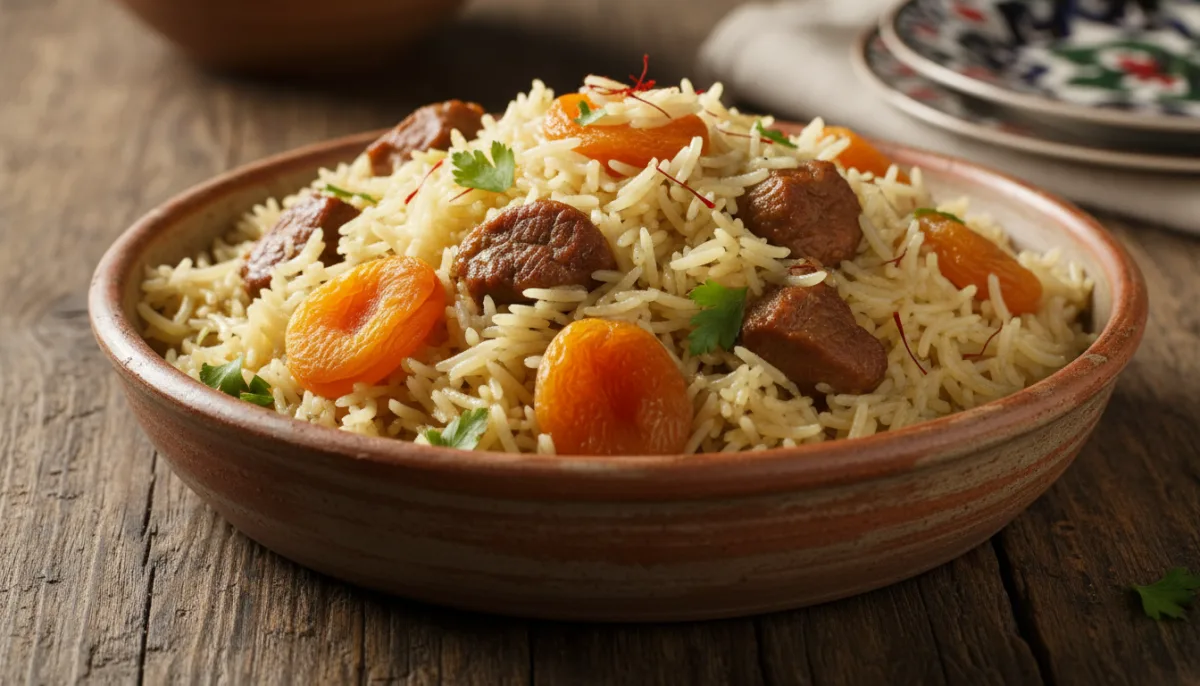
Fragrant Azerbaijani Lamb and Apricot Pilaf with Saffron

Experience the rich culinary heritage of Azerbaijan with this exquisite pilaf. Tender pieces of lamb are slow-cooked with sweet, sun-dried apricots and then layered with aromatic, saffron-infused rice. This dish is a celebration of flavors and textures, making it an ideal centerpiece for special occasions or a deeply satisfying family dinner.

✎
HOW TO MAKE IT

Let's cook.

01

Heat 1 tablespoon olive oil in a large, heavy-bottomed pot or Dutch oven over medium-high heat. Add the lamb cubes and sear until browned on all sides, about 5-7 minutes. Remove the lamb and set aside.

02

Add the chopped onion to the same pot and cook over medium heat until softened and translucent, about 5-8 minutes. Return the lamb to the pot.

03

Stir in 1 teaspoon salt, 1/2 teaspoon black pepper, and the saffron threads steeped in hot water. Add the halved dried apricots and mix well.

04

Pour in the rinsed Basmati rice and stir gently to combine with the lamb and apricot mixture.

05

Add 2 1/2 cups chicken broth to the pot. Bring the mixture to a boil over high heat, then immediately reduce the heat to low, cover tightly, and simmer for 18 minutes.

06

After 18 minutes, remove the pot from the heat and let it rest, covered, for an additional 10 minutes. Do not lift the lid during this time.

07

Fluff the pilaf gently with a fork before serving to combine all the ingredients and release the steam.

About This Recipe

Experience the rich culinary heritage of Azerbaijan with this exquisite pilaf. Tender pieces of lamb are slow-cooked with sweet, sun-dried apricots and then layered with aromatic, saffron-infused rice. This dish is a celebration of flavors and textures, making it an ideal centerpiece for special occasions or a deeply satisfying family dinner.
Fragrant Azerbaijani Lamb and Apricot Pilaf with Saffron
Simple ingredients.
Big flavor.
✦
♨

Chef's Tips

For extra flavor, toast a few tablespoons of slivered almonds or pistachios and sprinkle over the pilaf before serving. A pat of butter can be added to the rice before covering for a richer texture.
↔

Easy Substitutions

Beef stew meat can be used instead of lamb. Prunes or golden raisins can replace dried apricots for a different sweet and savory profile. Vegetable broth can be used for a lighter flavor.
▱

Storage & Reheating

Store leftover pilaf in an airtight container in the refrigerator for up to 3 days. Reheat gently in a microwave or on the stovetop with a splash of broth to prevent drying out.

Serving Suggestions

Serve this pilaf as a standalone main course or alongside a simple green salad with a lemon vinaigrette. A dollop of plain yogurt or a sprinkle of fresh chopped herbs like parsley or cilantro can also complement the rich flavors.

Common Mistakes

Overcooking the rice: This leads to mushy pilaf. Stick to the specified cooking and resting times. Lifting the lid during cooking: This releases steam, which is essential for cooking the rice evenly. Not rinsing the rice: This can result in a sticky, clumpy pilaf. Using too much liquid: This will also make the rice mushy. Ensure accurate measurements.

Frequently Asked Questions

Can I use brown rice for this recipe?

While Basmati rice is traditional, you can use brown rice, but the cooking time and liquid amount will need to be adjusted significantly. Brown rice typically requires more liquid and a longer cooking time.


What kind of lamb shoulder should I buy?

Look for boneless lamb shoulder, which is ideal for stewing and becomes very tender. If bone-in, you'll need to adjust the quantity to account for the bone weight.

Is saffron essential, or can I omit it?

Saffron provides a unique aroma, color, and flavor that is characteristic of Azerbaijani pilaf. While you can omit it, the dish will have a different, less authentic profile. A tiny pinch goes a long way.
MORE TO KNOW
The key to a perfect pilaf is proper rice cooking. Rinsing the Basmati rice removes excess starch, preventing stickiness. The resting period after cooking is crucial; it allows the rice grains to fully absorb the steam and become fluffy without becoming mushy. Avoid stirring the rice too much during cooking to maintain distinct grains.
WHAT PEOPLE THINK

Reviews

☆

No reviews yet

Be the first person to review this recipe.

SHARE YOUR THOUGHTS

Made this recipe?

Tell us how it turned out.

Your review will be checked before appearing publicly.