Home › Recipes › Dinner ›Hungarian ›Traditional Hungarian Catfish Halászlé
DINNER

Traditional Hungarian Catfish Halászlé

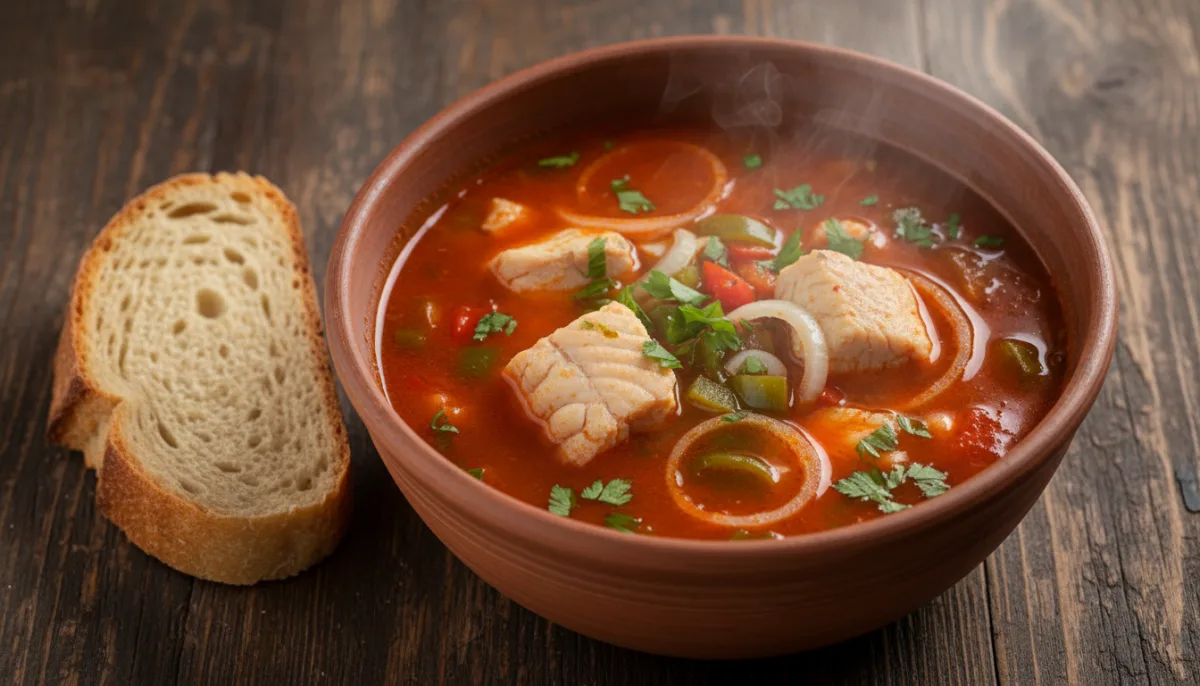
Savor the deep, comforting flavors of Hungary with this classic Halászlé. This recipe brings together succulent catfish in a richly spiced, paprika-infused broth, offering a truly authentic taste of Hungarian culinary heritage.

✎
HOW TO MAKE IT

Let's cook.

01

Heat vegetable oil in a large pot or Dutch oven over medium heat. Add the chopped onions and cook until softened and translucent, about 8-10 minutes.

02

Remove the pot from the heat. Stir in the sweet Hungarian paprika and hot Hungarian paprika (if using). Mix well to combine with the onions, ensuring the paprika does not burn.

03

Return the pot to medium heat. Add the chopped green bell pepper and tomato. Cook for 5 minutes, stirring occasionally, until vegetables begin to soften.

04

Pour in the fish broth, then add the salt and black pepper. Bring the mixture to a boil, then reduce heat to low, cover, and simmer for 20 minutes to allow the flavors to meld.

05

Add the catfish pieces to the simmering broth. Gently stir to submerge the fish. Continue to simmer uncovered for 10-12 minutes, or until the catfish is cooked through and flakes easily with a fork.

06

Taste and adjust seasoning if necessary. Serve hot.

About This Recipe

Savor the deep, comforting flavors of Hungary with this classic Halászlé. This recipe brings together succulent catfish in a richly spiced, paprika-infused broth, offering a truly authentic taste of Hungarian culinary heritage.
Traditional Hungarian Catfish Halászlé
Simple ingredients.
Big flavor.
✦
♨

Chef's Tips

For a richer flavor, you can use a mix of fish, such as carp or pike, in addition to catfish. Do not overcook the fish, as it can become tough and fall apart. The key to authentic Halászlé is high-quality Hungarian paprika.
↔

Easy Substitutions

If catfish is unavailable, cod or tilapia can be used, though the flavor profile will differ slightly. Vegetable broth can substitute fish broth in a pinch, but fish broth is highly recommended for authenticity. For extra heat, add a pinch of cayenne pepper or a sliced hot Hungarian wax pepper.
▱

Storage & Reheating

Store leftover Halászlé in an airtight container in the refrigerator for up to 3 days. Reheat gently on the stovetop over low heat until warmed through. Freezing is not recommended as fish can become rubbery upon thawing.

Serving Suggestions

Serve Halászlé hot with fresh crusty bread to soak up the delicious broth. A dollop of sour cream or a sprinkle of fresh parsley can be added as a garnish. It pairs well with a simple cucumber salad or pickled vegetables on the side.

Common Mistakes

1. Burning the paprika: Always remove the pot from heat before stirring in paprika to prevent bitterness. 2. Overcooking the fish: Catfish cooks quickly; add it only for the last 10-12 minutes to keep it tender. 3. Not enough paprika: Halászlé is defined by its paprika; don't be shy with the sweet variety. 4. Using generic paprika: Hungarian paprika has a distinct flavor; using other types will result in a different taste.

Frequently Asked Questions

Can I make this soup ahead of time?

While best served fresh, you can prepare the broth base a day in advance. Add the fish just before serving.


What kind of fish broth should I use?

A good quality store-bought fish broth or homemade fish stock will work best. Avoid overly salty broths.

Is this soup very spicy?

The sweet paprika provides flavor and color, while the hot paprika adds heat. You can adjust the hot paprika to your preference or omit it entirely for a milder soup.

Can I add other vegetables?

While not traditional, some variations include carrots or potatoes. If adding, ensure they are cooked through before adding the fish.
MORE TO KNOW
The secret to a truly authentic Halászlé lies in the quality and quantity of paprika. Hungarian paprika is known for its vibrant color and rich flavor. When adding paprika, always remove the pot from the heat first to prevent the paprika from burning, which can make it bitter. The long simmering of the vegetables before adding the fish helps to create a deep, flavorful base for the soup. Some traditional recipes involve straining the broth and pureeing the vegetables before adding the fish, but this simplified version retains the rustic charm and texture while still delivering on flavor.
WHAT PEOPLE THINK

Reviews

☆

No reviews yet

Be the first person to review this recipe.

SHARE YOUR THOUGHTS

Made this recipe?

Tell us how it turned out.

Your review will be checked before appearing publicly.