Home › Recipes › Lunch ›Sardinian ›Sardinian Porceddu (Roast Suckling Pig) with Myrtle Berries
LUNCH

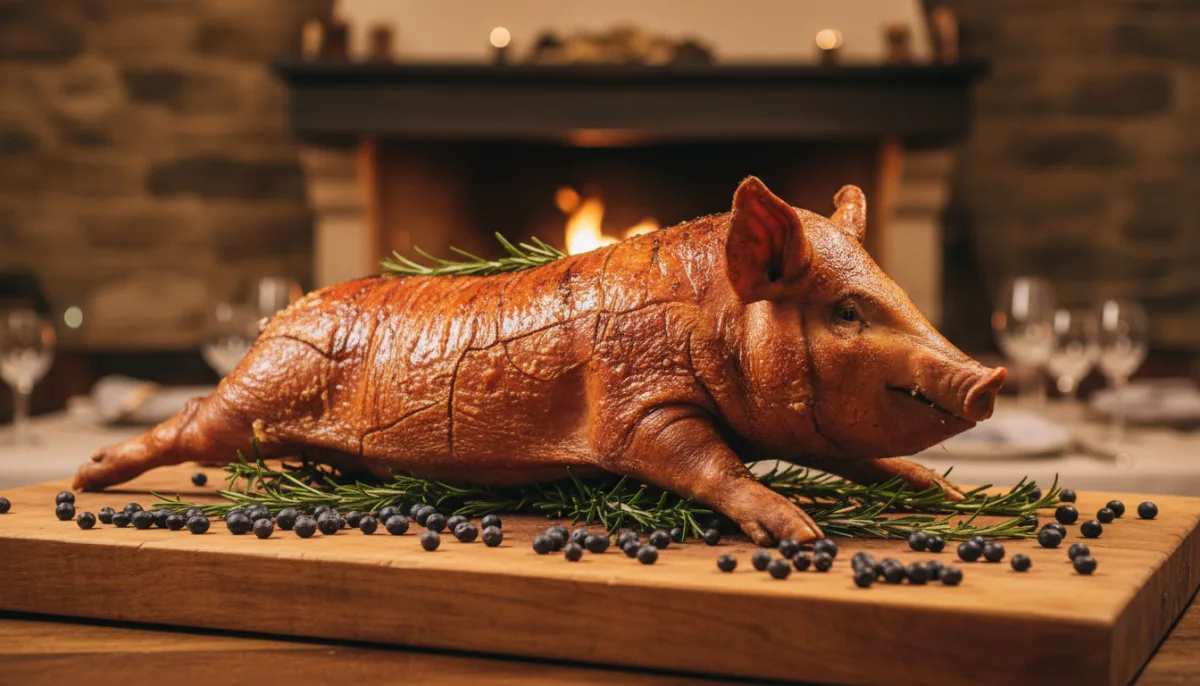
Sardinian Porceddu (Roast Suckling Pig) with Myrtle Berries

Experience a taste of Sardinian tradition with this succulent roast suckling pig, infused with aromatic myrtle berries. This recipe delivers tender meat with crispy skin, perfect for a celebratory meal.

✎
HOW TO MAKE IT

Let's cook.

01

Pat the suckling pig completely dry with paper towels. Score the skin in a diamond pattern, being careful not to cut into the meat.

02

In a small bowl, combine the myrtle berries, chopped rosemary, chopped sage, minced garlic, olive oil, sea salt, and black pepper to create a rub.

03

Generously rub the entire pig, inside and out, with the herb and myrtle berry mixture. Ensure the rub gets into the scored skin.

04

Place the pig on a large roasting rack set over a drip pan. Roast in an oven at 325°F (160°C) for 3 hours, or until the internal temperature reaches 145°F (63°C) in the thickest part of the thigh.

05

Increase the oven temperature to 400°F (200°C) and continue roasting for 30-45 minutes, or until the skin is deeply golden brown and crispy. Monitor closely to prevent burning.

06

Remove the pig from the oven and let it rest, tented loosely with foil, for 20-30 minutes before carving. This allows the juices to redistribute for maximum tenderness.

About This Recipe

Experience a taste of Sardinian tradition with this succulent roast suckling pig, infused with aromatic myrtle berries. This recipe delivers tender meat with crispy skin, perfect for a celebratory meal.
Sardinian Porceddu (Roast Suckling Pig) with Myrtle Berries
Simple ingredients.
Big flavor.
✦
♨

Chef's Tips

For extra crispy skin, you can prick the skin all over with a sharp fork before applying the rub. Basting occasionally with pan drippings during the initial roasting phase can also help keep the meat moist.
↔

Easy Substitutions

If fresh myrtle berries are unavailable, dried myrtle berries can be rehydrated in warm water for 30 minutes before use. Alternatively, juniper berries can be used as a substitute for a similar aromatic profile, though the flavor will be slightly different. For a smaller gathering, a pork shoulder or loin can be roasted with the same herb rub.
▱

Storage & Reheating

Store leftover roast pork in an airtight container in the refrigerator for up to 3 days. Reheat gently in an oven at 300°F (150°C) until warmed through, or slice and pan-fry for crispy edges.

Serving Suggestions

Serve this Sardinian Porceddu with roasted potatoes and onions, a simple green salad with a lemon vinaigrette, or traditional Sardinian pane carasau (crispbread). A side of braised artichokes or fava beans would also complement the rich flavors.

Common Mistakes

Overcooking the pig can lead to dry meat; use a meat thermometer to ensure it reaches the correct internal temperature. Not drying the skin thoroughly will prevent it from crisping properly. Forgetting to score the skin can result in less rendered fat and a less crispy texture. Over-salting is also a common error, so measure carefully.

Frequently Asked Questions

Where can I find fresh myrtle berries?

Fresh myrtle berries can be challenging to find outside of Sardinia. Look for them at specialty Mediterranean markets or online. Dried myrtle berries are more readily available.


Can I prepare the pig ahead of time?

You can apply the herb rub to the pig up to 12 hours in advance and keep it refrigerated. This allows the flavors to meld even further.

What if my pig is larger or smaller than 15-20 pounds?

Adjust roasting time accordingly. A general rule is about 20-25 minutes per pound at 325°F (160°C) for the initial cook, followed by the higher temperature for crisping the skin.
MORE TO KNOW
Achieving perfectly crispy skin on a roast suckling pig is a culinary art. The key steps are thorough drying of the skin, scoring it to allow fat to render, and a two-stage roasting process. The initial lower temperature cooks the meat through, while the final high-temperature blast crisps the skin. Ensure the pig is completely dry before applying the rub; moisture is the enemy of crispy skin. If the skin isn't crisping evenly, you can carefully use a kitchen torch for a few seconds on stubborn spots, but be very cautious to avoid burning.
WHAT PEOPLE THINK

Reviews

☆

No reviews yet

Be the first person to review this recipe.

SHARE YOUR THOUGHTS

Made this recipe?

Tell us how it turned out.

Your review will be checked before appearing publicly.