Home › Recipes › Breakfast ›Laotian ›Laotian Steamed Coconut and Taro Cakes (Khanom Maw Kaeng)
BREAKFAST

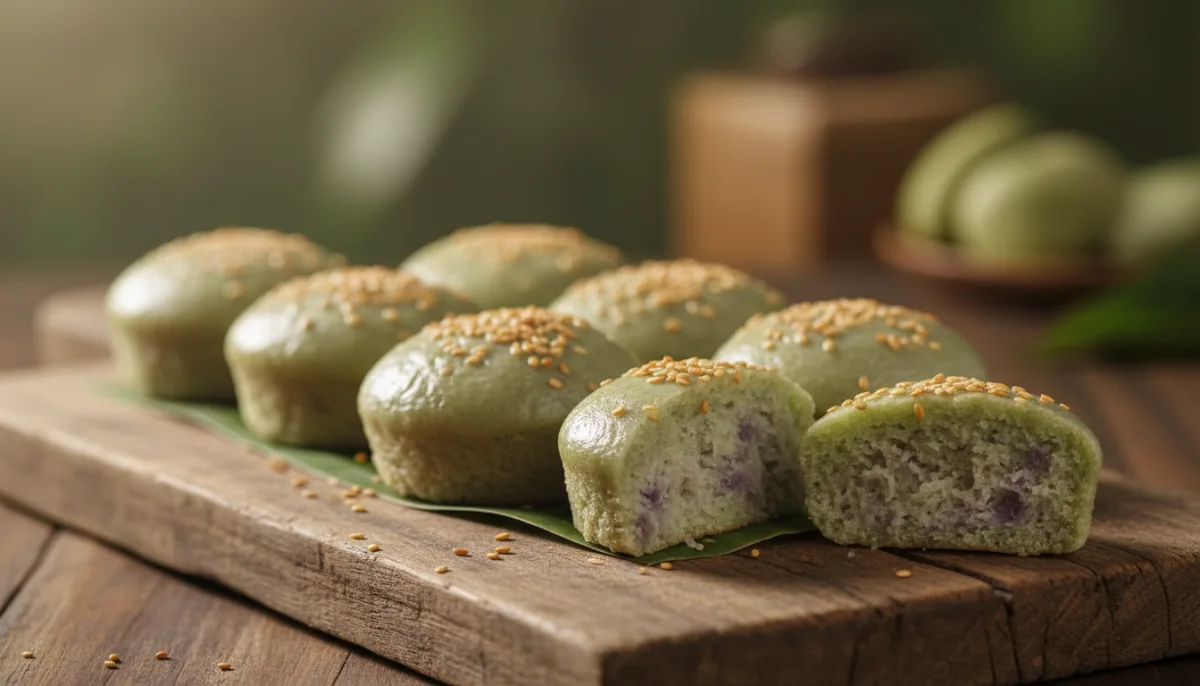
Laotian Steamed Coconut and Taro Cakes (Khanom Maw Kaeng)

These delightful Laotian steamed cakes offer a unique blend of sweet coconut and earthy taro, creating a comforting and subtly sweet breakfast or snack. Their soft, chewy texture and aromatic pandan notes make them a truly special treat.

✎
HOW TO MAKE IT

Let's cook.

01

Steam the taro root: Place the taro cubes in a steamer basket over boiling water. Steam for 15-20 minutes, or until very tender when pierced with a fork. Mash the steamed taro thoroughly with a fork or potato masher until smooth.

02

Prepare the batter: In a large bowl, combine the mashed taro, glutinous rice flour, tapioca flour, coconut milk, granulated sugar, and salt. Mix well until a smooth, thick batter forms. If using, stir in the pandan extract.

03

Grease molds: Lightly grease 8 small heatproof ramekins or a 9-inch round heatproof dish with a neutral oil.

04

Steam the cakes: Pour the batter into the prepared ramekins or dish. Place the ramekins/dish in a steamer basket over boiling water. Cover and steam for 30-40 minutes, or until the cakes are firm and a toothpick inserted into the center comes out clean.

05

Cool and serve: Carefully remove the steamed cakes from the steamer. Let them cool completely at room temperature before unmolding. Once cooled, sprinkle with toasted sesame seeds and serve.

About This Recipe

These delightful Laotian steamed cakes offer a unique blend of sweet coconut and earthy taro, creating a comforting and subtly sweet breakfast or snack. Their soft, chewy texture and aromatic pandan notes make them a truly special treat.
Laotian Steamed Coconut and Taro Cakes (Khanom Maw Kaeng)
Simple ingredients.
Big flavor.
✦
♨

Chef's Tips

For extra flavor, you can add 1/4 teaspoon of vanilla extract to the batter. Ensure your taro is very tender before mashing to avoid lumpy cakes. Cooling completely is crucial for the cakes to set properly and be easily unmolded.
↔

Easy Substitutions

If fresh taro is unavailable, you can use frozen taro, thawed and steamed. For a different flavor, sweet potato can be used instead of taro, though the texture will be slightly different. Pandan extract is optional; you can omit it or use a few drops of green food coloring for visual appeal.
▱

Storage & Reheating

Store leftover cakes in an airtight container at room temperature for up to 2 days, or in the refrigerator for up to 4 days. Reheat gently in a steamer or microwave until warm and soft.

Serving Suggestions

Serve these cakes warm or at room temperature with a cup of hot tea or coffee. They also make a delightful light dessert after a meal. For an added touch, drizzle with a little palm sugar syrup or sprinkle with shredded coconut.

Common Mistakes

1. Not mashing the taro thoroughly: This leads to lumpy cakes. Ensure taro is very tender before mashing. 2. Not cooling the cakes completely: Attempting to unmold warm cakes will cause them to break apart. Patience is key. 3. Overfilling the molds: The cakes will expand slightly during steaming, so leave a little room at the top. 4. Insufficient steaming time: This results in a gooey, uncooked center. Always check with a toothpick.

Frequently Asked Questions

Can I bake these cakes instead of steaming?

No, these cakes are specifically designed for steaming to achieve their unique soft and chewy texture. Baking would result in a very different, drier product.


Where can I find taro root?

Fresh taro root can typically be found in Asian grocery stores or well-stocked international markets.

Can I make these ahead of time?

Yes, these cakes are excellent made a day in advance. Store them properly and reheat gently before serving.
MORE TO KNOW
The key to perfect Khanom Maw Kaeng lies in achieving the right consistency for the taro mash and the batter. Over-steaming the taro can make it watery, while under-steaming will result in a lumpy texture. The combination of glutinous rice flour and tapioca flour gives these cakes their characteristic chewy yet tender bite. If your batter seems too thick, add a tablespoon or two of extra coconut milk until it reaches a pourable consistency. Conversely, if it's too thin, add a little more glutinous rice flour.
WHAT PEOPLE THINK

Reviews

☆

No reviews yet

Be the first person to review this recipe.

SHARE YOUR THOUGHTS

Made this recipe?

Tell us how it turned out.

Your review will be checked before appearing publicly.