Home › Recipes › Lunch ›Ecuadorian ›Ecuadorian Fanesca (Andean Grain and Bean Soup) with Hard-Boiled Eggs
LUNCH

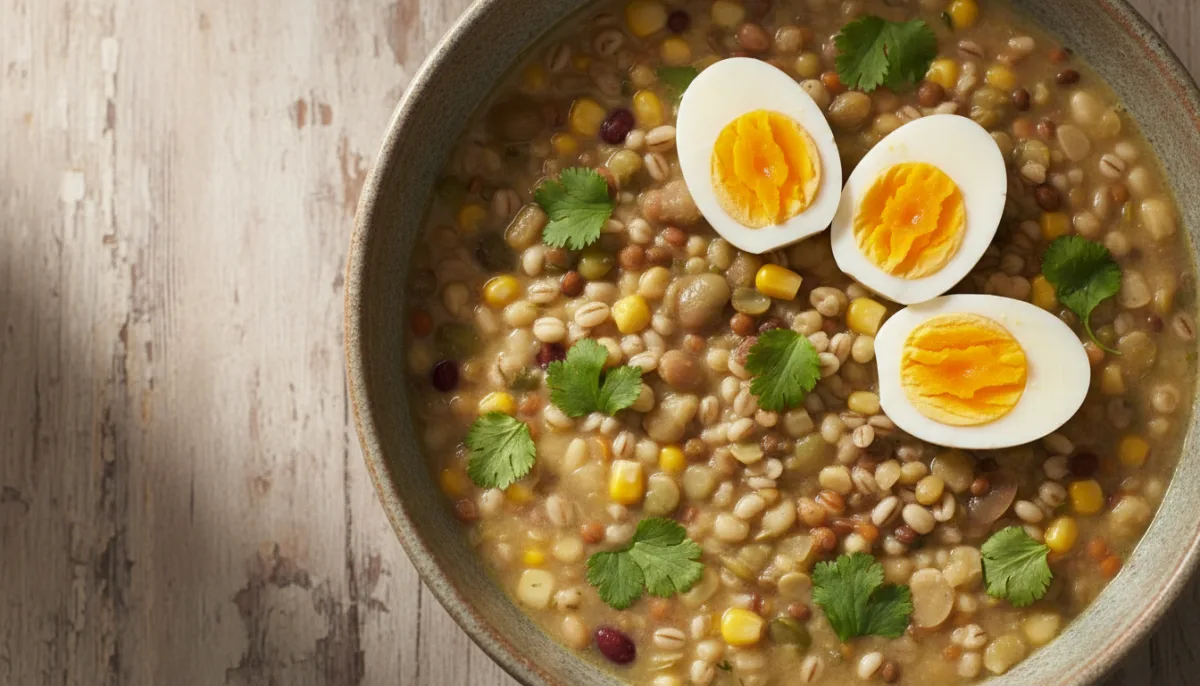
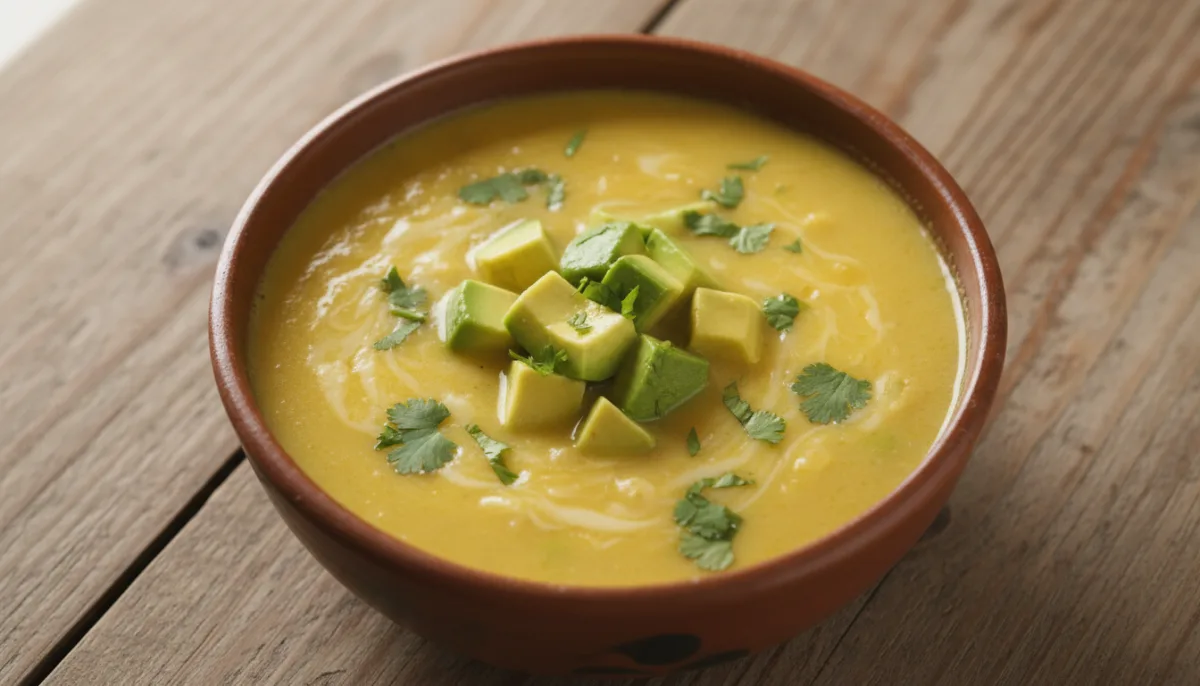
Ecuadorian Fanesca (Andean Grain and Bean Soup) with Hard-Boiled Eggs

Experience the rich flavors of Ecuador with this traditional Fanesca soup, a hearty and creamy dish typically enjoyed during Holy Week. This version features a blend of grains, beans, and vegetables, topped with savory hard-boiled eggs for a satisfying lunch.

✎
HOW TO MAKE IT

Let's cook.

01

Heat 1 tablespoon of olive oil in a large pot or Dutch oven over medium heat. Add 1 cup of chopped white onion and cook until softened, about 5-7 minutes.

02

Stir in 2 cloves of minced garlic, 1/4 teaspoon of ground cumin, and 1/4 teaspoon of ground achiote (or paprika). Cook for 1 minute until fragrant.

03

Add 1/2 cup of cooked fava beans, 1/2 cup of cooked lima beans, 1/2 cup of cooked corn kernels, and 1/4 cup of rinsed quinoa to the pot. Pour in 4 cups of vegetable broth.

04

Bring the mixture to a boil, then reduce heat to low, cover, and simmer for 20 minutes, or until the quinoa is cooked through and the flavors have melded.

05

In a separate bowl, whisk together 1 cup of milk and 1/2 cup of ricotta cheese until smooth. Gradually stir this mixture into the simmering soup.

06

Continue to simmer the soup gently for another 10 minutes, stirring occasionally, until it thickens slightly. Season with 1/2 teaspoon of salt and 1/4 teaspoon of black pepper, adjusting to taste.

07

Ladle the hot Fanesca into individual bowls. Garnish each serving with 1/2 hard-boiled egg (or 2 quarters) and a sprinkle of 2 tablespoons of fresh chopped cilantro.

About This Recipe

Experience the rich flavors of Ecuador with this traditional Fanesca soup, a hearty and creamy dish typically enjoyed during Holy Week. This version features a blend of grains, beans, and vegetables, topped with savory hard-boiled eggs for a satisfying lunch.
Ecuadorian Fanesca (Andean Grain and Bean Soup) with Hard-Boiled Eggs
Simple ingredients.
Big flavor.
✦
♨

Chef's Tips

For a richer flavor, you can use a blend of different cooked beans like chickpeas or lentils. Adjust the consistency by adding more milk or broth if the soup becomes too thick. A pinch of oregano can also be added with the cumin for an extra aromatic touch.
↔

Easy Substitutions

If fava beans or lima beans are hard to find, you can use cannellini beans or butter beans. For a dairy-free version, use a plant-based milk and a dairy-free cream cheese alternative, or omit the ricotta and thicken with a cornstarch slurry. Paprika can be used in place of achiote for color.
▱

Storage & Reheating

Store leftover Fanesca in an airtight container in the refrigerator for up to 3 days. Reheat gently on the stovetop over low heat, adding a splash of milk or broth if needed to restore consistency. Hard-boiled eggs are best added fresh when serving.

Serving Suggestions

Serve this Fanesca as a hearty main course for lunch. Pair it with a simple green salad with a light vinaigrette. Offer a side of crusty bread for dipping. For a more traditional presentation, you can also garnish with fried plantain slices or a sprinkle of fresh parsley.

Common Mistakes

Overcooking the quinoa can make it mushy; ensure it's just tender. Adding the milk and ricotta too quickly or at too high a heat can cause the dairy to curdle; stir it in gradually over low heat. Not seasoning adequately throughout the cooking process can result in a bland soup; taste and adjust salt and pepper as you go. Forgetting to rinse the quinoa can lead to a bitter taste.

Frequently Asked Questions

Can I make Fanesca ahead of time?

Yes, Fanesca can be made a day in advance. The flavors often deepen overnight. Reheat gently and add fresh garnishes.


What if I don't have all the specific beans?

You can substitute with other cooked beans like chickpeas, cannellini beans, or even lentils. The important thing is to have a variety of textures and flavors.

Can I freeze Fanesca?

While you can freeze the soup base, the dairy components (milk and ricotta) might separate upon thawing, affecting the texture. It's best enjoyed fresh or refrigerated for a few days.
MORE TO KNOW
Fanesca is a deeply symbolic dish in Ecuador, traditionally prepared during Holy Week to represent the twelve apostles and the twelve tribes of Israel through its diverse ingredients. While this recipe offers a simplified, family-friendly version, the essence of its rich, creamy texture and blend of grains and legumes remains. The key to a good Fanesca is the slow simmering that allows the flavors to fully develop and the grains to soften, creating a comforting and nourishing meal.
WHAT PEOPLE THINK

Reviews

☆

No reviews yet

Be the first person to review this recipe.

SHARE YOUR THOUGHTS

Made this recipe?

Tell us how it turned out.

Your review will be checked before appearing publicly.