Home › Recipes › Dinner ›Tibetan ›Steamed Tibetan Tingmo with Spicy Potato and Glass Noodle Stir-fry
DINNER

Steamed Tibetan Tingmo with Spicy Potato and Glass Noodle Stir-fry

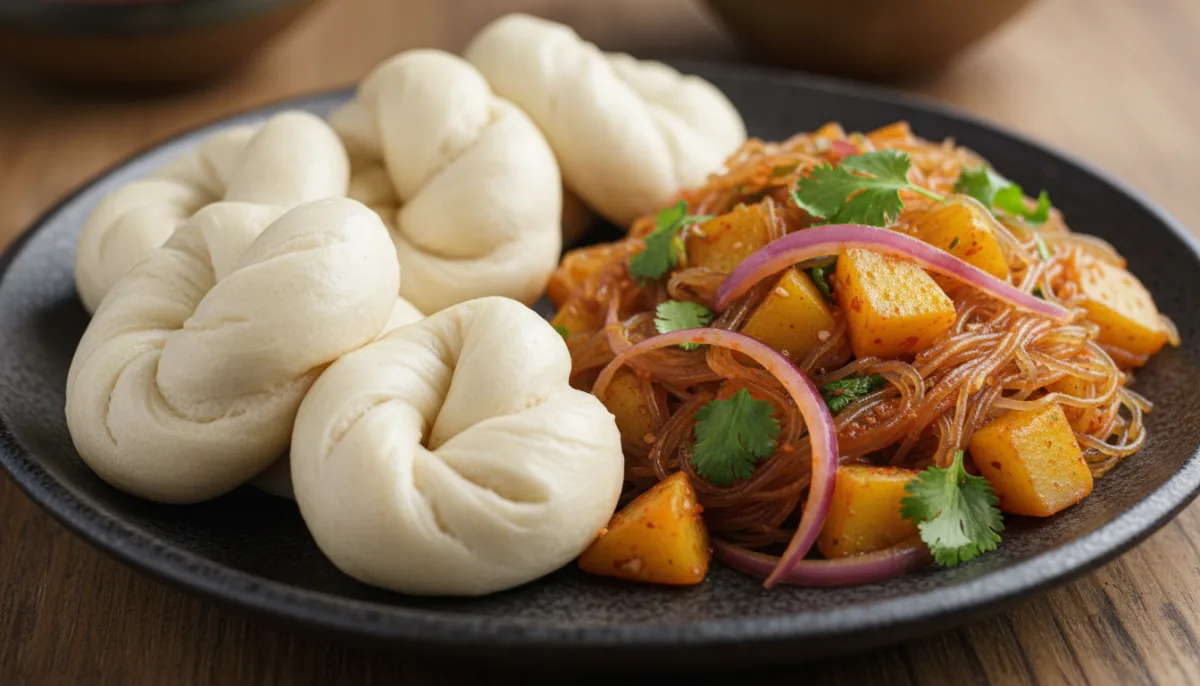
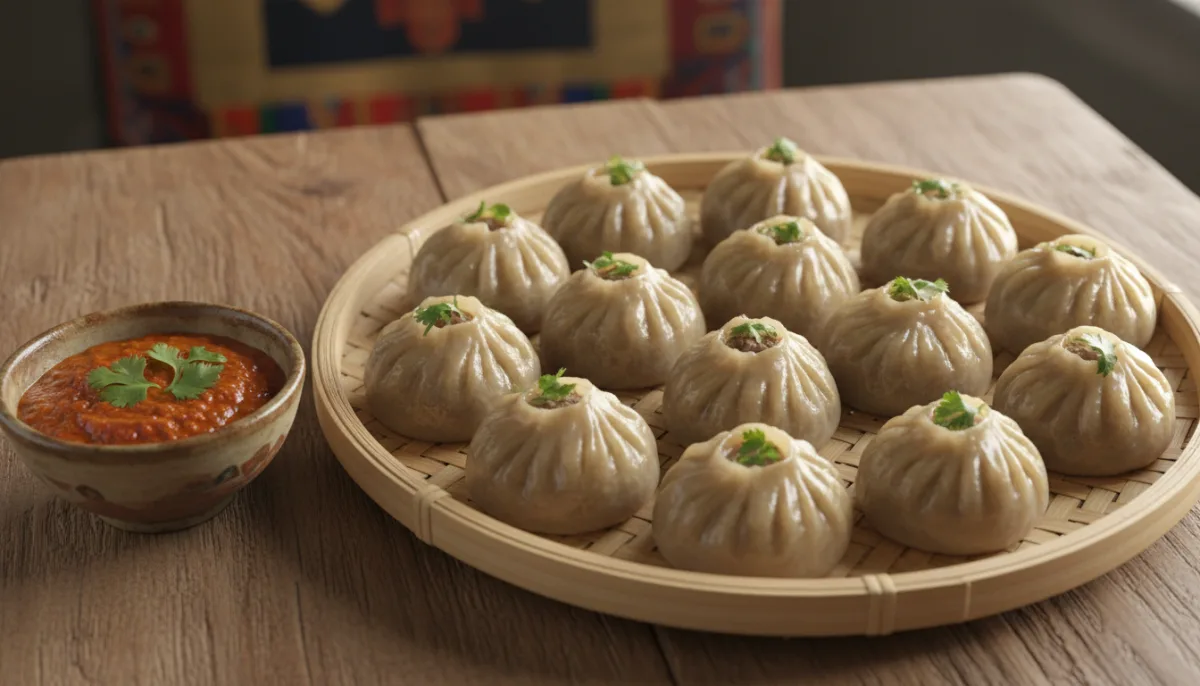
Discover the heartwarming taste of Tibet with our recipe for fluffy, steamed Tingmo bread, perfectly paired with a zesty and spicy stir-fry of potatoes and glass noodles, known as Aloo Phing. This dish brings together delightful textures and bold flavors for a truly satisfying meal.

✎
HOW TO MAKE IT

Let's cook.

01

Prepare the Tingmo dough: In a large bowl, combine 2 cups all-purpose flour, 1/2 teaspoon active dry yeast, and 1/2 teaspoon salt. Gradually add 3/4 cup warm water, mixing until a shaggy dough forms. Knead on a lightly floured surface for 5-7 minutes until smooth and elastic. Place in a lightly oiled bowl, cover, and let rise in a warm place for 1 hour, or until doubled in size.

02

While the dough rises, prepare the Aloo Phing ingredients: Cook 2 diced potatoes in boiling water for 5-7 minutes until tender but still firm. Drain and set aside. Soak 1 cup dried glass noodles in hot water for 5 minutes until softened, then drain and cut into shorter lengths.

03

Form the Tingmo: Punch down the risen dough and divide it into 8 equal pieces. Roll each piece into a small oval. Fold the oval in half lengthwise, then twist it gently to create a Tingmo shape. Repeat with remaining dough.

04

Steam the Tingmo: Arrange the shaped Tingmo in a steamer basket lined with parchment paper, ensuring they are not touching. Steam over boiling water for 10-12 minutes, or until puffed and cooked through. Keep warm.

05

Cook the Aloo Phing: Heat 2 tablespoons vegetable oil in a large skillet or wok over medium-high heat. Add 1/2 cup thinly sliced red onion and stir-fry for 2 minutes until softened. Add 2 cloves minced garlic and 1 inch grated fresh ginger, stir-fry for 1 minute until fragrant.

06

Add the spices and potatoes: Stir in 1 tablespoon soy sauce, 1 teaspoon chili powder, and 1/2 teaspoon turmeric powder. Add the cooked diced potatoes and stir gently to coat. Cook for 3-4 minutes, allowing the potatoes to absorb the flavors.

07

Finish the Aloo Phing: Add the softened glass noodles to the skillet. Toss everything together for 2-3 minutes until the noodles are heated through and well combined with the potatoes and spices. Taste and adjust seasoning if needed.

08

Serve: Garnish the Aloo Phing with 1/4 cup fresh chopped cilantro. Serve immediately with the warm, steamed Tingmo bread.

About This Recipe

Discover the heartwarming taste of Tibet with our recipe for fluffy, steamed Tingmo bread, perfectly paired with a zesty and spicy stir-fry of potatoes and glass noodles, known as Aloo Phing. This dish brings together delightful textures and bold flavors for a truly satisfying meal.
Steamed Tibetan Tingmo with Spicy Potato and Glass Noodle Stir-fry
Simple ingredients.
Big flavor.
✦
♨

Chef's Tips

For extra flavor in the Aloo Phing, you can add a pinch of Sichuan peppercorns or a dash of black vinegar. Ensure your yeast is active for fluffy Tingmo; if it doesn't foam in warm water, it's likely expired. Don't overcrowd the steamer basket when cooking Tingmo, as they need space to expand.
↔

Easy Substitutions

You can substitute sweet potatoes for regular potatoes in the Aloo Phing. For a vegetarian option, omit the soy sauce or use a vegetarian alternative. Any thin noodle can replace glass noodles, though the texture will differ. A pinch of asafoetida can be added to the Aloo Phing for an onion-garlic flavor if you're avoiding those ingredients.
▱

Storage & Reheating

Leftover Tingmo and Aloo Phing should be stored separately in airtight containers in the refrigerator for up to 2 days. Reheat Tingmo by steaming for a few minutes until soft. Reheat Aloo Phing in a skillet over medium heat until warmed through.

Serving Suggestions

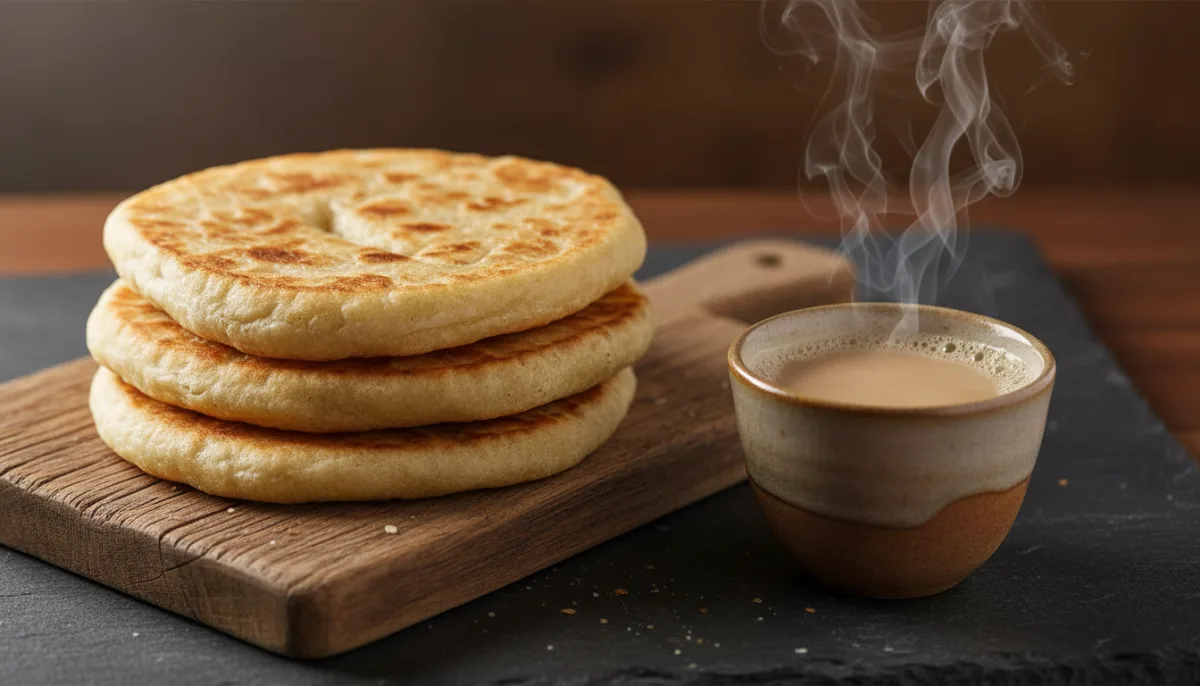
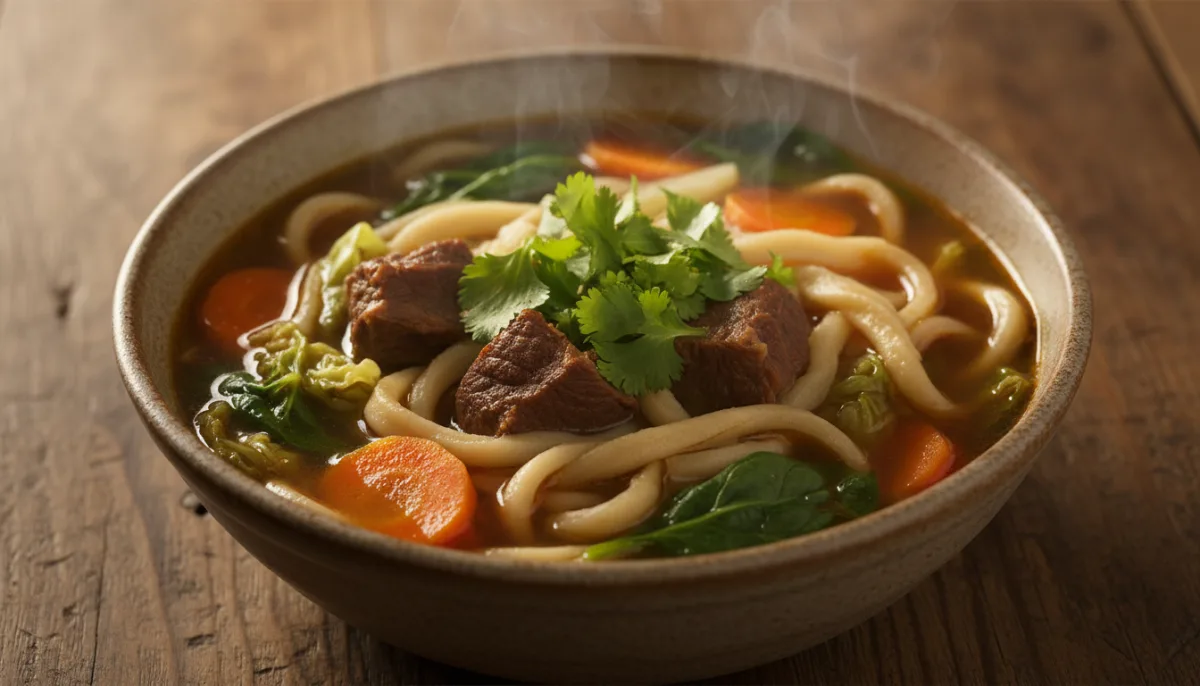
Serve this dish with a side of fresh cucumber and tomato salad for a refreshing contrast. A simple clear vegetable broth can also accompany the meal. For an authentic experience, enjoy with a cup of traditional Tibetan butter tea. A sprinkle of toasted sesame seeds over the Aloo Phing adds an extra layer of texture and flavor.

Common Mistakes

Over-kneading the Tingmo dough can make it tough; stop when it's smooth and elastic. Not letting the Tingmo dough rise sufficiently will result in dense bread. Overcooking the potatoes for the Aloo Phing will make them mushy; they should be tender but still hold their shape. Overcrowding the skillet when cooking the Aloo Phing can lead to steaming instead of stir-frying, resulting in less flavor development. Not cutting the glass noodles after soaking can make them difficult to eat.

Frequently Asked Questions

Can I make the Tingmo dough ahead of time?

Yes, you can prepare the dough and let it rise in the refrigerator overnight. Bring it to room temperature for about 30 minutes before shaping and steaming.


What if I don't have a steamer?

You can improvise a steamer by placing a heat-proof colander or metal sieve over a pot of simmering water, ensuring the water doesn't touch the bottom of the colander. Cover the pot with a tight-fitting lid.

Is Aloo Phing very spicy?

The spice level can be adjusted to your preference. Start with 1/2 teaspoon of chili powder and add more if you like a hotter dish. You can also use a milder paprika for less heat.

Can I add other vegetables to the Aloo Phing?

Absolutely! Bell peppers, carrots, or green beans would be delicious additions. Add them with the onions or potatoes, depending on their cooking time.
MORE TO KNOW
Tingmo is a staple Tibetan steamed bread, often served with various curries or stir-fries. Its unique twisted shape is not just for aesthetics; it helps create pockets for steam, resulting in a wonderfully soft and airy texture. The key to perfect Tingmo is a well-kneaded dough and proper proofing. Aloo Phing, on the other hand, is a quick and flavorful stir-fry that balances the mildness of the Tingmo with its spicy, savory notes. The glass noodles absorb the sauce beautifully, adding a delightful chewiness to the dish. This combination provides a complete and satisfying meal that highlights the simple yet profound flavors of Tibetan cuisine.
WHAT PEOPLE THINK

Reviews

☆

No reviews yet

Be the first person to review this recipe.

SHARE YOUR THOUGHTS

Made this recipe?

Tell us how it turned out.

Your review will be checked before appearing publicly.